
The growth of the internet and e-commerce has significantly transformed how we consume, purchase, and interact with consumables. No company has quite capitalized on the e-commerce boom as Amazon has. By creating a service that exploits convenience, efficiency and accessibility to everything one would ever need, all in one place. It could seem that Amazon has truly used e-commerce systems to improve society by providing convenience. However, that convenience comes with a cost with current Amazon Prime subscription models costing approximately $130 a year.
Amazon Prime funds its parent company, Amazon, which has exploited its workforce and laborers for years, manipulated customers, funded propaganda pieces, engaged in union busting, and created one of the most exploitative businesses in modern history. While the convenience is undeniable, the hidden costs extend beyond just the individual’s pocket. The company forces employees into dangerous, unreachable labor quotas and grueling schedules while they endure stagnant wages and lack of professional development. These overworked staff members face harsh penalties for falling behind as they labor under inhumane conditions. Meanwhile, the system generates massive capital gains that the company funnels into political influence instead of improving the workforce’s financial well-being.
The Price Keeps Going Up, and You Keep Paying
Since its launch in 2014, Amazon has increased the annual Prime membership price 3 times. According to findings published on gocancelit.com, Amazon Prime prices have risen 1.4 times faster than inflation since 2014. Amazon currently charges $139 per year for an annual plan or $14.99 per month for a monthly plan, which totals approximately $180 per year. While that could be seen as a hefty price for what is essentially just a streaming and delivery service, Amazon has doubled down, expanding its revenue extraction. In January 2024, Amazon introduced commercials to Prime Video, a service that members previously enjoyed without advertisements. To avoid these interruptions, members now pay an additional monthly fee of $2.99, which raises their existing subscription costs. This new fee took effect without any reduction in the standard membership price.
Now They Want Even More
Amazon announced in March 2026 that it would replace the $2.99 ad-free tier with a new subscription called Prime Video Ultra, launching on April 10, 2026. The new tier costs $4.99 per month, a 67% price increase over the tier it replaces. That tier is also now the only way to access 4K and UHD streaming on the platform. If you want ad-free 4K viewing on top of your standard Prime membership, you are looking at a minimum of $184.99 per year. Morgan Stanley projected that Prime Video advertising would generate $3.3 billion in global revenue in 2024, growing to $5.2 billion in 2025 and $7.1 billion in 2026. Amazon extracts more from you at every turn, and the price trajectory has shown no signs of reversing.
Analysts Predict Another Base Hike Is Coming
J.P. Morgan analyst Doug Anmuth published a research note in mid-2025 predicting that Amazon would raise the base Prime membership price in 2026. The firm estimated that a $20 increase on the annual plan could generate an additional $3 billion in revenue for the company. Every time Amazon raises prices, over 200 million subscribers absorb the cost without much resistance. That tells Amazon exactly what it needs to know about the public’s tolerance for the price hikes. The absence of consumer pushback establishes a dangerous precedent, encouraging Amazon and other major firms to persist in raising their rates.
Prime Day Is Not the Deal You Think It Is
Amazon’s Prime Day events generate enormous spending. Prime members purchased more than 375 million items worldwide during one Prime Early Access Sale and saved more than $2.5 billion in aggregate. As compelling as those numbers may seem, Prime Day deals skew heavily toward Amazon’s own proprietary products and third-party inventory that failed to sell at full price. Price tracking tools regularly show that many “deals” during Prime Day represent prices that were artificially inflated in the weeks prior.
Free Shipping Was Never Unique and Now It Means Even Less
Early Prime members paid for 2-day shipping when speedy delivery was still in its infancy. However, advancements in transport technologies and Amazon’s growth into a massive conglomerate with thousands of employees worldwide have diminished the justification for this price. Now, Walmart, Target, Best Buy, and many other major retailers offer free 2-day or same-day delivery on orders above modest prices.
Target Circle 360 members enjoy free same-day delivery from any Target store. Walmart provides free next-day and 2-day shipping on millions of items without requiring a membership for orders over $35. The core value proposition of Prime has always centered on speed and cost in its delivery system. With competitors now offering the same services for free or heavily subsidized, Prime’s flagship use case appears expensive and exploitative. You pay $139 per year to maintain a habit, not to access a service that no one else offers.
You Are Not Getting More for Your Money
Trae Bodge, smart shopping expert at TrueTrae, points out that having a Prime membership often causes consumers to spend more than they intended. Amazon tracks every purchase you make and surfaces personalized recommendations designed to trigger repeat spending. Consumer savings expert Andrea Woroch confirms, “Walmart’s and Target’s drive-up pick-up options provide same-day purchase convenience without having to go in the store. This doesn’t cost extra.” She also notes that Walmart, Target, and Best Buy will all price-match Amazon directly, meaning you can access Amazon’s pricing at a competing retailer without funding Amazon’s subscription model at all.
Amazon Built Its Subscription on Manipulation
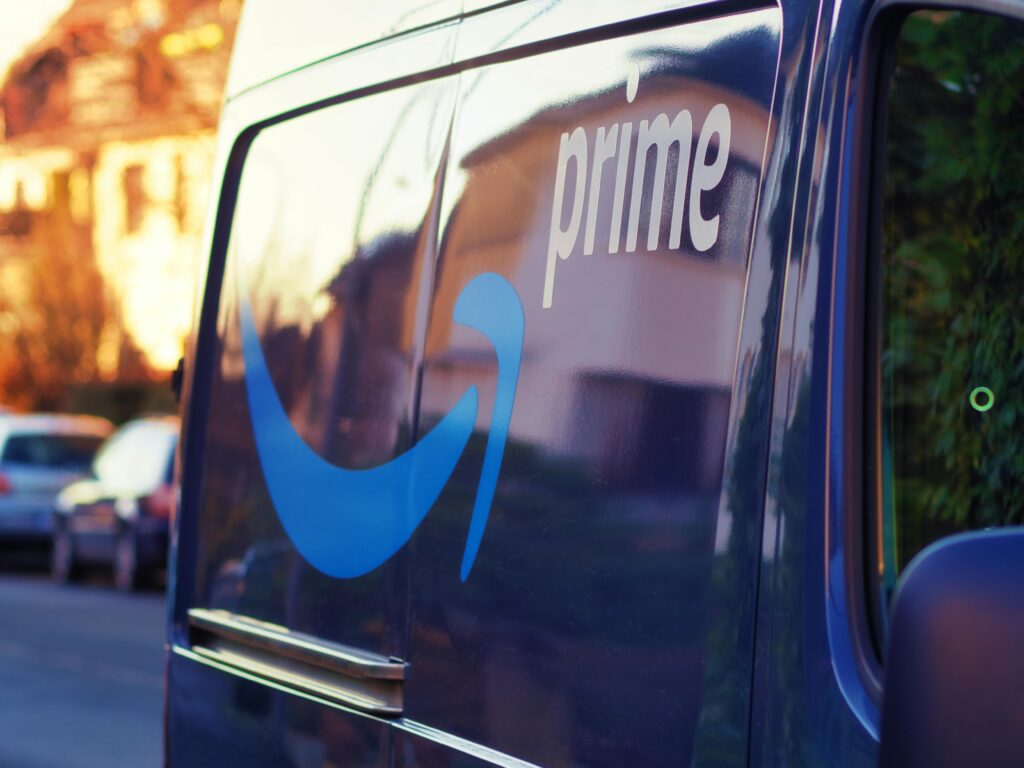
In 2023, Amazon faced a Federal Trade Commission lawsuit over the use of manipulative “dark patterns” to influence consumer behavior. According to the FTC, the company engineered a seamless enrollment for Prime while obscuring the terms of recurring charges in small print. Moreso, the agency pointed to a convoluted cancellation system, which they dubbed “Iliad Flow” internally, that forced users through a 15-click sequence spanning 4 different web pages. This was intentionally baked into the website designs to deceptively trap people into subscriptions. The name itself, a reference to one of Western literature’s longest epic poems, indicates that the developers were fully aware of the arduous journey they were creating for customers.
A $2.5 Billion Price for Lack of Responsibility
Just 3 days into its September 2025 trial with the FTC, Amazon settled for a historic $2.5 billion. The agreement included a $1 billion civil penalty, the steepest ever for an FTC rule violation, and $1.5 billion in refunds to consumers harmed by their deceptive subscription model. The FTC reported that approximately 35 million people qualified for payments of up to $51 for being unknowingly signed up for Prime or for facing obstacles when trying to cancel. Even after paying the largest fine of its kind in the agency’s history, Amazon did not admit any wrongdoing. The company treated the record-breaking penalty as a standard business expense, continued its subscription model, and even announced a new version. When a corporation can evade significant charges without accepting responsibility, it does not demonstrate accountability; it merely becomes a line item in a budget.
The Looming Antitrust Battle
The September 2025 litigation battle was not Amazon’s only lawsuit from the FTC but merely the beginning. In a more expansive second lawsuit, the FTC has accused the corporation of maintaining an illegal monopoly over the online marketplace and retail sectors. Supported by Puerto Rico and 18 states, this major antitrust case was cleared to move forward by a federal judge in October 2024, despite Amazon’s efforts to have it thrown out.
The upcoming trial, set for 2027, will be presided over by the same judge who handled the previous case. Amazon has also been identified by the courts, state governments, and federal regulators as a massive conglomerate that demands extensive legal scrutiny. Ultimately, your Prime membership fees help fund the company’s defense against these significant legal actions – and that is definitely a reason to go and cancel your subscription.
You Cannot Easily Cancel Even Now
After the FTC settlement, Amazon revamped its cancellation process; however, legal proceedings in April 2026 show that the company remains entangled in ongoing litigation regarding its initial use of “dark patterns.” The FTC’s main argument went beyond just the number of clicks needed to cancel; it highlighted the underlying intent. Amazon created a framework based on the belief that customer inertia would safeguard revenue more effectively than delivering real value, a strategy that has thrived for over a decade.
Although canceling a Prime membership now takes less than five minutes for those who know how to navigate the process. The fact that millions continue their subscriptions despite rising costs, the introduction of advertisements, and documented manipulative practices demonstrates the lasting effectiveness of that original design.
The Workers Paying the Real Price
According to a May 2025 report by the Strategic Organizing Center, which examined injury records submitted to OSHA, Amazon’s warehouse safety record remains poor. In 2024, the company’s serious injury rate reached 5.9 per 100 employees, roughly twice the rate seen at competing warehouses. Despite a 2021 commitment to reduce its total injury rate by 50% by 2025, Amazon missed its 2024 target by 80%. This failure to protect its workforce occurred even as the company reported consistent record-breaking profits, leaving employees at a significantly higher risk of harm than the rest of the industry.
Amazon Knew and Chose Profit Over People
In December 2024, Senator Bernie Sanders led a probe that uncovered internal Amazon records. These records revealed that the company’s safety specialists advised leadership to lower production targets to reduce worker injuries. However, leadership dismissed these suggestions, citing potential negative impacts on operational performance. Amazon’s own operational protocols reveal that the corporation has systematically placed production volume above the safety and health of its staff. The Senate’s findings further highlight Amazon’s dominant footprint, as the corporation manages approximately two-thirds of large-scale U.S. warehouses and oversees roughly 80% of the sector’s workforce. Despite this scale, Amazon’s injury statistics have consistently outpaced the rest of the industry for 7 years.
Barriers Go Up, and Work Continues
Alec MacGillis reports in his book Fulfillment: Winning and Losing in One-Click America that Amazon places physical barriers around employees who die while working to ensure uninterrupted facility operations. This strategy reflects the internal logic in Amazon’s records, which reveal that the company determined the financial cost of improving hazardous conditions outweighed the expense of compensating for injuries. As a result, while Amazon generates tens of billions in quarterly operating income, its workers experience physical harm at rates significantly higher than the industry average. The Amazon fulfillment center serves as a space where workplace hazards are not merely accidental; the company has analyzed, quantified, and ultimately maintained them.
The Numbers Do Not Lie
Amazon’s North America segment posted operating income of $9.3 billion in Q4 2024 alone, a 43% year-over-year increase. AWS generated $45.6 billion in full-year 2025 operating income. Amazon reported approximately $80 billion in total operating profit for 2025. That wealth is produced, in significant part, by a warehouse workforce that sustains injuries at nearly double the industry average. The gap between what Amazon extracts from its workers and what it returns to them in safety investment is not a story about a company that is trying and failing. It is a story about a company that has run the numbers and made a choice. You fund that choice every time you renew your Prime membership.
Jeff Bezos Is Using Your Money
Jeff Bezos bought The Washington Post in 2013. In February 2026, he ordered the paper to cut approximately one-third of its entire workforce. More than 300 of roughly 800 journalists in the newsroom lost their jobs. The layoffs eliminated the sports desk, shut down the Books section, suspended the Post Reports podcast, and gutted the international desk. The paper’s Ukraine bureau chief was reporting from a war zone when the cuts landed. However, speculation surrounds Bezos’s Washington Post’s job cuts. The job cuts came shortly before Bezos paid $40 million for rights to a Melania Trump documentary and $35 million to advertise it. However, he apparently did not have the funds to pay the reporters he sent into conflict zones under The Washington Post. That ordering of priorities reflects exactly what The Washington Post is to Jeff Bezos: an asset to be managed, not a press institution to be funded.
He Cut the Reporter Who Covered Amazon
Among the journalists cut in February 2026 was Caroline O’Donovan, the Washington Post reporter whose beat was Amazon. She covered the company’s labor practices, its warehouse injury rates, and its working conditions. Bezos cut the journalist whose job was to hold his primary company to account. That is editorial control exercised through the payroll. A billionaire who owns both the company being scrutinized and the newspaper doing the scrutinizing faces no conflict of interest rules that compel him to act otherwise. The Post’s newsroom did not fail to cover Amazon because of incompetence. It was structurally incapable of full independence from the moment Bezos signed the purchase papers.
Read More: Amazon Data Center Under Scrutiny After Reports of Rare Cancer Cluster
Your Subscription Funds His Superyacht
Amazon Prime generated $44.374 billion in subscription revenue in 2024, up from $40.2 billion in 2023. That revenue stream comes directly from over 200 million Prime members worldwide. Jeff Bezos owns a $500 million superyacht and a second support vessel large enough to carry a helicopter. His net worth sits at approximately $190.9 billion. That wealth flows from a company that injures its warehouse workforce at twice the industry rate, manipulates consumers into subscriptions they did not fully consent to, suppresses the journalism meant to scrutinize it, and pays the largest FTC penalty in history without admitting legal responsibility.
Where to Go Instead
You do not have to stop shopping online to cancel Prime. Any Amazon order over $35 qualifies for free standard shipping without a membership, so you can still buy from Amazon while avoiding the fee. Walmart Plus costs $98 per year and includes free shipping with no order minimum, fuel discounts, and a Paramount Plus subscription. Target Circle 360 offers free same-day delivery for $99 per year. Your local library’s digital platform gives you free access to ebooks, audiobooks, and streaming content that partially replaces Prime Reading and Prime Video.
Browser extensions like Cently and Capital One Shopping automatically compare Amazon prices against other retailers and apply coupons at checkout. The tools to leave are available, they are cheaper in most cases, and they do not come attached to a company that the federal government has taken to trial. The only thing keeping most people subscribed to Prime is habit, and habit is the one thing you are fully controlling.
A.I. Disclaimer: This article was created with AI assistance and edited by a human for accuracy and clarity.
Read More: Amazon Prime Settlement Refund: How to Check Your Eligibility and Claim Yours