
A U.S. teenager landed in the hospital this January after secretly vaping for 3 years. 17-year-old Brianne Cullen was taken to the hospital after she began to struggle breathing during cheerleading practice. She was diagnosed with “popcorn lung”, also known as bronchiolitis obliterans. The condition is rare; however, it is chronic and irreversible, causing permanent damage to the bronchioles, the smallest branches of the lungs. This damage leads to persistent coughing, fatigue, breathlessness, and other severe respiratory issues. Cullen’s case is one of many who have been vape users and get popcorn lung. Her case and many like hers give concern to the hidden dangers many young vapers do not see coming: long-term lung damage with no cure.
Factory Workers to Teen Vapers
Bronchiolitis obliterans gained the nickname “popcorn lung” in the early 2000s, when microwave popcorn factory workers began developing severe lung problems. Investigators eventually traced the cause of the illness back to a flavouring agent that is used to give popcorn its rich, buttery flavor: diacetyl. Workers had been inhaling diacetyl fumes daily at the factory, which subsequently scarred and permanently damaged their lungs.
Popcorn lung is a progressive disease that makes breathing increasingly difficult. What made popcorn lung especially tragic was its permanence. Once the bronchioles are scarred, the damage cannot be reversed. Treatment options are limited to managing symptoms with bronchodilators, corticosteroids, and oxygen therapy. In extreme cases, patients may only have lung transplantation as their only hope of survival. However, diacetyl is completely safe to consume. Only when diacetyl is aerosolized does it become a toxic inhalant. So, eating butter-flavored popcorn is safe, but breathing in the aerosolized vapors into your lungs is not.
The Buttery Agent Affecting Young Lungs
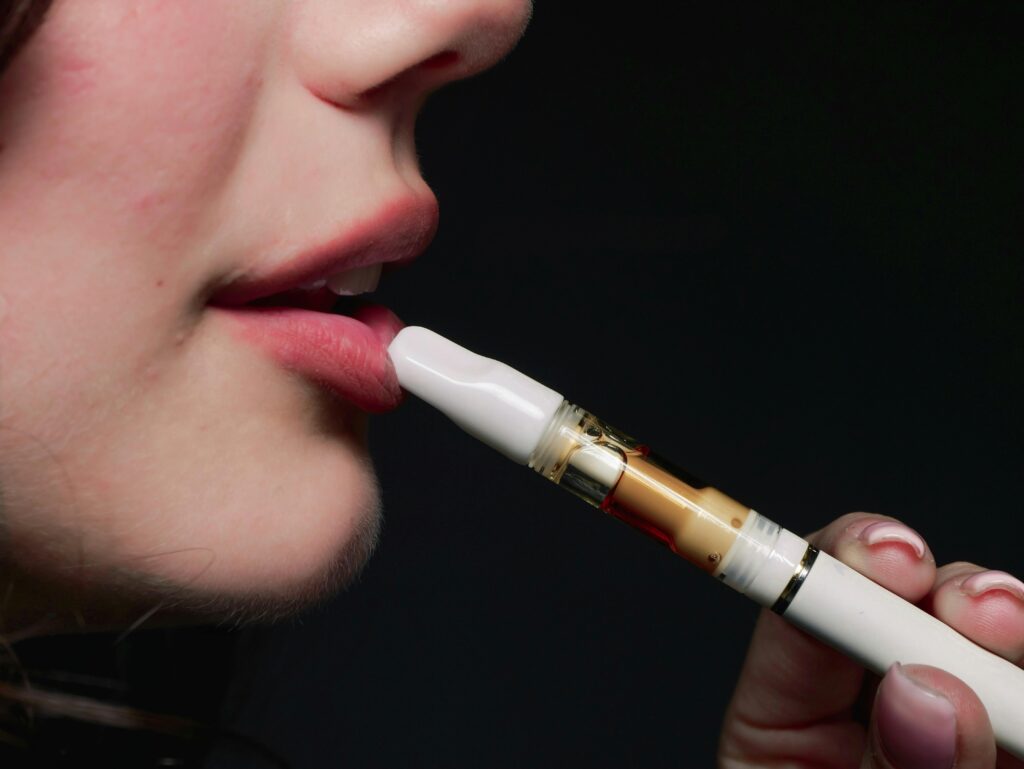
Diacetyl, officially known as 2,3-butanedione, is a flavoring agent approved for use in food products. It is safe to eat, but it becomes toxic when aerosolized. When diacetyl enters the lungs, it triggers inflammation that leads to scar tissue formation in the bronchioles. These tiny airways become narrower and narrower, making it progressively harder for air to flow through. The scarring is permanent, often disabling, and potentially fatal if left untreated.
Despite the known dangers, diacetyl is only officially banned in e-cigarettes within the European Union and the United Kingdom. The United States and other jurisdictions around the world have not banned diacetyl in vaping products. This is highly concerning as illegal vapes that do not comply with laws and regulations still frequently appear in the market. A 2015 Harvard study tested 51 flavored e-cigarette products and found diacetyl in 39 of the products, making 75% of all the tested products containing an agent directly linked to irreversible lung disease.
Flavors and False Safety
Vaping’s popularity amongst teenagers and young adults has grown, most likely due to the multitude of flavor options available. While previous smokers find vapes a “healthier” alternative to tobacco smoke, the flavors also appeal to younger teens who might have never smoked before. Flavors like bubblegum to cotton candy to mango ice disguise the dangers of the chemicals inhaled and are flavors marketed to young demographics. These sweet flavors make vaping seem harmless and fun.
In 2024, an estimated 1.63 million middle and high school students reported current e-cigarette use. While this represents a decline from 2.13 million in 2023, the numbers remain deeply concerning. Among students who currently vape, over 26% reported daily use and nearly 38% reported frequent use. Even more alarming, almost 85% of adolescent vapers use flavored e-cigarettes. Many young people believe vaping is a safer alternative to smoking cigarettes; however, the reality is different. While containing varying amounts of nicotine, e-liquids also contain a chemical cocktail designed to appeal to users. However, many of these flavoring agents were never tested for inhalation safety.
Since vaping and vape products are a relatively new phenomenon, testing on the effects of vaping on the lungs is limited. However, the past decade of research has brought up many concerns and risks. Currently, scientists and researchers are discovering more risks associated with smoking, and only time will tell the long-term impacts of vaping. E-liquids already contain
The Chemical Cocktail: Beyond Diacetyl
Diacetyl is not the only harmful chemical found within some e-cigarettes. Researchers estimate that more than 180 flavoring agents are used in vaping products today. The e-cigarette market currently offers more than 7,000 flavors to consumers. When these chemicals are heated, many break down into new compounds that have never been tested for inhalation safety. That becomes a significant concern for long-term lung damage.
Two diacetyl substitutes, acetoin and 2,3-pentanedione, are frequently found in e-cigarettes. These chemicals may be just as harmful as diacetyl itself. In fact, research shows that acetoin reacts to form diacetyl in e-liquids, especially when nicotine is present. Formation is accelerated by nicotine, meaning users are exposed to diacetyl even when it’s not listed as an ingredient. Other toxic chemicals detected in e-cigarette vapors include formaldehyde and acetaldehyde. Both are carcinogenic compounds that contribute to long-term lung damage and disease risk and have been linked to popcorn lung.
No Cure Exists for Popcorn Lung
Popcorn lung is unfortunately irreversible and permanent, and there is no cure for the disease. Once the lungs are damaged, treatment is limited to managing current symptoms and slowing down the progression of the disease. Doctors may prescribe bronchodilators to help open airways, corticosteroids to reduce inflammation, and oxygen supplementation when needed. Some patients may require immunosuppressant therapy to decrease the body’s immune response, though this approach is often ineffective for toxin-induced cases.
For Brianne Cullen, the Nevada teen diagnosed in January, her prognosis is good because her case was caught early. She now relies on an inhaler to help with breathing. However, doctors are still unaware of the full status of her lungs or whether there will be long-term effects. Her mother emphasized that popcorn lung is irreversible and can cause problems like cancer in the future. In severe cases where the disease progresses despite treatment, lung transplantation becomes the only option. Yet even transplant patients can develop popcorn lung again as a complication of the procedure. Prevention, not treatment, remains the best and only defense against this devastating disease.
Harvard Study Exposes Diacetyl in 75% of Tested Vapes
A 2015 study from Harvard T.H. Chan School of Public Health revealed that over 75% of flavored e-cigarettes and refill liquids contained diacetyl. Researchers tested 51 types of flavored e-cigarettes and refill liquids sold by leading brands. They found diacetyl in 39 of the 51 products tested. The study also tested for 2 related flavoring compounds: acetoin and 2,3-pentanedione. These chemicals are listed as “high priority” respiratory hazards in the workplace by the Flavor and Extract Manufacturers Association. At least 1 of the 3 target chemicals was detected in 47 of the 51 flavors tested, a staggering 92% of the flavors.
Lead author Joseph Allen noted that recognition of flavoring chemical hazards started with popcorn lung over a decade ago. However, diacetyl and related chemicals are used in many flavors beyond butter, including fruit, alcohol, and candy flavors found in e-cigarettes. The tested products included flavors with particular appeal to children, teenager,s and young adults. Names like “Cotton Candy,” “Fruit Squirts,” and “Cupcake” clearly target younger consumers. The study revealed that both diacetyl and 2,3-pentanedione were detected simultaneously in 21 unique flavors. This suggests 2,3-pentanedione is often used in conjunction with diacetyl and not actually replacing it in some cases.
EVALI Crisis: A Warning From Recent History
Brianne Cullen’s cases and many former and subsequent cases like hers all mirror the 2019 EVALI crisis. EVALI stands for e-cigarette or vaping product use-associated lung injury. The outbreak saw 68 deaths and over 2,800 hospitalizations across the United States. Cases peaked in August and September 2019 before investigators identified vitamin E acetate as one of the main causes of the outbreak. Vitamin E acetate is a thickening agent used in some cannabis vape products. When heated, vitamin E acetate produces a highly toxic gas called ketene.
Researchers found vitamin E acetate in lung fluid samples from 48 of 51 EVALI patients tested. Not a single healthy control participant had the chemical in their lungs. The EVALI crisis primarily affected young people, the largest cannabis users. By February 2020, cases had been reported in all 50 states, the District of Columbia and two U.S. territories. The median age of deceased patients was 49.5 years, but ages ranged from 15 to 75. The outbreak served as a stark reminder that vaping carries serious, potentially deadly risks.
A Changing Industry, But Still Some Uncertainty
The Harvard diacetyl study and the 2019 EVALI outbreak reflect a period when vaping products were far less regulated and ingredient disclosure was minimal. Since then, the vaping industry and regulatory environment have evolved, driven largely by public scrutiny, litigation risk and increased oversight.
Many vape manufacturers today claim to have removed diacetyl and related diketones from their formulations. “Diacetyl-free” labeling is now common, particularly among companies attempting to comply with U.S. Food and Drug Administration (FDA) premarket review requirements. Flavoring suppliers have also reformulated products and increasingly provide certifications stating that their ingredients do not contain diacetyl, 2,3-pentanedione or acetoin. In parallel, some brands now rely on third-party laboratory testing to demonstrate ingredient transparency and reduce known respiratory hazards.
The EVALI crisis similarly reshaped industry practices. Investigators determined that most cases were linked to illicit THC vape cartridges containing vitamin E acetate, a cutting agent rarely used by licensed manufacturers today. In response, vitamin E acetate has largely disappeared from regulated cannabis vape products, and several states have restricted or banned its use altogether. The outbreak underscored how quickly inhaled additives, particularly in unregulated products, can cause catastrophic harm.
However, these changes do not eliminate risk. The absence of diacetyl does not equate to inhalation safety, and many substitute flavoring chemicals have never undergone long-term toxicological testing for aerosol exposure. Regulatory oversight remains uneven, enforcement gaps persist, and counterfeit or imported products continue to circulate widely. As a result, consumers may still be exposed to compounds whose respiratory effects are poorly understood.
These historical events remain relevant not because the industry has stood still, but because they demonstrate a recurring pattern: chemicals considered safe for ingestion can prove dangerous when inhaled, especially when innovation outpaces regulation. While modern products may differ from those studied a decade ago, the fundamental concern remains unresolved, vaping delivers complex chemical mixtures directly into the lungs, an exposure pathway that carries unique and still-emerging risks.
Why Inhalation Makes All the Difference
There is a distinction between consuming and inhaling these chemicals. While most of these products have been approved for usage in food products and consumables, these agents have not been tested or approved for use in vaping products. When chemicals are consumed as food, they travel through the digestive system. The liver processes these substances before they enter the bloodstream, reducing their potential harm. The chemical interactions that take place between the agent and the digestive system do not react to create toxic substances that are harmful. The digestive system also works as a protective barrier against any harmful chemicals that could harm the body. However, when these chemicals are aerosolized and inhaled, they bypass this breakdown process. Inhaled substances go straight into the lungs and from there directly into the bloodstream. They reach vital organs like the heart and brain within seconds.
This is what made the original popcorn factory cases so devastating. Workers could safely eat butter-flavored popcorn without any ill effects. But breathing in the buttery chemical day after day destroyed their lungs. The same principle applies to vaping. Flavoring chemicals approved for use in food products have never been tested for inhalation safety. Many of these chemicals cause serious damage when they reach the delicate tissues of the lungs. Recent research on diacetyl exposure demonstrates this danger clearly. Studies show diacetyl vapor exposure results in cilia loss, increased inflammatory response, and altered gene expression in lung cells. These changes make users more susceptible to viral infections, including SARS-CoV-2.
The Urgent Need for Regulatory Action
More recent studies continue raising alarm bells about vaping’s impact on young people’s respiratory health. A multi-national study found that adolescents who vape report significantly more respiratory symptoms, even when researchers adjust for smoking status. Certain flavor types, nicotine salts and frequency of use were all linked to worsening symptoms. Four patients in a 2022 case series developed constrictive bronchiolitis with a history of vaping. All showed progressive shortness of breath paired with obstructive lung function and air trapping on chest CT scans. Lung biopsies revealed subepithelial fibrosis with luminal narrowing and patchy bronchiolar obliteration, confirming constrictive bronchiolitis.
History is clearly repeating itself. Just as workplace safety rules were overhauled to protect popcorn factory workers decades ago, we now need similar regulatory urgency for the vaping industry. This is especially critical when it comes to protecting the next generation from long-term lung damage. Brianne Cullen’s story serves as a powerful reminder that vaping carries real consequences. Despite fruity flavors and sleek designs, these devices are not harmless. What seems innocent can leave damage that lasts a lifetime. Prevention through regulation, clear labeling, stricter ingredient testing, and educational campaigns can help minimize risks. Until stronger protections exist, stories like Cullen’s will continue emerging as young vapers discover too late the permanent price of their habit.
Disclaimer: This article was created with AI assistance and edited by a human for accuracy and clarity.
Read More: Mother Told Her ‘Heart Attack’ Was Actually Caused By Lung Injury Due to Vaping