
Rare medical events draw intense attention during any mass vaccination campaign. Among COVID vaccine side effects, few stories triggered more concern than unusual clotting after certain shots. Doctors were not looking at ordinary leg clots alone. They were seeing severe headaches, brain vein clots, abdominal vein clots, and low platelet counts. That picture suggested an immune attack, not a routine circulation problem. Public health agencies had to hold two truths together. Vaccination was preventing severe disease and death across entire populations. Yet a very small number of recipients developed a dangerous syndrome after adenoviral vector vaccines. Researchers later labeled that syndrome thrombosis with thrombocytopenia syndrome, or TTS. Many scientific papers also used the name vaccine-induced immune thrombotic thrombocytopenia, or VITT. WHO and national regulators treated the problem as real, rare, and urgent. They also kept emphasizing the broader benefits seen during the pandemic.
Scientists now appear much closer to explaining why those events occurred. In February 2026, a New England Journal of Medicine study led by Jing Jing Wang and colleagues added a much sharper answer. The team linked VITT to adenoviral core protein VII, also called pVII. It also tied the syndrome to a specific light-chain gene background and a crucial antibody mutation. Together, those factors offer a clear route from vaccination to anti-PF4 antibodies in susceptible people. That does not mean all COVID vaccine side effects were poorly understood or widely hidden. It means one rare complication now has a stronger biological explanation. For anyone tracking blood clots from COVID vaccine campaigns, that is a major shift. The discussion can now move beyond broad suspicion and toward mechanism, risk, diagnosis, and safer design.
How doctors realized this was not ordinary clotting
The first alarms came from clinicians, not from viral posts or political arguments. Emergency teams began seeing patients with severe headache, abdominal pain, chest symptoms, confusion, and neurological deficits after vaccination. Scans then revealed clots in places doctors do not commonly expect. Cerebral venous sinus thrombosis appeared repeatedly. Abdominal vein thrombosis also appeared often enough to stand out. Just as important, platelet counts were falling when they should not have been. That feature pushed the cases away from ordinary thrombosis and toward immune-mediated disease. In March 2021, WHO still described the AstraZeneca vaccine as having a “positive benefit-risk profile.” At that stage, COVID-19 remained a much larger immediate public health danger. WHO had reason for that caution. It said more than 20 million AstraZeneca doses had already been given in Europe, and more than 27 million Covishield doses had been given in India.
The same review said the available data did not suggest any overall increase in common clotting conditions such as deep venous thrombosis or pulmonary embolism. WHO also noted that the European Medicines Agency had reviewed 18 cases of cerebral venous sinus thrombosis after more than 20 million AstraZeneca vaccinations in Europe. Investigators were therefore not reacting to ordinary clot numbers alone. They were reacting to a strange clinical picture that kept repeating. Patients had unusual clot locations, falling platelets, and symptom onset within a narrow period after vaccination. That combination became the first strong signal that something distinct was happening. It also explains why early concern focused on case patterns, not on a broad rise in everyday clotting events. Clinicians were seeing something medically specific, and they knew it required a different explanation.
The clinical picture became sharper as agencies compared reports across countries. WHO later called TTS “a very rare new type of adverse event.” It also noted that brain and abdominal clots were key features. In the same April 2021 review, WHO pointed toward the vaccine platform itself. It said a platform-specific mechanism linked to adenoviral vaccines “cannot be excluded.” That short phrase carried real weight. Investigators had moved beyond asking whether the cases were coincidental. They were now testing whether a shared vaccine technology might explain them. The time window also helped doctors separate VITT from routine post-vaccine discomfort. Symptoms usually appeared several days after vaccination, not in the first 24 hours.
WHO told clinicians to watch for severe headache, abdominal pain, and shortness of breath within 4 to 20 days. It also warned that heparin could be dangerous in suspected TTS and urged platelet measurement with appropriate imaging. The Brighton Collaboration began developing a specific case definition to support causality assessment. WHO also urged countries to review, report, and investigate every suspected case, then communicate openly with the public. Those details changed bedside behavior in hospitals and emergency rooms. Doctors began ordering platelet counts earlier, scanning more aggressively, and considering PF4 antibodies when the presentation matched. Once the syndrome gained a name, a time window, and common features, teams could spot it sooner. They could also treat it with greater precision. That process marked the shift from scattered case alarm to organized clinical recognition, and it laid the groundwork for everything that followed.
Why adenoviral vaccines drew the closest scrutiny, and how policy changed
The platform signal became harder to ignore as data accumulated. WHO said in April 2021 that TTS had not been linked to mRNA vaccines such as Pfizer-BioNTech or Moderna. The concern centered on adenoviral vector vaccines, especially Oxford-AstraZeneca and Johnson & Johnson. That distinction shaped both research and policy. Scientists needed to know which shared component might explain the syndrome. Regulators needed to decide whether one platform carried a higher risk than another. WHO’s April review also put rough numbers on the problem. It said UK data suggested about 4 cases per million adults who received Vaxzevria or Covishield. It said the estimated rate in the European Union was about 1 case per 100,000. WHO also said countries should weigh local COVID-19 burden, age groups, and vaccine availability when judging risk.
That advice reflected a pandemic still killing large numbers of people. In some settings, delaying vaccination also carries danger. Yet the same review made a crucial distinction. WHO said TTS had not been linked to mRNA platforms. That difference pushed adenoviral vaccines into a more intense safety discussion. It also gave later mechanistic work a much clearer direction. Investigators no longer needed to search every possible vaccine pathway equally. They could focus on a narrower technology class and ask what those vectors shared. That narrowing was one of the most important early clues in the entire VITT story. The later NEJM study supported that focus directly. Wang and colleagues wrote that VITT is “specific for adenovirus vector-based Covid-19 vaccines.”
They then traced the strongest antibody link to an adenoviral core protein. That signal did not center on the spike target itself. Real-world policy moved in the same direction. CDC says thrombosis with thrombocytopenia syndrome occurred in about “4 people per one million doses” after the J&J vaccine. It also says rates were higher among women aged 30 to 49 years. CDC now notes that J&J is no longer available in the United States. FDA says Janssen requested withdrawal of its authorization on May 22, 2023. The agency then revoked that authorization on June 1, 2023. Australia followed its own path, but the direction was similar. The federal health department says AstraZeneca is no longer available there from March 21, 2023.
It estimates about 2 cases per 100,000 in those aged 60 or older. It estimates about 2 to 3 cases per 100,000 under 60. ATAGI later recommended an alternative to AstraZeneca for people under 60. The TGA then recorded the product’s formal cancellation in 2024, saying AstraZeneca made a business decision because there was no current or anticipated future demand. These decisions did not grow from one dramatic headline. They followed accumulating evidence, wider access to alternatives, and a stronger understanding that blood clots from COVID vaccine platforms were not evenly distributed across all technologies. Regulators responded by shifting policy where safer options were available, while researchers kept asking why the adenoviral platform carried this specific risk. Those comparisons also strengthened confidence that the risk was specific, measurable, and responsive to better evidence, updated guidance, and choice.
What the 2026 NEJM study discovered, and why the syndrome stayed rare
The 2026 NEJM study tackled the mechanism with unusual depth. Wang and colleagues sequenced anti-PF4 antibodies from 21 patients with VITT. They also genotyped light-chain hypervariable genes from 100 patients. Then they compared antibodies directed against PF4 with antibodies directed against several adenoviral proteins. The strongest match came from adenoviral core protein VII, or pVII. The authors reported that only antibodies purified against pVII contained anti-PF4 species matching the classic VITT fingerprint. Antibodies against intact virions or other adenoviral proteins did not show the same match. The paper also found that all antibodies shared similar molecular fingerprints, including a common “ED” motif in the heavy chain and a restricted IGLV3-21*02 or *03 light chain. That result gave researchers a plausible inciting antigen after years of uncertainty.
It also narrowed the search dramatically. The field no longer had to speak only about an adenoviral platform in general terms. It now had a specific internal viral protein that could help launch the harmful response. In mechanistic work, that kind of precision changes everything. It turns a suspected association into a testable pathway with defined molecular steps. The methods also gave the paper unusual strength. The team used antibody proteomics, genomic sequencing, peptide mapping, and reverse-engineered recombinant antibodies to test the model directly. That combination allowed the authors to compare suspected trigger proteins, track antibody fingerprints, and check whether the proposed mutation actually changed binding behavior in the lab. The study then explained how that pathway may become dangerous. The antibodies do not simply bind pVII and stop there.
In susceptible people, an evolving immune response appears to drift toward platelet factor 4, or PF4. In the paper’s abstract, the authors said a specific mutation can “misdirect antibody targeting towards PF4.” That mutation is called K31E. It swaps a positively charged lysine for a negatively charged glutamic acid at position 31. Wang and colleagues concluded that K31E is “required to produce the highly reactive anti-PF4 antibodies” seen in VITT. They strengthened that claim with experiments using recombinant antibodies. When they reversed the mutation, PF4 binding weakened, and pVII binding increased. The authors also mapped the binding site to a 15-mer pVII peptide. That peptide, RYARAKSRRRRIARR, is highly conserved in both ChAdOx1 and Ad26. Anti-PF4 antibodies purified from VITT sera bound similarly to the ChAdOx1 and Ad26 pVII peptides.
The discussion then stated that molecular mimicry between pVII and PF4 forms “a fundamental pathobiological mechanism of VITT.” That wording is strong, but the data support it. The same study also helps explain rarity. Wang and colleagues found the relevant IGLV3-21*02 or *03 allele in 99 of 100 patients, yet they also noted that the background frequency in the general population ranges from 20% to 60%, depending on ethnicity. Many healthy people, therefore, carry the same light-chain background and never develop VITT. The allele alone does not create the syndrome. A person appears to need the permissive gene background, antibodies against the relevant pVII epitope, and then the crucial K31E mutation. Only when those steps align does antibody targeting move toward PF4 with enough force to activate platelets. That layered pathway explains how a genuine and dangerous complication could remain extremely rare across vast vaccination campaigns.
What doctors learned from VITT, and what future vaccine design may change
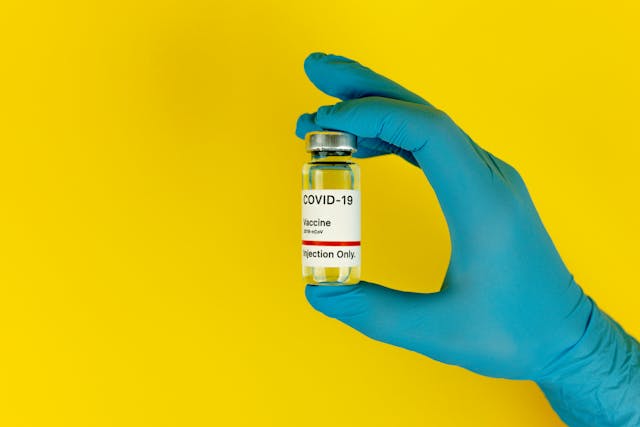
Recognition changed treatment very quickly once the syndrome became clearer. Early case reports showed that standard clotting protocols were not always suitable. WHO warned in 2021 that heparin may be dangerous in TTS. It said immunoglobulins and non-heparin anticoagulants should be considered. ASH later translated that warning into practical bedside guidance. It advises immediate blood counts, imaging based on symptoms, PF4 ELISA testing, fibrinogen, and D-dimer. It also advises urgent hematology consultation when thrombosis or thrombocytopenia appears in the post-vaccine window. When thrombosis is confirmed, and suspicion remains high, ASH recommends intravenous immunoglobulin and non-heparin anticoagulation while PF4 ELISA results are pending. ASH also says the incidence is “extremely low,” yet it still urges urgent evaluation when symptoms fit.
It notes that the key window runs from 4 to 42 days after vaccination. It also stresses that mild constitutional symptoms in the first 24 to 48 hours are not suggestive of VITT. Australia’s health department describes a similar timing pattern after AstraZeneca. EMA captured the clinical urgency in a single phrase. It said TTS requires “rapid identification and urgent clinical management.” Those recommendations matter because VITT can move fast. Patients may present with crushing headache, abdominal pain, shortness of breath, bruising, or focal neurological signs. A missed diagnosis can delay the right treatment while platelet-activating antibodies continue causing damage. Once clinicians recognized the syndrome, they could act with greater confidence and avoid choices that might worsen the immune clotting process.
Read More: Scientists Uncover How Covid Vaccines Might Trigger Rare Heart Issues
The most constructive lesson now lies in prevention by design. Adenoviral vectors still have scientific value in vaccines and gene delivery research. The goal is therefore sharper than simple abandonment. Researchers now have a defined protein target to modify or remove. If pVII or its critical epitope starts the harmful immune sequence, future developers can test safer vectors that preserve immunogenicity while avoiding this trigger. That possibility changes the tone of the discussion around COVID vaccine side effects. Scientists no longer need to speak only in broad associations or unresolved suspicion. They can work from a mapped antigen, a defined mutation, and a clearer susceptibility model. WHO said in 2021 that open, transparent, and evidence-based communication is essential to maintain trust. That principle still applies.
Surveillance systems detected rare blood clots from COVID vaccine campaigns. The scientific response then kept going until the biology became clearer. The new NEJM study does not answer every remaining question. It does, however, give medicine a credible molecular explanation and a practical route toward safer adenoviral vaccine design. That is the most useful takeaway from this long debate. The problem was rare, the mechanism was obscure, and the investigation kept moving until the evidence sharpened. For readers trying to understand blood clots from COVID vaccine programs without falling into panic or denial, that is the central point. Medicine now has a much better explanation for what happened, why it happened rarely, and how future vaccine engineering may reduce the risk even further. That progress also gave researchers a clearer path toward safer vectors, better screening, and more confident public communication about risk.
Disclaimer: This information is not intended to be a substitute for professional medical advice, diagnosis or treatment and is for information only. Always seek the advice of your physician or another qualified health provider with any questions about your medical condition and/or current medication. Do not disregard professional medical advice or delay seeking advice or treatment because of something you have read here.
A.I. Disclaimer: This article was created with AI assistance and edited by a human for accuracy and clarity.
Read More: Plant-Based Chewing Gum Shows Promise Against COVID, Flu, and Herpes in Lab Tests