
Throughout history, there have been numerous apocalypse predictions, from both seers and scientists. These end-of-the-world predictions range from the biblical to the astronomical. Astronomers have started reading the universe’s spoiler alerts, and the plot twists are wild. A new peer-reviewed study shows how aging stars quietly erase nearby worlds. Another team recently watched a star swallow a planet in real time. Together, those clues point toward the Sun’s distant future and our own fate.
This is not alarmist doom, and it is not science fiction. It is careful evidence that finally fits together across methods and timescales. Think of it as a true crime story set in space, with physics as the culprit. The motive is gravity, and the weapon is a rising tide from swollen stars. The victims are the hot giant planets that orbit too close to survive. The clues include missing worlds, dusty wreckage, and a filmed celestial “last meal.” Most importantly, the timelines are vast, yet the lessons are immediate. If you want a clear guide through these discoveries, keep reading. We will follow the evidence, one chapter at a time.
The End of the World Prediction Study
Edward Bryant and Vincent Van Eylen constructed a vetted sample from more than 15,000 transit-like signals. They identified 130 planets and planet candidates around stars that have left the main sequence. Their goal was to find out how often very close giant planets occur as the host star evolves. Their conclusion revealed a significant decline in occurrence for more evolved hosts. Stars that have swelled and cooled have far fewer hot giants than younger post-main-sequence stars. The pattern matches a basic prediction; once a star grows, tidal coupling strengthens, and orbits begin to decay. Bryant noted that, “This is strong evidence that as stars evolve off their main sequence, they can quickly cause planets to spiral into them.”
Van Eylen added some needed context, stating that “Earth is certainly safer than the giant planets in our study.” Earth orbits farther out than the hot giants they studied. So, he is not rejecting the overall finding; he is simply noting that Earth’s position changes its immediate risk. The study looks at many systems, not just a single case. That kind of population evidence is harder to dismiss. This is because large samples reduce the chances of cherry-picking and mere coincidences. The authors also emphasize what comes next methodologically. They plan to measure planetary masses with precise stellar velocities. That step reduces false positives and separates planets from low-mass stars. As Bryant put it, “Once we have these planets’ masses, that will help us understand exactly what is causing these planets to spiral in and be destroyed.” Masses, radii, and orbits together will refine models of dissipation and decay.
The Effect of Tidal Mechanics
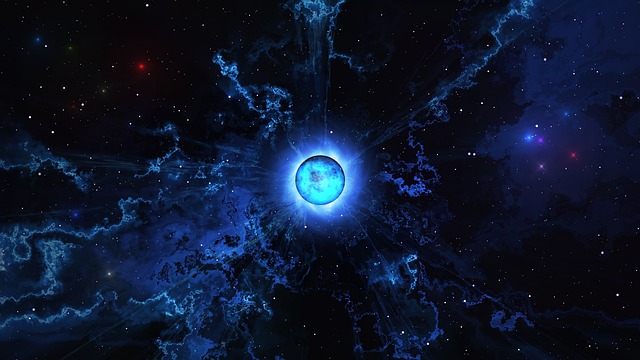
Tidal forces arise when gravity is stronger on one side of a body than on the other. That gradient stretches the planet slightly and can also distort the star. Energy then dissipates as heat inside the bodies. Angular momentum exchanges between the spins and the orbit. When the star grows, the leverage increases because distance is a significant factor. Small inward shifts strengthen tides and then accelerate decay. Eventually, orbits can shrink so much that a planet grazes the star’s outer atmosphere. At that point, gas drag “steals” orbital energy quickly and hastens the final plunge. As NOAA puts it, “Tidal forces are based on the gravitational attractive force.” Basically, the rest follows by geometry and scaling. Van Eylen uses a simple analogy in his interviews, noting that “Just like the Moon pulls on Earth’s oceans to create tides, the planet pulls on the star.”
The same physics governs many systems. Tidal decay is driven mainly by distance, size, and internal dissipation. Closer planets feel stronger tides, so their orbits shrink much faster. Bigger stars or planets generate bigger tides, which also speed decay. “Dissipation” means how efficiently a body turns flexing into heat; stronger dissipation makes decay quicker. The steep distance dependence explains why late stellar expansion has such a significant impact. A modest increase in stellar radius can flip outcomes for close worlds. That is why occurrence rates fall fastest at the shortest orbital periods. The new population result, therefore, acts like a real-universe laboratory. It reveals textbook mechanics operating at a galactic scale with measurable consequences.
The Role of TESS
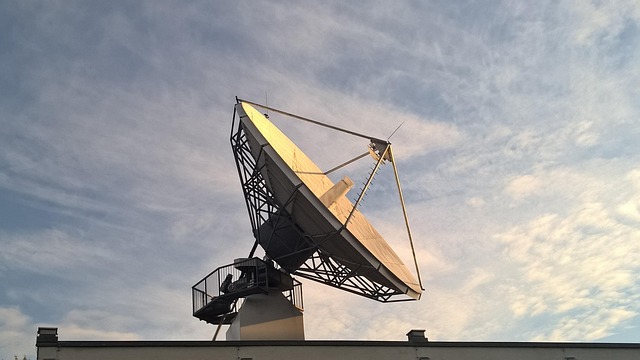
TESS monitors large sky sectors and catches tiny dips in starlight when planets transit. Full-frame images extend coverage to many stellar types, including evolved hosts. Bryant and Van Eylen built a search tuned for those stars and then estimated occurrence rates. They corrected for detection completeness so weak signals did not just vanish. Transits favor short periods and near-edge-on orbits. That sounds like a limitation until you recall where tides bite first. Short periods are exactly the regimes that test tidal decay efficiently. The Royal Astronomical Society explained their workflow, stating that they “ran the data through a computer program to search for small dips in brightness.” They then grouped hosts by evolutionary stage.
That step allows the researchers to compare like with like. Bryant points to the next measurement that will sharpen interpretations. He noted that “Once we have these planets’ masses, that will help us understand exactly what is causing these planets to spiral in and be destroyed.” Masses and eccentricities will improve decay timescale estimates across the sample. The approach shifts the debate away from single spectacular cases. It asks whether a whole population shows a predicted signature. That signature appears as a deficit of close giants around swollen stars. Population-level questions reduce the influence of unusual systems. They also reveal physics that might hide in individual histories.
Watching a Star Swallow a Planet
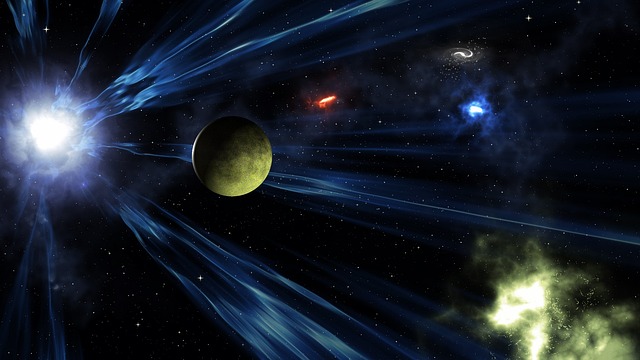
Statistics are persuasive, but a single direct event can close a causal loop. In 2023, a Sun-like star brightened dramatically and then emitted warm infrared light. Spectra indicated a cool outflow consistent with a disrupted giant planet. The event is known as ZTF SLRN-2020, and it marked a long-predicted stage. An MIT news release quoted the lead author, Kishalay De, who stated that “We were seeing the end-stage of the swallowing.” In the same release, Kishalay De connected the moment to our remote future, adding, “We are seeing the future of the Earth.”
NASA’s mission page framed the event within standard stellar evolution. A star that exhausts its core fuel expands and can engulf close worlds. That snapshot is rather important because it captures energy release, dust formation, and kinematics. It links theory and population trends with time-resolved reality. The movie and the census now support each other directly. Observers combined optical and infrared data to reconstruct the sequence. The visible flash arrived first, then dust brightened the infrared bands. That timing matches expectations for a plunging planet that injects energy, then sheds material. The sequence helps calibrate models of drag, heating, and mass loss during engulfment.
White Dwarfs and Planetary Debris
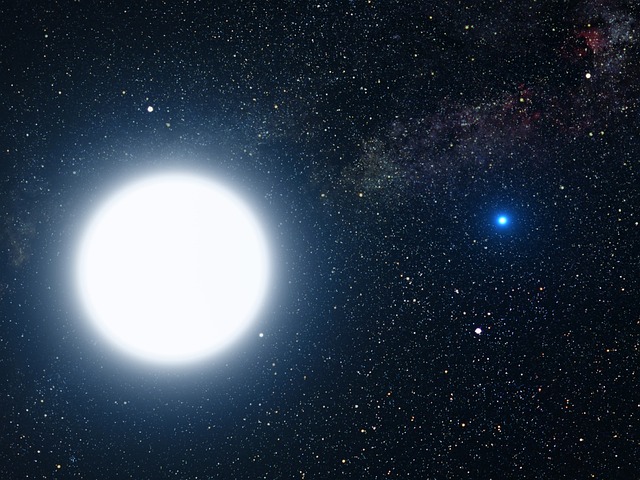
Sun-like stars end as compact white dwarfs after shedding their envelopes. Their atmospheres should be pure hydrogen or helium because heavy elements sink rapidly. Yet many white dwarfs exhibit fresh metals and dusty or gaseous disks. These signatures require ongoing accretion from disrupted planetary material. A University of Warwick team described how they detected X-rays from “debris from disintegrating planets” crashing onto a white dwarf. Another Warwick study reported the “highest nitrogen abundance ever detected in a white dwarf’s debris.”
That chemistry points to a Pluto-like icy body, not dry rock. These forensic clues show that planetary systems often survive in altered form. Pieces linger, migrate inward, and then disintegrate near the compact remnant. A few systems also host giant planets at great distances, which likely endured the turmoil. The inner regions tell a harsher tale. They often end as dust, gas, and falling metal. Polluted atmospheres, therefore, act as a running logbook for late-stage dynamics. They record which kinds of bodies feed the remnant, and on what timescales. Each detection constrains models of scattering, resonances, and tidal disruption in the post-red-giant era.
The Sun’s Schedule and Earth’s Disputed Survival
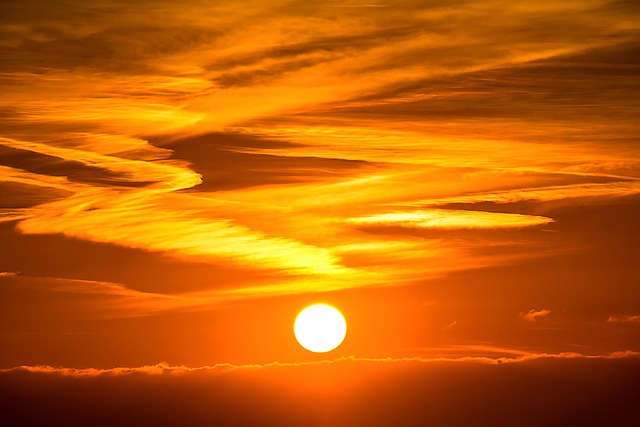
The Sun is stable today, yet evolution proceeds on billion-year scales. When hydrogen levels are low, the core contracts and the outer layers swell. NASA has released information that describes that sequence in various steps. A Sun-like star becomes much larger and much brighter during its red giant phase. Close worlds then face heightened tides and possible engulfment. Van Eylen offers two important clarifications for a general audience, noting that “Earth is certainly safer than the giant planets in our study,” because it orbits farther out. He also warns against comfort that ignores biology. He stated that “Earth itself might survive the Sun’s red giant phase. But life on Earth probably would not.”
Climate modeling indicates that rising solar luminosity likely triggers a moist greenhouse state. Water enters the stratosphere, hydrogen escapes, and oceans diminish over long spans. NASA summarizes the foundation, stating that “The greenhouse effect is the process through which heat is trapped near Earth’s surface.” That process can shift as solar input slowly rises. Classic calculations that include tides, mass loss, and atmospheric drag still lean toward engulfment near the Sun’s maximum size. The exact outcome depends on poorly known dissipation inside the late-stage Sun. It also depends on how much mass the Sun sheds before peak radius. Either way, habitability ends much earlier than any possible geometric escape.
Other Plausible End of the World Predictions?
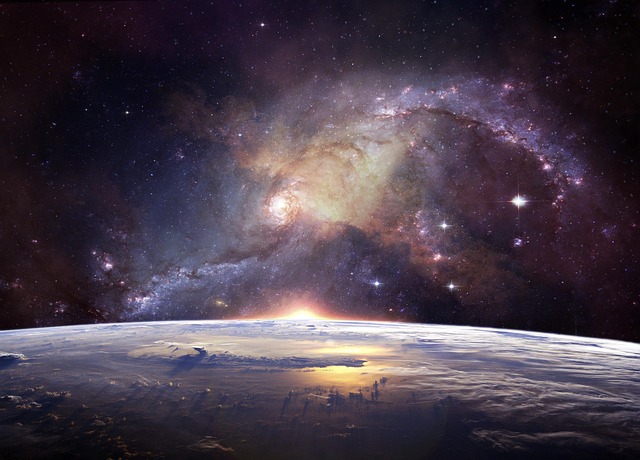
The Sun dominates Earth’s long-term risk, yet the galaxy can still reshape background hazards. Updated simulations using Gaia and Hubble data revised expectations for a Milky Way and Andromeda merger on near timescales. Institutional summaries now describe a wide range of futures, not one cinematic crash. One widely quoted line captures the uncertainty. It stated that there is “a 50-50 chance within the next 10 billion years.” Another line of research examines our likely merger with the Large Magellanic Cloud. Some studies place that event around two billion years from now.
The infall could feed the central black hole and alter the halo’s structure. These events rarely cause direct stellar collisions. They can still stir comet reservoirs and change close encounter rates for distant bodies. Researchers also consider the risk from a close stellar flyby. Such a passage could perturb the Oort cloud and raise long-term impact flux. A Nature-style summary noted that “The situation is more uncertain than previously thought.” These scenarios create diffuse risks that unfold over immense times. They do not rival the Sun’s red-giant certainty for near-term outcomes. Still, they help frame the Solar System within a dynamic galaxy where orbits evolve.
What do the numbers imply for Earth specifically?

The new MNRAS result focuses on hot giants with very short periods. The hosts are not perfect solar twins. The planets are not Earth-sized worlds. Even so, the trend is anchored in physics that does not care about composition. Once a star’s radius grows, tidal coupling strengthens and decay accelerates. The strongest effect appears at the shortest periods, as the data also show. Bryant expressed surprise without hype, stating that “We expected to see this effect, but we were still surprised by just how efficient these stars seem to be at engulfing their close planets.”
That efficiency shifts expectations for many inner systems, including analogs of hot Jupiters. For Earth, two uncertainties dominate the final scene. The first is how strongly the late-stage Sun dissipates tidal energy. The second is how much mass loss expands Earth’s orbit before the star reaches peak size. Classic calculations still find engulfment near the end, although small parameter changes can move the line. Population measurements do not settle Earth’s single outcome. They reveal what similar physics does across many stars. That context pushes the conversation beyond wishful scenarios. It builds consistency from demographics, not only elegant equations.
The Bottom Line on Apocalypse Prediction
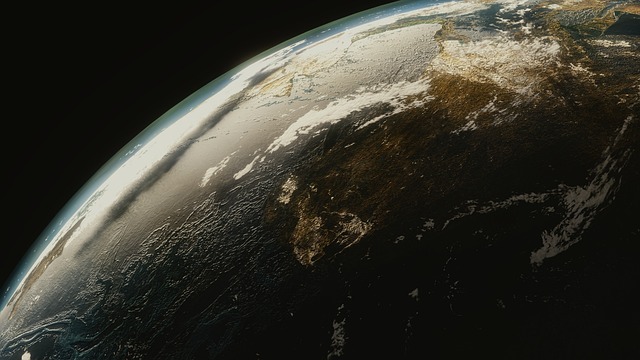
Across methods and timescales, the story is now coherent. A team watched a star consume a planet in real time, with optical flashes and infrared dust. Many white dwarfs carry fresh metals and dusty disks, which reveal ongoing debris accretion. The new TESS-based census shows a deficit of hot giants around evolved stars, which matches tidal predictions. Those three pillars support a single arc that spans theory, event, and population. Bryant describes the central mechanism, noting that “These interactions slow the planet down and cause its orbit to shrink, making it spiral inwards until it either breaks apart or falls into the star.”
So, what about the end of the world prediction for Earth itself? Life on Earth likely ends long before the Sun reddens significantly, due to steady solar brightening and climate thresholds. The planet’s ultimate survival during the Sun’s maximum expansion remains debated. Classic models still lean toward engulfment near the final swelling. Other galactic endings exist, including mergers and flyby-driven comet surges. Those possibilities add background risk without outranking the Sun’s certainty. If the long future follows current evidence, the inner Solar System dissolves into heat and light. The Sun cools into a white dwarf after shedding its envelope. Distant fragments continue orbiting through a darker era with fewer worlds and quieter skies.
Disclaimer: This article was created with AI assistance and edited by a human for accuracy and clarity.
Read More: NASA Warns Earth Is Running Out of Oxygen, Study Predicts End Date