
At first, it just seemed like a post-pandemic hangover: scattered patients drifting into Yorkshire clinics with damaged lungs. Then a pattern emerged that began to hint at a New COVID-linked syndrome that had been hiding in plain sight. People arrived breathless, exhausted, or covered in puzzling rashes, sometimes with new Raynaud’s symptoms or unexplained muscle pain. Blood tests revealed antibodies against MDA-5, a viral sensor usually praised for detecting RNA viruses like SARS-CoV-2. Some of those patients soon developed aggressive interstitial lung disease, and standard labels were no longer adequate.
Their illness overlapped with anti-MDA5 positive dermatomyositis, yet numbers climbed and dipped with local COVID waves. Researchers from Leeds and UC San Diego have now given this constellation a name and a framework. They describe a New COVID-linked syndrome, MDA5-autoimmunity and interstitial pneumonitis contemporaneous with the COVID-19 pandemic, or MIP-C. Their work explores how infection, vaccination, genetics, and MDA-5 signalling might converge to spark rare but dangerous autoimmunity. In this article, we will describe what they found, how it fits into post-COVID lung research, and what patients should know.
MDA5 – The viral sensor at the centre of the story
The MIP-C story begins with a single protein. MDA5 is encoded by the IFIH1 gene and acts as a sensor for viral RNA inside cells. It helps immune defences recognise many RNA viruses, including SARS-CoV-2. In a University of Leeds press release, the team explains that “the immune system contains a protein called MDA5, which helps detect RNA viruses like COVID-19.” In healthy responses, MDA5 activation helps clear infection. However, in some people, the immune system begins to target the protein itself. Before the pandemic, anti-MDA5 antibodies were already known in a rare form of dermatomyositis that often causes rapidly progressive interstitial lung disease and high mortality.
Case series from East Asia and Europe showed that MDA5-positive dermatomyositis often presented with severe lung involvement and distinctive rashes. Because MDA5 sits directly on the interface between viral sensing and autoimmunity, it became a natural suspect once COVID-19 survivors started showing unexplained lung damage and unusual autoimmune syndromes. Researchers also noticed that a common IFIH1 genetic variant, rs1990760, seemed to influence COVID-19 outcomes, suggesting that baseline differences in MDA5 signalling might shift how people respond to SARS-CoV-2 infection. Against this background, the Leeds Teaching Hospitals’ immunology laboratory began to see something they had not observed before: a sharp rise in anti-MDA5 positive tests in the second year of the pandemic. That observation launched the MIP-C investigation.
How the Leeds Team Uncovered MIP-C
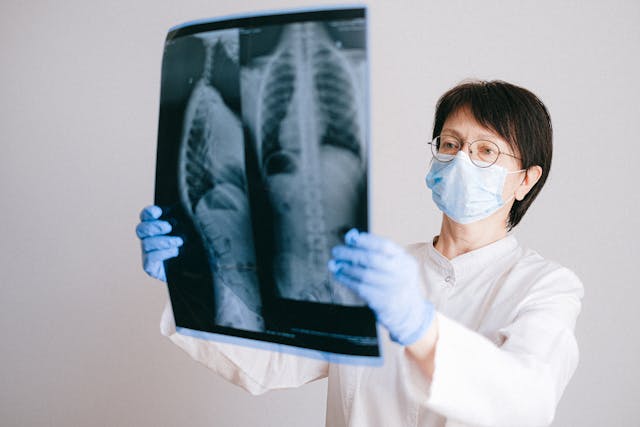
Image Credit: Pexels
The new study was led by Paula David and colleagues at Leeds Teaching Hospitals NHS Trust. It was conducted in collaboration with Saptarshi Sinha and Pradipta Ghosh’s group at the University of California, San Diego. They audited all myositis-specific autoantibody tests performed for a catchment population of approximately 3.6 million people between 2018 and 2022, focusing on anti-MDA5. Before COVID-19, MDA5 positivity was extremely rare. The team identified 6 new anti-MDA5 cases across 2018 and 2019, representing less than 1% of all myositis antibody tests. However, from 2020 onwards, that picture began to change. There were 9 new cases in 2020, 35 in 2021, and 16 in 2022, with positivity rates peaking at 4.8% in 2021.
Crucially, other myositis-specific autoantibodies did not indicate a similar surge. This selective increase suggested a specific trigger involving MDA5 rather than a general rise in autoimmune testing. The authors write, “We describe this phenomenon as MDA5 autoimmunity with interstitial pneumonitis contemporaneous with the COVID-19 pandemic.” To understand what lay behind that phrase, the Leeds team reviewed clinical records, imaging, and outcomes for 60 new anti-MDA5 positive patients. They then linked those findings to regional SARS-CoV-2 case rates and vaccination data. Meanwhile, the UC San Diego group carried out transcriptomic analyses on external COVID-19 datasets to probe possible mechanisms. Together, these approaches shaped the proposed entity of MIP-C.
Who Developed MIP-C?

David and colleagues found that all 60 patients with new anti-MDA5 positivity showed signs of autoimmune disease. However, only a subset developed serious lung involvement. The average age was 56, and about 60% were women. Just over half were recorded as white by UK census categories, with smaller numbers from Asian, Black, and other backgrounds. Of these 60 people, 25 developed interstitial lung disease. This subgroup faced the greatest risk. Approximately half of them experienced rapid progression, and 8 patients with ILD died, nearly all from respiratory failure. In contrast, among the 35 people without ILD, there was only 1 death, related to sepsis. A News-Medical report summarising the work notes that “approximately 42% of MDA5+ cases were associated with progressive ILD.”
Those without ILD were far from healthy. Many had dermatomyositis-spectrum rashes, Raynaud’s phenomenon, joint symptoms, or proximal muscle weakness, often requiring immunosuppressive treatment. Children were also affected, although paediatric cases were few and non-fatal in this cohort. The study, therefore, suggests that MIP-C sits on a spectrum. At one end are patients with autoimmunity centred on skin, vessels, and muscles. At the other end are patients whose lung involvement progresses quickly and can be fatal. Although the syndrome appears rare in population terms, it carries heavy consequences when it does occur.
How MIP-C Differs from Classic Anti-MDA5 Dermatomyositis

Clinicians had described MDA5-positive dermatomyositis years before COVID-19 appeared, especially in East Asian cohorts, where rapidly progressive ILD and high mortality are common. Early reports suggested that up to half, and sometimes more, of anti-MDA5 dermatomyositis patients develop severe interstitial lung disease. The Yorkshire cluster looked different in several ways. First, the ethnic distribution shifted. In the new cohort, 53% of patients were white, reflecting local demographics, whereas pre-pandemic MDA5-positive dermatomyositis showed a strong East Asian predilection. Second, only 25 of the 60 anti-MDA5 positive cases had ILD at the time of review. Many others presented with Raynaud’s phenomenon, skin rashes, synovitis, or scleroderma-like features without major lung damage.
Third, the course of lung disease seemed more varied. Some ILD patients stabilised or improved under treatment, while others declined quickly despite intensive care. By comparison, the previous series of classic MDA5 dermatomyositis describes a more uniformly aggressive lung trajectory. One review notes that “rapidly progressive ILD with diffuse alveolar damage drives severity and mortality in anti-MDA5 dermatomyositis.” These differences led the Leeds–UCSD group to treat MIP-C as a related but distinct entity, shaped by the COVID-19 era. The underlying autoantibody is the same, yet the phenotype blends classic features with new patterns that seem linked to contemporary viral exposures and genetic background. Whether some non-ILD cases will evolve into more typical adult MDA5 disease over time remains uncertain and will require continued follow-up.
What Do Gene Signatures Reveal About IFIH1
The most technically complex part of the study came from the UC San Diego computational group. Sinha and colleagues analysed transcriptomic datasets from bronchoalveolar lavage, lung tissue, and peripheral blood mononuclear cells of people with COVID-19, autoimmune ILD, and idiopathic pulmonary fibrosis. Across these datasets, the IFIH1 gene, which encodes MDA5, was strongly induced in COVID-19 lungs and blood cells. IFIH1 expression correlated with an IL-15-centred type I interferon response and a signature of ISG15-positive CD8 T cells, previously identified as a hallmark of progressive MDA5-associated ILD. In an accompanying explanation, Ghosh notes that interleukin-15 is a cytokine that “can cause two major immune cell types,” referring to natural killer cells and CD8 T cells that drive antiviral responses and, sometimes, autoimmunity.
The team also examined how the rs1990760 IFIH1 variant shaped this response. People with the TT genotype showed a blunted IFIH1 surge and a less intense interferon signature, especially at older ages. That pattern aligns with previous genetic work suggesting that rs1990760 TT can protect against severe COVID-19 and certain autoimmune diseases. Taken together, these analyses support a model where viral RNA exposure in susceptible individuals drives MDA5 activation, a strong interferon response, and then a cascade of CD8 T-cell activity that can damage lung tissue in an autoimmune pattern. At the same time, the findings highlight that genetic background and disease severity modulate this pathway, which may explain why only a tiny fraction of COVID-19 survivors develop MIP-C.
What the Study Revealed
Because MIP-C emerged during the COVID-19 era, it is natural to ask whether infection, vaccination, or both are causally responsible. David and colleagues approached this question with caution. In their retrospective audit, only 8 out of 60 patients had confirmed COVID-19 before MDA5 positivity was detected, and another 7 were infected afterwards. At the same time, 49 patients had documented vaccination, and 36 received vaccines before anti-MDA5 tests turned positive. Epidemiologically, the highest rate of MDA5 positivity overlapped with strong community circulation of SARS-CoV-2 in 2021 and with the regional vaccination rollout. Yet infection status was often uncertain because many people were never tested, and there was no uniform serology. A MedicalXpress report, summarising the team’s conclusions, notes that the authors “emphasized that their study cannot disentangle the separate effects of infection and vaccination on MDA5 autoimmunity.”
Mechanistic clues come from experimental work on mRNA vaccination. Li and colleagues, working in murine models, revealed that modified RNA in BNT162b2 vaccine formulations could be sensed by MDA5 in lymph nodes, driving type I interferon production and robust CD8 T-cell responses. However, this signalling is central to protective immunity and does not mean that vaccination commonly triggers autoimmunity. Instead, it suggests that both natural infection and RNA-based vaccines share a dependence on MDA5, which might rarely tip toward pathological autoimmunity when combined with genetic susceptibility and other factors. The Leeds–UCSD team, therefore, stops short of drawing direct causal lines. They argue that infection waves, vaccination timing, and the surge in anti-MDA5 positivity are temporally and biologically linked, yet observational data cannot prove which exposure is decisive for individual patients. Their paper concludes that “these findings warrant further studies, preferably through multi-centre efforts and across nations.”
MIP-C within Post-COVID Autoimmunity

Image Credit: Pexels
MIP-C does not exist in isolation. Large population studies now suggest that COVID-19 infection is followed by a modest but measurable rise in diverse autoimmune and autoinflammatory disorders. In a retrospective cohort study of more than 3 million patients with confirmed COVID-19 and a similar number of controls, Yeon-Woo Heo and colleagues in South Korea reported that “COVID-19 is associated with long-term risk for autoimmune and autoinflammatory connective tissue disorders.” That analysis, published in JAMA Dermatology, found higher rates of conditions such as rheumatoid arthritis, systemic lupus erythematosus, Sjögren syndrome, and Behçet disease after infection. Risk appeared greater after severe disease and in people who were not vaccinated.
Parallel work on post-COVID lung disease points to overlapping mechanisms. K Xie and colleagues reviewed pulmonary sequelae of COVID-19 and highlighted that persistent parenchymal changes, impaired diffusion capacity, and fibrotic patterns appear in a subset of survivors, sometimes months after acute illness. Guilherme Bridi and colleagues, writing in Archivos de Bronconeumología, stressed that “the presence of pulmonary fibrosis secondary to COVID-19 is a new entity.” Most post-COVID interstitial changes slowly improve, yet a fraction evolve towards stable or progressive fibrosis. The MIP-C study suggests that, within that fraction, a smaller group may have an overt autoimmune signature centred on MDA5. Understanding how often this pattern occurs in other regions and how it interacts with more “typical” post-COVID fibrosis will be an important task for future international registries.
Read More: Study Suggests Possible Link Between Pfizer COVID-19 Vaccine and Vision-Related Eye Conditions
What Should You Watch for?
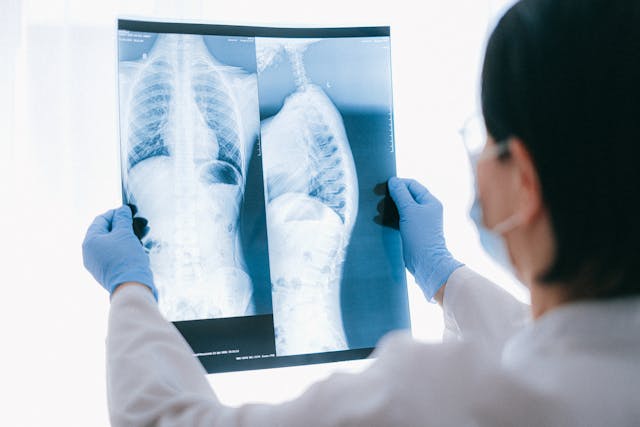
For individual patients, the key messages from this research are somewhat complex. MIP-C appears rare relative to the huge number of people infected with SARS-CoV-2 worldwide, yet its consequences can be severe. The Leeds cohort suggests that clinicians should consider anti-MDA5 testing when people present with certain combinations of symptoms after COVID-19 infection or vaccination. These patterns include new or worsening breathlessness, especially when chest imaging shows interstitial changes; dermatomyositis-like rashes; unexplained Raynaud’s phenomenon; proximal muscle weakness; or a mix of these features. In some cases, CT scans may reveal ground-glass opacities, early fibrotic bands, or pneumomediastinum. Early involvement of rheumatology and interstitial lung disease specialists can help coordinate immunosuppression, pulmonary rehabilitation, and careful monitoring.
Guidance from the Pulmonary Fibrosis Foundation stresses that “persistent symptoms should prompt a medical evaluation for the cause.” Their fact sheets explain that cough, breathlessness, fatigue, or chest discomfort after COVID-19 do not automatically mean ILD. Yet they do warrant assessment when they persist or worsen. Evaluation usually includes a clinical exam and high-resolution CT imaging, with autoantibody panels considered in the right clinical context. Patients who are worried about MIP-C should remember scale and proportion. In the Leeds region, 60 MDA5-positive cases emerged over nearly 5 years of testing for a population of millions. Awareness is important, but panicking does not really help. The most constructive step is to seek timely evaluation for concerning respiratory or autoimmune symptoms. This is especially true when there is a history of COVID-19 pneumonia or other interstitial findings.
The Bottom Line

The MIP-C study sits at the frontier of post-COVID medicine, where clinicians are still defining unfamiliar syndromes. Researchers must balance curiosity with caution, learning from signals without rushing toward sweeping claims. The work benefits from systematic regional antibody testing and careful clinical review of every anti-MDA5 positive case. Mechanistic insights from transcriptomic analyses of independent datasets strengthen the proposed links between COVID-19, MDA5, and autoimmune lung injury.
However, the study’s retrospective design and incomplete infection or serology data limit firm conclusions about causality. Lack of direct transcriptomic profiling from the Yorkshire patients themselves leaves important mechanistic questions still open.
Other groups are closing gaps, including work from Wang’s team in China on post-COVID pulmonary fibrosis risk factors. They highlight how acute disease severity, inflammatory activity, and imaging patterns shape later scarring in vulnerable lungs. Reviews from independent teams also call for stronger biomarkers to separate reversible inflammation from fixed fibrosis after COVID-19. Taken together, these efforts suggest COVID-19 has unmasked a rare MDA5-associated autoimmunity that can drive severe ILD.
MIP-C appears to share core mechanisms with classic anti-MDA5 dermatomyositis but shows distinct demographic and clinical patterns. Both viral infection and RNA-sensing pathways activated by vaccination seem biologically relevant to this New COVID-linked syndrome. Existing evidence does not support blaming vaccines as the main driver of anti-MDA5 positive disease. Large cohort studies instead show vaccination reduces severe COVID-19, which itself fuels many autoimmune and pulmonary complications.
Disclaimer: This article was created with AI assistance and edited by a human for accuracy and clarity.
Read More: COVID’s Long Shadow: Signs the Virus May Still Affect You Years Later