
After years of rumors and shifting timelines, Mel Gibson’s new movie, The Resurrection of the Christ, is finally rolling cameras. The long-planned follow-up to 2004’s The Passion of the Christ began shooting in Rome, has an entirely new principal cast, and now has firm release plans. That’s right, a new actor plays Jesus in Mel Gibson’s movie. Yet the sequel also carries complex expectations because the first film became both a global box office phenomenon and a lightning rod for criticism. In this article, we will look at the latest reporting on the film’s casting, production, and locations. We will also revisit the core disputes that shaped public debate in 2004. We will also learn why it is launching as two films in 2027.
A New Jesus, A New Mary Magdalene, and a Fully Recast Ensemble
In Mel Gibson’s new movie, the major update is the cast. Finnish actor Jaakko Ohtonen, known for The Last Kingdom, is stepping into the role of Jesus, replacing Jim Caviezel. Cuban actress Mariela Garriga takes over as Mary Magdalene, while Kasia Smutniak plays Mary, the mother of Jesus. Peter will be portrayed by Pier Luigi Pasino, Pontius Pilate by Riccardo Scamarcio, and Rupert Everett appears in a small but important role. According to media reports, the production started last week at Rome’s Cinecittà Studios, with the main ensemble recast across the board.
Earlier coverage had suggested certain return cast members from the original, but new reporting has clarified that this will not be the case. Why recast now, though? Well, one source close to the production said that the time jump from 2004 to now would have required expensive CG de-aging. “It made sense to recast the whole film,” the source said, rather than rely on extensive visual effects to match the narrow time window of the Resurrection narrative. That pragmatic decision also gives Mel Gibson some leeway to shape a different tonal palette, since he is not repeating the original film’s exact creative choices.
Filming Has Begun

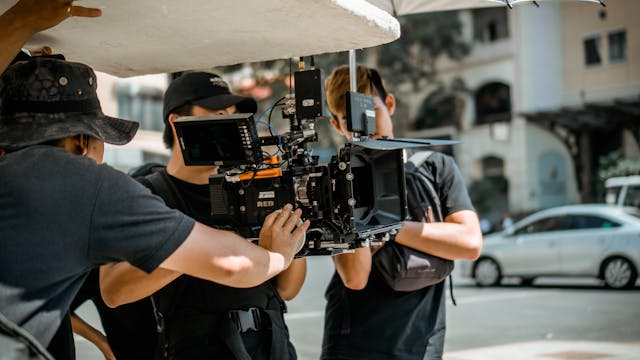
Cameras are rolling at Cinecittà, the same studio where the original Passion movie staged its sets more than 20 years ago. The production is also slated to shoot in the ancient city of Matera and across rural Southern Italian sites, including Ginosa, Gravina di Laterza, and Altamura. Those locations are not just picturesque. They are archeologically textured backdrops with weathered stone, irregular alleys, and high-contrast light that help convey a sense of sacred antiquity without heavy digital augmentation.
This will help make the story feel far more intimate and time-bound. The films will focus on events beginning three days after the crucifixion. That means that the sets, streets, and landscapes must feel immediate and lived-in, rather than grandiose or theatrical. Matera’s pale stone can photograph with austere beauty, while also allowing for controlled night scenes, hilltop staging, and torchlit processions. Cinecittà’s controlled stages, meanwhile, provide the flexibility to design interior spaces that track with the sequel’s reportedly ambitious spiritual and metaphysical sequences.
Two Films, Forty Days Apart
Lionsgate is partnering with Icon Productions to release The Resurrection of the Christ as two separate features in 2027. Part One is slated for Good Friday, March 26, and Part Two for Ascension Day, May 6. The 40-day spacing intentionally mirrors the biblical timeline from Resurrection to Ascension, and it is a sign that the marketing leans into liturgical rhythms rather than generic tentpole patterns. Splitting the project does more than expand runtime. It creates space for the sequel’s broader canvas, which Mel Gibson has described in striking terms. In public comments, he suggested the script ranges across visions of Hell and Sheol, the fall of the angels, and layered narrative perspectives. He memorably called it “an acid trip,” emphasizing how the story steps beyond linear retelling toward metaphysical exploration. That framing suggests bold tonal shifts from the procedural brutality of the first film to sequences that are visionary and symbolic.
What Story Should We Expect?
Although the production is keeping plot specifics under wraps, the setting pretty much reveals what we can expect. The story begins after the crucifixion and moves through reported post-Resurrection appearances, the disorientation of the disciples, and the political fallout in Jerusalem. They are said to be taking a non-linear approach, with vantage points that may include Roman authorities, religious leaders, and the early followers grappling with grief and their beliefs. The premise invites questions about memory and reliability, which may be one reason the filmmakers embraced a new cast. Fresh faces can act as a reset, encouraging audiences to engage the material on its own terms rather than as a direct continuation of performances from 2004.
Mel Gibson’s collaborators have hinted that the narrative will travel across inner states as well as physical locations. If the film realizes that ambition, viewers might see a tapestry of testimony and symbolic imagery rather than a straight chronological diary. Such a structure could also address the hardest creative challenge here. The Resurrection is, by its nature, an event attested by witnesses rather than a scene one can depict empirically. Filmmakers often respond with point-of-view shifts, voiceover testimony, or visionary tableaux. Early descriptions point in that direction.
The Original Movie
So, what about the original movie? Well, the original Passion of the Christ remains a cultural outlier. It ultimately earned more than $610 million worldwide, making it one of the highest-grossing independent films ever, and one of the top R-rated releases in North American history. Yet it was also harshly criticized for its extreme violence and alleged antisemitic framing. That combination of commercial impact and controversy means the sequel will arrive with strong interest and renewed scrutiny. Trade and mainstream sources continue to cite the box office context and the divisive reception. Screen Rant’s longform overview catalogs the main criticism buckets: historical and biblical inaccuracies, depictions that many interpreted as antisemitic, and a level of violence some reviewers called excessive. The article also recaps disputed moments, such as the serpent in Gethsemane and the “demon baby,” which do not appear in the biblical text, as well as debates over the mechanics of crucifixion.
Those details remind us that factual claims and artistic inventions became tightly knotted in the public conversation. Before its 2004 release, the film drew concern from religious and interfaith leaders who saw potential for antisemitic readings. A joint committee from the U.S. Conference of Catholic Bishops and the Anti-Defamation League criticized a script version as “one of the most troublesome texts, relative to anti-Semitic potential,” arguing it presented an “evil cabal of Jews” relentlessly pursuing Jesus. Supporters countered that the movie simply staged Gospel narratives, with some Vatican voices explicitly rejecting the charge of antisemitism. The push and pull illustrate how sensitive interpretive choices can become flashpoints even among committed believers. There was also confusion around a supposed papal endorsement. Reports circulated that Pope John Paul II said, “It is as it was,” after a private screening. The Vatican later tried to clarify that the Pope did not issue public judgments on artworks.
Read More: Prehistoric Dam Unearthed Near Biblical Pool Linked to Jesus’ Miracle
The Question the Sequel Must Answer
The first movie’s violence was not simply a talking point. It also shaped how many people experienced the film both physically and spiritually. Various accounts surfaced of people actually fainting in theaters, and critics debated whether the cruelty portrayed illuminated sacrifice or overwhelmed it. The sequel, by contrast, is believed to pivot from scourging to the liminal space of the Resurrection. If it leans into witness accounts and visionary sequences, it could emphasize the mystery over explicit torment. That rebalancing would not erase the Passion. Yet it might foreground hope, transformation, and commissioning, which many Christian viewers consider central to Easter faith. Gibson himself has hinted at a wider metaphysical scope. He has spoken of sequences that reach into Hell and Sheol, and storylines involving angelic rebellion. If those threads survive into the final cut, audiences should expect tonal whiplash by design, with stark contrasts between grief, fear, revelation, and glory.
The new cast also positions the films to avoid immediate comparison with specific beats of the original. That choice lowers the noise around performance continuity and lets the sequel’s theological fabric carry the weight. Lionsgate’s decision to anchor the releases to Good Friday and Ascension Day is clever counter-programming. Faith-forward audiences often organize around church calendars, which can translate into grassroots group ticketing. The 40-day spacing also invites sermon series, study guides, and community events that bridge Part One and Part Two. For general audiences, the cadence acts like a real-time narrative pause, similar to prestige television finales that split seasons to build anticipation. Trade outlets underline both the symbolism and the risk. The pairing is bold if word of mouth is strong, yet it leaves little room for course correction between chapters. Internationally, the locations and the cast could expand reach.
What the Team Is Saying
Reporters describe Mel Gibson’s pitch in vivid terms. He told a podcast audience the script is unusual, saying he had “never read anything like it”, and likened aspects to “an acid trip.” That description makes it sound like a rather ambitious undertaking, warning viewers not to expect a straightforward docudrama. Separately, a production source said that recasting solved the time-frame problem and spared the production heavy de-aging costs. Those two statements together explain both the aesthetic and logistical pivots. On the 2004 controversies, institutional voices were split. The ADL and Catholic bishops’ committee criticized the script’s antisemitic potential, while some Vatican commentary defended the film as expressing “forgiveness, mercy, and reconciliation.”
The Vatican’s press office also emphasized the Pope’s practice of avoiding public artistic judgments, complicating the “It is as it was” lore. In short, the debate never rested on a single authority. It unfolded across communities that read the same text with different emphases. So, what happens next? First, we can expect some footage to leak from the location work in Matera and the surrounding towns. Those glimpses will reveal how natural light and stone architecture are helping to create an authentic atmosphere. Second, the production at some point will confirm additional characters from Acts or early church tradition, which could indicate how far the story moves beyond Easter morning. Third, expect the film’s marketing to focus on hope, witness, and transformation. That emphasis would both help distinguish the sequel and address past criticism that the first film focused on suffering over redemption. Finally, take note of how interfaith groups respond to early materials, because that will likely shape the wider conversation.
Read More: Is the ‘Exact Date’ of Jesus’ Return Near? Biblical ‘Signs’ Point to Doomsday