
On the 1st of October, 2025, reports of a new wave of COVID infections being driven by a variant often nicknamed Stratus started circulating. Early research has revealed that children who are infected more than once face a higher risk of long COVID. Additionally, a pediatric analysis suggests that a second infection can double the odds of post-COVID problems in subsequent months. Those findings are part of a pattern emerging across hospital networks in the U.S., U.K., Europe, and Asia.
In these areas, the new COVID variant known as Stratus has become dominant or co-dominant. According to health authorities, there are no signs that the Stratus COVID variant is more severe than prior Omicron strains. However, they do warn that the sheer number of cases can potentially translate into more total hospitalizations. Furthermore, they note that there is also the possibility of lingering symptoms in a minority of patients, including young people.
What is the Stratus COVID Variant?
Stratus is the informal name for a family within the Omicron tree called XFG and its descendants, such as XFG.3. Reports indicate that XFG was first detected in early 2025 in Southeast Asia and spread to dozens of countries by June. It then rose rapidly during late summer and early autumn as people started returning to schools and work. The World Health Organization lists XFG as a variant under monitoring. This category is used when a lineage exhibits mutations that warrant closer tracking, but without evidence of more severe disease compared to prevailing variants.
American hospital systems and university medical centers reported that Stratus accounted for a considerable share of cases by early September. This was consistent with CDC variant proportion data that showed the XFG family displacing the summer lineage called Nimbus. In the United Kingdom, a similar pattern emerged, with the UK Health Security Agency describing XFG and XFG.3 as the most common lineages in current circulation. Clinically, Stratus causes the same kinds of symptoms seen with other Omicron variants of COVID. Doctors have reported upper airway symptoms such as sore throat, hoarseness, congestion, headache, muscle aches, cough, and fever.
Some reports describe an unusually scratchy or razor blade style throat early in illness. However, many cases are otherwise mild in those who are up to date with vaccination. Yet, this does in no way mean that Stratus is harmless. The rise in cases increases pressure on clinics, emergency rooms, and schools. The new COVID variant’s main advantage appears to be its improved immune escape ability. This means that it can infect people who have prior immunity through vaccination or a past infection. These mutations seem to help it slip past antibodies, potentially raising case counts even if the typical severity remains similar.
The Stratus COVID Variant Spreads Quickly

Several independent data streams reveal a similar overall picture. Testing and sequencing in clinics show XFG, or Stratus, on top in many places. Wastewater trends in the United States climbed through September, right as schools went back and people spent more time indoors. Hospital and university updates reveal the same pattern in their own labs. Taken together, all these sources have indicated that Stratus overtook Nimbus in late summer and early autumn of 2025. One large, NIH-supported analysis included more than 460,000 individuals under 21 treated across a network of about 40 pediatric hospitals. The researchers found that a second COVID infection raises long COVID risk. In fact, it roughly doubled the chance of long COVID.
The study used careful methods to balance differences between children who had one infection and those who had two. It found an elevation in risk regardless of the severity of the second acute illness. Even though once infected, children could still develop persistent symptoms, vaccination was still protective at the population level. However, doubling risk does not mean that most children will develop long COVID after a second infection. Only a small number of children actually develop long COVID. That said, the pediatric study fits with other literature indicating that repeated infections carry cumulative risks for some long-term issues.
How Long COVID Affects Children and Teens

Long COVID refers to symptoms that persist or recur for weeks to months after the initial infection. Classic symptoms include fatigue, exertional intolerance, persistent cough, headaches, dizziness, chest pain, sleep issues, and issues concentrating. Studies in the past year have emphasized that the symptom profile for very young children can look different. For toddlers, you may observe sleep disruption, fussiness, behavioural changes, low energy, poor appetite, and a dry cough that lingers. Health teams have urged parents to actively monitor for these patterns, since children cannot always express how they feel.
If a child is not bouncing back as expected two to four weeks after isolation ends, a pediatric follow-up is warranted. The same is true if school or sports are causing unusual exhaustion and shortness of breath. Many children improve with time, symptom control, gradual return to activity, and proper sleep. A small number end up requiring specialty care for cardiac, respiratory, neurologic, or autonomic symptoms. Ultimately, preventing infection and reinfection remains the simplest way to reduce long COVID risk, even if most second infections are mild.
How the new COVID Variant Compares to Earlier Waves

Nimbus grabbed the world’s attention over the winter and spring for causing very sore throats and its rapid spread. However, XFG has shown a higher growth advantage in several locations since late August. Multiple newsrooms report that XFG and its child lineages, especially XFG.3, have outcompeted NB.1.8.1 in the United Kingdom. At the moment, the health authorities still rate the additional public health risk from XFG as low at the global level. This is because the severity and hospital outcomes appear similar to the recent Omicron waves. While this may seem like a contradiction to some, there is an important aspect to keep in mind.
A variant can be more successful at spreading while not being intrinsically more severe, yet still raise the total number of hospital visits because more people get sick at once. Vaccination still reduces the risk of severe disease, emergency visits, and hospitalization from the Omicron lineages that are currently circulating. It also reduces the chance of infection at the population level. The 2025 to 2026 COVID vaccine formulations were released on the 1st of September, 2025, and national medical groups recommend them for people six months and older. Very often, the vaccination uptake lags if people think that COVID has disappeared. However, that perception often changes once schools and universities see attendance fall due to respiratory illnesses in September and October.
How to Protect Yourself and Others
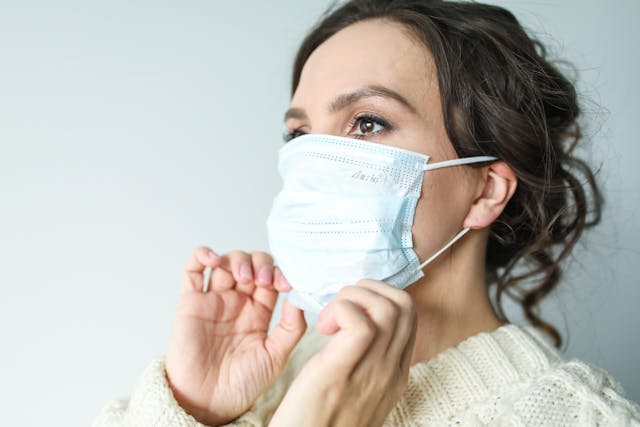
For crowded indoor spaces with poor ventilation, a well-fitted respirator or high filtration mask adds a valuable layer of protection. This is especially true during periods of high wastewater levels or school outbreaks. Using portable HEPA units and opening windows on mild days can lower the risk of COVID and other respiratory viruses. These steps help protect vulnerable family members and reduce repeated exposures that can add up across a school term. Keep your vaccinations up to date, and schedule both the 2025 to 2026 COVID vaccine and the seasonal influenza shot. Some families prefer to separate visits by a week or two to better track side effects.
The most important point is to complete both. If the classroom is crowded or an outbreak is reported, consider a high-filtration mask during the spike. Even a week or two of consistent masking during a peak can reduce the likelihood of infection while the wave passes. Using rapid tests can still identify many infectious cases during the first several days of symptoms. If your child is symptomatic but tests negative on day one, retest on day two or three. If the symptoms persist beyond two to four weeks, ask your pediatrician about long COVID assessment.
The Additional Risks of Reinfection

Each new infection is another chance to develop long COVID. If you avoid infection entirely during a wave, your risk of long COVID from that wave is zero. If you do get infected, most children will recover fully within weeks, but a small percentage will not. Additionally, repeat infections make that small percentage larger. Families cannot stop the dynamics behind the spread of variants, but they can lower their risk. Vaccination, ventilation, masking, and smart decisions about gatherings during high-risk periods all help lower risk.
UKHSA states that while XFG is common and growing, current vaccines are expected to retain protection against severe outcomes. While the Stratus COVID variant appears to spread easily and dodge antibodies better than some predecessors, it has not demonstrated a step change in its virulence. That does not mean it is worse in severity than prior Omicron waves, but it does mean that you will see it frequently in classrooms, dorms, and offices. So, basically, be vigilant, but don’t panic.
Other Diseases that Could Lead to Another Pandemic

COVID is not the only disease that could potentially result in another pandemic. For example, H5N1 is now widespread in wild birds and poultry worldwide. In 2024 and 2025, the virus also infected U.S. dairy cattle, and several farm-linked human infections were detected in exposed workers. At the moment, the health authorities still consider the overall public risk low. However, the biggest concern is people with close, unprotected animal exposure. While raw milk remains risky and is discouraged, FDA testing has not found live virus in pasteurized dairy products. Luckily, candidate vaccines and antivirals exist if wider spread ever occurs. Another candidate is Mpox, which never fully went away after 2022. Most recent global attention focuses on clade I and a new offshoot called clade Ib. In early 2025, China reported a cluster linked to a traveler from the Democratic Republic of the Congo.
Transmission of the disease is through close physical contact, including intimate contact, sharing items, or prolonged face-to-face exposure. The symptoms include fever, headache, swollen lymph nodes, and a characteristic rash. While most cases are typically mild, severe disease can occur in some cases. Nipah is a bat-borne virus that causes severe disease in some patients. It spills over to people through contact with infected animals, contaminated food, or close contact with patients. Kerala State in India has experienced repeated, tightly managed outbreaks. In 2025, health officials confirmed new cases and one death, with the contacts subsequently traced and monitored. WHO notes that Kerala has recorded multiple outbreaks since 2018, although usually quite limited in size. At the moment, there is no licensed vaccine for general use. Therefore, outbreak control relies on early detection and supportive care.
Read More: Father Shares Experience of Illness Following Pfizer COVID Vaccine, Discusses Recovery
The Problem with Antimicrobial Resistance

Drug-resistant germs are an ever-growing problem that spreads quietly. Common bacteria like E. coli and Staph are learning to evade antibiotics. That makes routine care, from stitches to chemo, a little riskier. Hospitals also face stubborn threats like Candida auris. How did we get here? Basically, we used too many antibiotics. Additionally, new medicines are not arriving fast enough, and the old ones do not work as well anymore. Travel and trade help these resistant strains move across borders. Climate shifts can change where disease-carrying insects and animals live. That gives germs new chances to spread.
Routine infections that were once easy to treat can now mean longer hospital stays and higher costs. Doctors must sometimes use stronger drugs that have more side effects. Families feel the impact when a simple infection drags on for weeks. This is a slow-moving crisis that touches everyday life, not just rare outbreaks. So, how do we attempt to fix this issue? Well, there are a few ways that we can do so. You should only use antibiotics when truly needed. Finish the course exactly as prescribed. Never use leftovers or share pills. Medical institutes need to improve infection control, ventilation, and cleaning in healthcare.
We can also expand rapid diagnostics so doctors can target treatment. Invest in vaccines that prevent infections outright. Governments can also strive to strengthen wastewater and genomic surveillance to spot the spread early. Support incentives for new antibiotics and alternative tools like phage therapy. Farmers can reduce antibiotic use in livestock and improve animal health through hygiene and vaccines. Hospitals can track resistance patterns and share data quickly. Patients can ask simple questions, such as whether an antibiotic is really needed today. Ultimately, this is a marathon, not a sprint, yet action now prevents a crisis later.
The Bottom Line

Reinfections are not just background noise. They matter, especially for kids and teens. The newest pediatric data points to a simple idea. A second COVID infection can roughly double the chance of long COVID, even if the illness itself feels mild. That does not mean panic. It means smart habits during busy virus seasons. Stratus is spreading because it dodges some existing immunity, not because it suddenly became more dangerous. Health agencies still judge the added risk as low overall.
What should families do with that information? Keep it practical. Stay up to date on vaccines. Check your local wastewater or health department updates to see when levels are rising. In crowded indoor spaces, lean on clean air and good masks, especially during peaks or when visiting vulnerable relatives. If a child is not bouncing back after an infection, ask your pediatrician about a paced return to activity and symptom support. These are the steady lessons from the Omicron years. They let kids stay in school, play sports, and see friends while trimming the odds of a lingering setback. No single step is perfect, but together they stack the deck in your favor. The same playbook works for Stratus, too.
Disclaimer: This article was created with AI assistance and edited by a human for accuracy and clarity.
Read More: Could Your Allergy Nasal Spray Double as a COVID Shield?