
If you have ever caught your finger in a heavy door or spent an afternoon wielding a shovel without gloves, you are likely familiar with the sudden, sharp sting of a blister forming. But while most blisters are filled with a clear, straw-colored fluid, sometimes a dark, ominous-looking red or purple bubble appears instead. This is a blood blister. While they can look alarming, often resembling a small, dark bruise trapped under a bubble of skin, blood blisters are generally the body’s way of protecting itself. They are a common dermatological occurrence, yet they frequently cause more anxiety than a standard friction blister due to their color and the pain associated with the initial injury. Consider this your comprehensive guide to blood blisters. We will explore everything you need to know: how they form, how to tell them apart from other skin conditions, the best ways to treat them at home, and the critical signs that indicate it’s time to seek professional medical help.
What Exactly Is a Blood Blister?
To understand a blood blister, you first have to understand the anatomy of a standard blister. Most blisters (known as friction blisters) occur when the top layer of skin, the epidermis, separates from the layer beneath it, the dermis. The space between these layers fills with serum. This is the clear component of blood that leaks out of surrounding tissues to provide a cushion for the damaged area. A blood blister follows the same mechanical process, with one key difference: vascular damage. When a blood blister forms, the force of the injury is strong enough to rupture the tiny blood vessels (capillaries) near the surface of the skin. Instead of just serum filling the gap between the skin layers, blood leaks in as well. This gives the blister its characteristic dark red, purple, or even black appearance.
Common Locations
Because they are caused by pressure or pinching, blood blisters are most frequently found in the following places:
- The hands: Particularly the fingertips, palms, and joints.
- The feet: Specifically, the heels, the balls of the feet, and the toes.
- The mouth: Sometimes caused by accidentally biting the cheek or tongue (though these require different care than skin blisters).
Common Causes: How They Happen
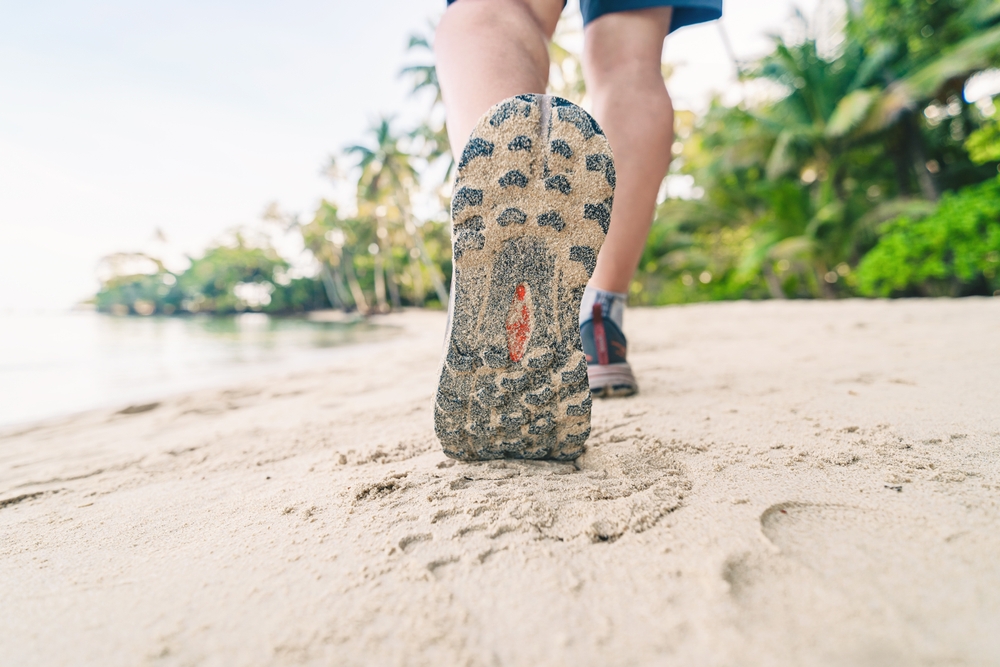
Blood blisters rarely happen out of nowhere. They are almost always the result of a specific physical trauma. Understanding the cause can help you prevent future occurrences.
1. Pinching Injuries
The most classic cause of a blood blister is a pinch or crush injury. This happens when the skin is caught between two hard surfaces. Common scenarios include:
- Catching a finger in a drawer or a car door.
- Using pliers or heavy tools where the skin gets caught in the hinge.
- Heavy machinery accidents.
2. Intense Friction
While light friction usually causes a clear blister, sudden and intense friction can rupture capillaries. This is common in athletes, particularly rowers, weightlifters, or runners, who may experience a sudden shift in their equipment or footwear that “grabs” the skin with significant force.
3. Impact Trauma
A direct blow to the skin, such as being hit by a hammer or a fast-moving ball, can cause a blood blister. The force compresses the skin layers and bursts the underlying vessels without necessarily breaking the surface of the skin.
4. Chemical or Environmental Exposure
In rarer cases, exposure to certain chemicals, frostbite, or extreme heat can cause the skin to blister and bleed internally. These are often more serious than a standard pinch blister because the damage may extend deeper into the tissue.
Identifying the Symptoms
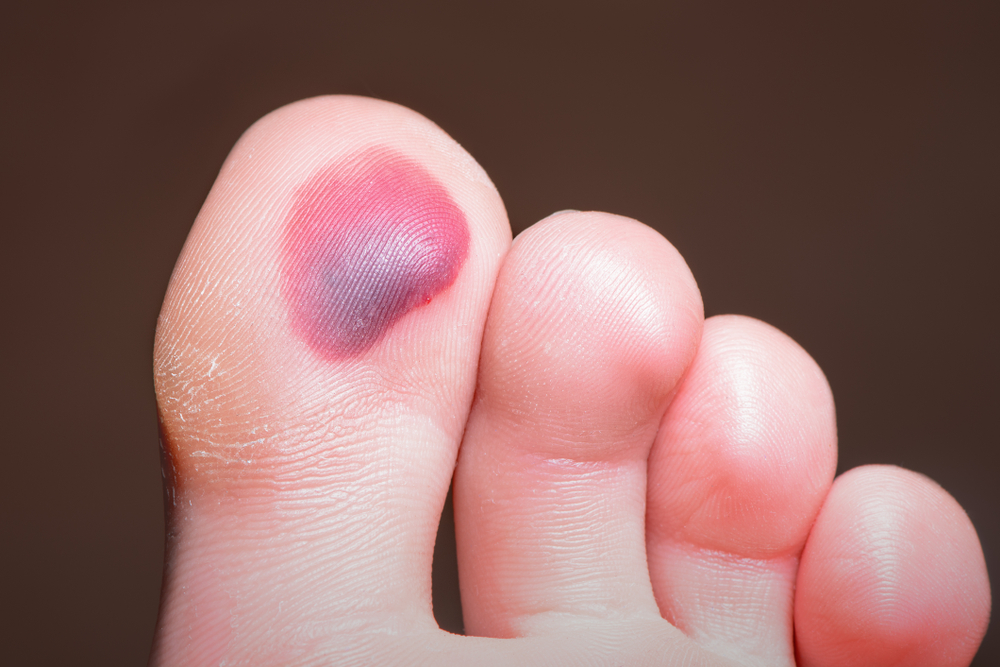
Identifying a blood blister is usually straightforward, but it is important to distinguish it from other skin conditions like moles, warts, or even melanoma.
Physical Appearance
Initially, the blister will look bright red in color. As the blood ages and loses oxygen, it will turn dark purple, maroon, or black. Blood blisters are usually circular or oval-shaped domes raised above the skin. Unlike a bruise, which is flat and underneath the skin, a blood blister is a raised pocket containing liquid.
Sensory Symptoms
Most blood blisters are painful immediately after the injury. The pressure of the fluid against the nerve endings in the dermis can cause a mild to heavy throbbing sensation. The area around the blister may be red, warm, and sensitive to the touch. As the blister begins to heal and the skin dries out, it may also become itchy.
The “Golden Rule” of Blister Care: Do Not Pop It
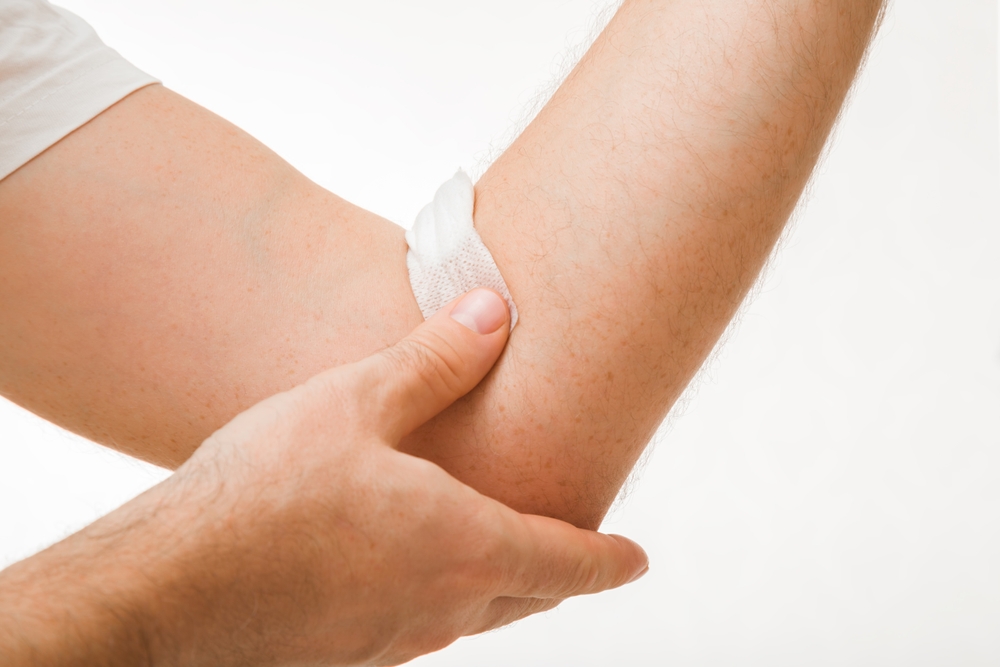
If there is one piece of advice every doctor and dermatologist agrees on, it is this: Do not pop a blood blister. While it may be tempting to drain the fluid to relieve pressure, popping a blood blister creates an open wound. The roof of the blister acts as a natural, sterile bandage. By breaking that seal, you are inviting bacteria into a raw area of skin that is already compromised. Furthermore, because a blood blister involves broken blood vessels, popping it can lead to more bleeding and a higher risk of systemic infection.
Why the Fluid is Important
The fluid inside the blister is actually a “healing cocktail.” It contains white blood cells that fight off potential pathogens and growth factors that encourage the skin underneath to regenerate. When you leave the blister intact, the body eventually reabsorbs the fluid, and the old skin dries up and peels off naturally once the new skin underneath is ready.
How to Treat a Blood Blister at Home
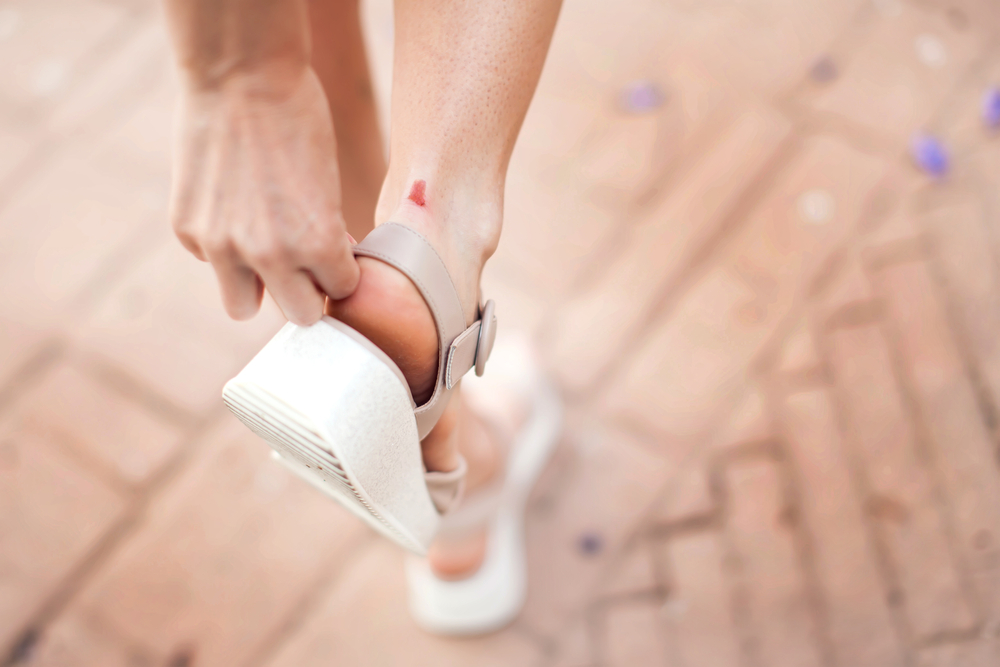
Image Credit: Shutterstock
If you have a blood blister that isn’t showing signs of infection, you can manage it easily with basic first aid. The goal is to protect the blister until it heals on its own.
Step-by-Step Home Care
- Clean the area: Gently wash the blister and the surrounding skin with mild soap and water. Do not scrub; you don’t want to accidentally rupture the skin.
- Apply cold compression: If the injury just happened, apply an ice pack wrapped in a towel for 10 to 15 minutes. This helps reduce swelling and can minimize the amount of blood that leaks into the blister.
- Elevate: If the blister is on a hand or foot, keeping the limb elevated can help reduce the throbbing and pressure.
- Protect with a bandage: Cover the blister with a loose bandage. For blisters in high-friction areas, like the heel, for example, you may want to use a “donut” bandage. This is a piece of moleskin or thick gauze with a hole cut in the center. The “donut” surrounds the blister, taking the pressure off the bubble itself.
- Avoid friction: Switch to looser shoes or avoid the activity that caused the injury for a few days.
When It Pops On Its Own
Sometimes, despite your best efforts, a blister will burst. If this happens, do the following:
- Let the fluid drain naturally.
- Do not peel off the loose layer of skin. Flatten it back down over the wound.
- Apply an over-the-counter antibiotic ointment.
- Cover it with a sterile, non-stick bandage and change the dressing daily.
When to See a Doctor
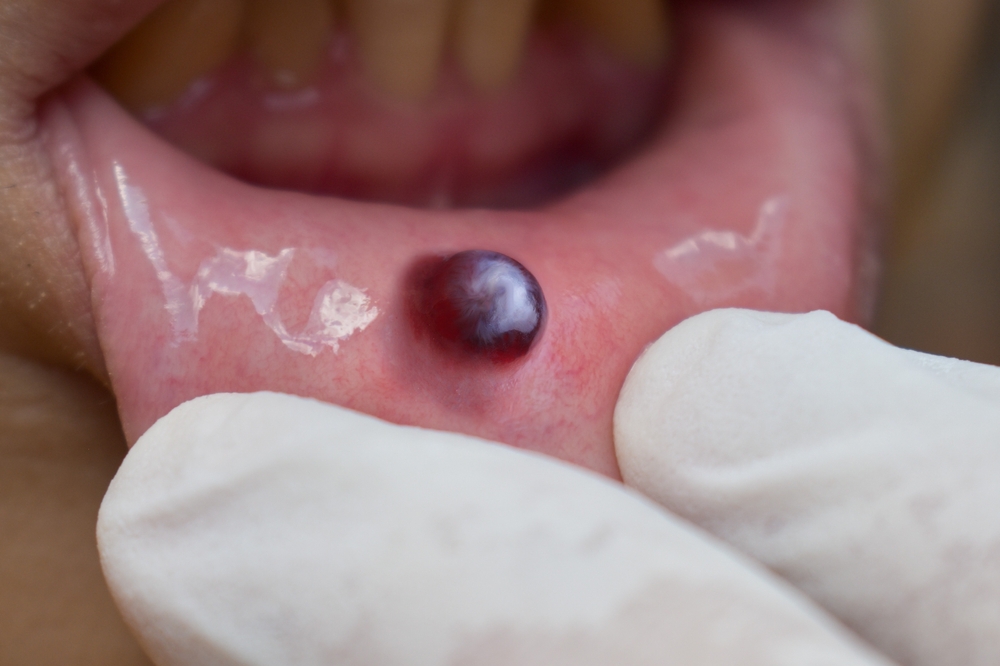
Image Credit: Shutterstock
While most blood blisters are minor annoyances, some situations require professional medical intervention. You should schedule an appointment or visit urgent care if you experience any of the following:
1. Signs of Infection
If bacteria enter the blister, it can lead to a localized infection or, in rare cases, cellulitis (a deeper skin infection). Watch for:
- Pus: If the fluid becomes cloudy, yellow, or green.
- Increased heat: The area feels hot to the touch.
- Red streaking: Red lines extending outward from the blister (this is a medical emergency)
- Fever or chills: Systemic symptoms that suggest the infection is spreading.
2. Size and Location
If the blister is larger than a nickel or is located in a spot that makes movement impossible, a doctor may choose to drain it in a sterile environment. Injuries near mucous membranes, the eyes, or the mouth should be evaluated to ensure there is no more serious damage. Finally, any blister in the genital area should be examined by a professional, as it may be a symptom of an STI rather than a friction injury.
3. No Known Cause
If you wake up with multiple blood blisters and you cannot remember a specific injury, this is a major red flag. Unexplained blisters can be a symptom of a few conditions. These include blood disorders and issues with clotting or low platelet counts, nutritional deficiencies, specifically severe vitamin C or B12 deficiencies, or drug reactions, as some medications can cause skin eruptions.
4. Chronic Conditions
If you have diabetes or a compromised immune system, you should never treat a blister, even a small one, without consulting your doctor. Poor circulation in the feet can turn a simple blood blister into a non-healing ulcer very quickly.
Prevention: Keeping Your Skin Safe
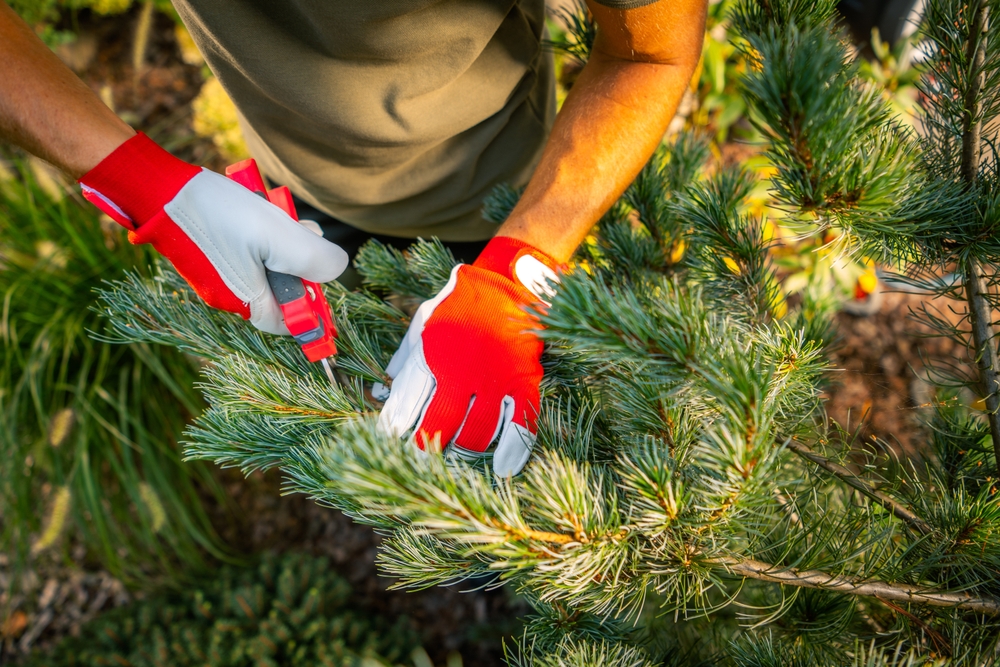
Prevention is always better than treatment. Most blood blisters can be avoided with a few simple precautions. These include:
- Using gloves: When using hand tools, gardening, or lifting weights, high-quality gloves provide a layer of protection against pinches and friction.
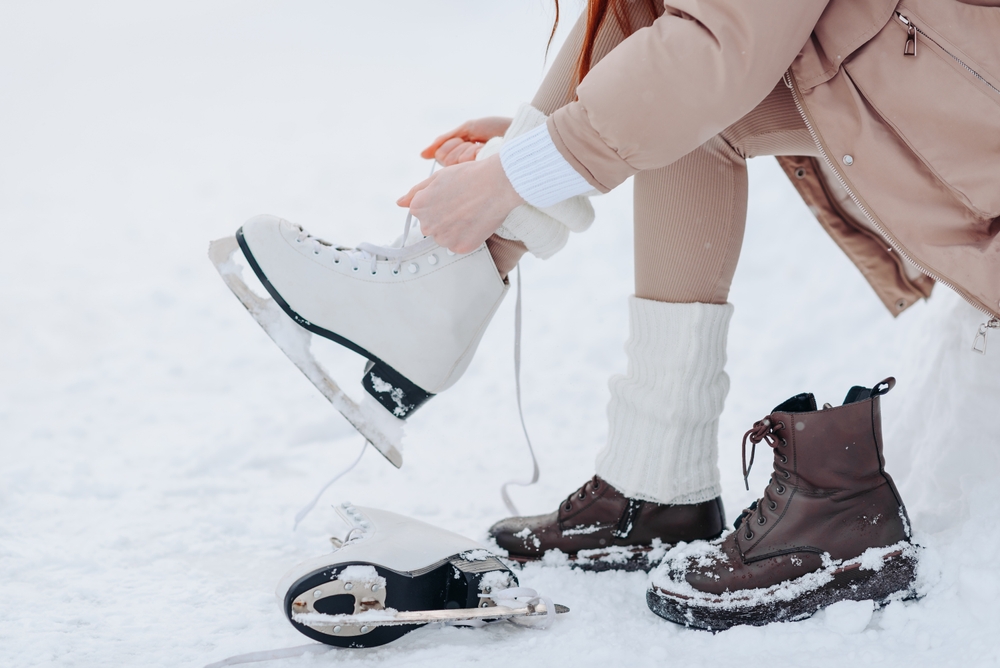
- Proper footwear: Ensure your shoes fit correctly. Shoes that are too tight can pinch the skin, while shoes that are too loose cause the friction that leads to blisters.
- Moisture management: Use moisture-wicking socks or anti-chafing balms if you are an athlete. Sweaty skin is more prone to tearing and blistering.
- Tool safety: Be mindful of where your fingers are when using pliers, clamps, or closing heavy doors.
Summary of Care
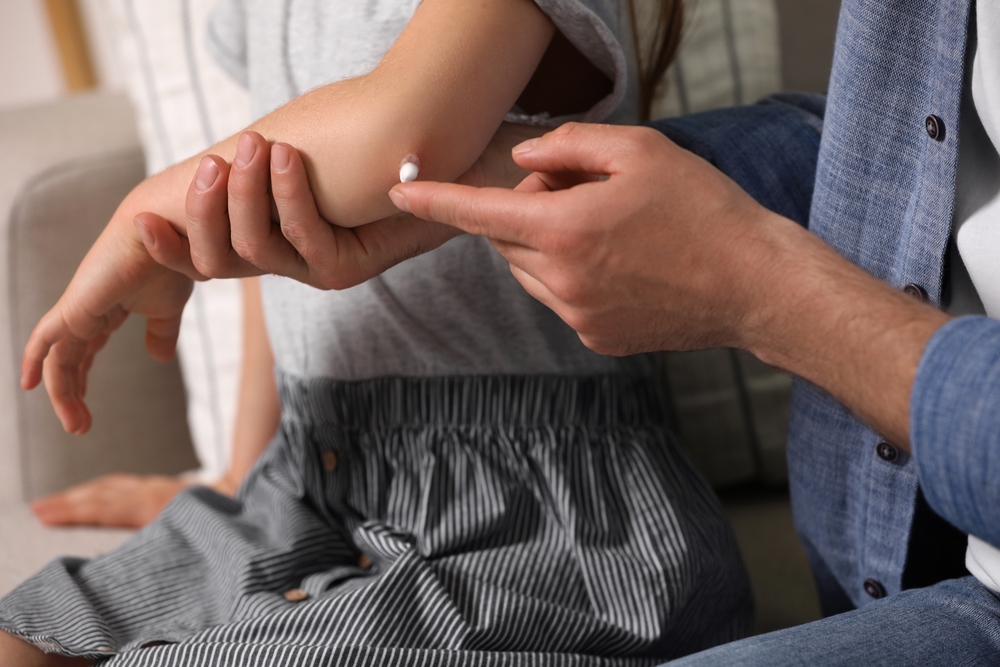
In brief, the ideal care for a blood blister should be icing the area immediately upon injuring it, if possible. Clean the area gently and keep it elevated. Cover the area with a loose, sterile bandage or donut pad. Do not pop the blister. Wait for the body to reabsorb the fluid; this usually takes one to two weeks. In the meantime, watch for pus, red streaks, or fever, as these can indicate a more serious condition and the need for medical intervention.
The Bottom Line
Blood blisters are a visceral reminder of our body’s incredible ability to protect itself. While that dark, swollen bubble might look scary, it is actually a highly sophisticated “internal bandage” designed to keep the environment beneath the skin sterile while repairs are underway. By resisting the urge to pop the blister and providing it with a clean, cushioned environment, you allow your body to complete its healing process efficiently. Most blood blisters will resolve themselves within a week or two, with the dark spot eventually drying up and flaking away to reveal fresh, healthy skin underneath. Remember that your skin is your body’s first line of defense. If a blister looks unusual, appears without cause, or shows signs of infection, do not hesitate to seek medical advice. Keeping an eye on the healing process and practicing good safety habits will ensure that a minor pinch doesn’t turn into a major problem.
Read More: The Virus That Lurks for Years Until Your Body Can No Longer Keep It in Check