
Cuba’s worsening shortages have pushed humanitarian aid back to the center of the island’s daily reality. In March 2026, two separate developments drew unusual international attention. China confirmed that the first shipment of a 60,000-ton rice donation had left for Cuba, while an international aid convoy reached Havana with food, medicine, solar panels, bicycles, and other supplies. Those moves arrived during a period of severe blackouts, fuel scarcity, water disruptions, and mounting pressure on hospitals and households. Official and major news sources also show that this aid did not emerge in a vacuum. It landed in a country already struggling with food access, damaged infrastructure, and a shrinking supply of energy.
The aid, however, carries two meanings at once. On one level, it offers practical relief to people facing shortages of basic staples and essential services. On the other hand, it shows how fragile Cuba’s supply system has become, as rice, medicines, fuel substitutes, and emergency equipment increasingly depend on outside assistance. The World Food Programme has already warned in its Cuba strategy papers that the country faces persistent food security and nutrition pressures, while PAHO has documented continuing water and health disruptions after Hurricane Melissa. Against that backdrop, every shipment now carries more weight than its cargo alone might suggest.
China’s rice shipment arrived with both scale and symbolism
The China story drew notice because the shipment was large, immediate, and tied to a broader emergency package. Granma, the official newspaper of Cuba’s Communist Party, reported in January that China had approved €80 million in emergency financial assistance along with a “donation of 60,000 tons of rice in emergency mode.” Then, on March 19, the Cuban embassy in China said the first shipment had set sail, and CiberCuba reported that the donation had already left for the island. Those announcements gave the story a clear timeline. First came the pledge in January. Then came the movement of food in March, when shortages had already become harder for Cuban families to ignore.
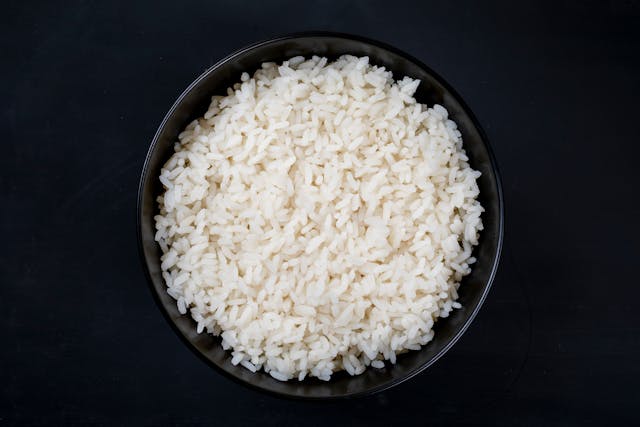
Rice holds unusual weight in Cuba because it is not a side item. It sits near the center of daily eating habits, ration calculations, and household budgets. CiberCuba noted that the staple had grown increasingly scarce and often sold at prices many people could not afford. That context explains why the Chinese shipment quickly became more than a diplomatic headline. It spoke directly to the most ordinary question in a difficult economy, which is whether a basic meal can still be assembled at a cost families can manage. When a government must rely on foreign partners for such a central food item, the shipment becomes a measure of need as much as generosity. The shipment also revealed how humanitarian aid now overlaps with infrastructure stress.
The January package was not limited to food. It also included money meant for electrical equipment and other urgent needs, according to both Granma and CiberCuba. That pairing was telling. Cuba did not simply need calories. It needed support for the systems that keep food moving, preserve medicine, and sustain basic public services. By March, blackouts had become so frequent that food storage itself had become a daily risk. A rice shipment can relieve pressure, but it cannot run refrigeration, restore transport schedules, or stabilize distribution on its own. China’s assistance, therefore, arrived as both relief and diagnosis. It helped, yet it also exposed the depth of the strain. Chinese support also carried a clear political message. According to CiberCuba’s account of the embassy post, the first shipment “sets sail for Cuba,” and the announcement stressed Chinese “solidarity” while saying that “Cuba is not alone.”
Those words framed the cargo as more than a commercial transaction. They cast it as a public statement of alignment at a time when Cuba faced both domestic stress and sharper international pressure. Yet whatever message Beijing intended, the practical value of the food remained obvious. In a country where shortages have become part of ordinary planning, 60,000 tons of rice reach people first as dinner, ration support, and temporary breathing room. Politics travels with the shipment, but hunger gives it urgency. For many Cubans, that urgency has become the true measure of foreign aid. It is judged less by ceremony than by whether cupboards fill, ration pressure eases, and one more week passes without another sacrifice at the table at home.
The convoy to Havana showed that aid is now coming from many directions
If the Chinese shipment reflected state-to-state support, the international convoy showed a different lane of assistance. Reuters reported that Cuba received a humanitarian shipment on March 24 from the Nuestra America Convoy, an international effort organized by activists. The first vessel arrived from Progreso, Mexico, with 14 tons of food, medicine, solar panels, and bicycles. Reuters also reported that the sea delivery added another 6 tons that activists had already flown in during the previous week for hospitals. AP described the convoy as part of the “Our America Convoy to Cuba,” with more than 650 participants from 33 countries. Those figures turned a symbolic visit into a visible transnational operation.
The material on board reflected Cuba’s current emergency with unusual accuracy. Food addressed scarcity. Medicines responded to the hospital strain. Solar panels pointed straight at the electricity crisis. Bicycles offered a practical answer to transport problems caused by fuel shortages and service cuts. NBC Miami, carrying AP reporting, summarized the cargo in simple terms, noting solar panels, food, and medicine for cancer treatment among the donated supplies. In other words, the convoy did not arrive with abstract gestures. It arrived with items matched to the failures most visible across the island. That practical mix helps explain why even relatively modest tonnage drew strong coverage. The goods were chosen for a country whose systems now break at several points at once.
Even the people involved showed how wide the concern had spread. AP reported the participation of British parliamentarian Jeremy Corbyn, Colombian Senator Clara López, Spanish politician Pablo Iglesias, U.S. labor leader Chris Smalls, and members of the Irish group Kneecap. Reuters said nearly 300 groups from more than 30 countries were involved. That reach matters because Cuba’s crisis can sometimes appear isolated or trapped inside old ideological language. The convoy disrupted that impression. It brought politicians, activists, and aid supporters to the island in person, and it did so while blackouts and shortages dominated local life. Their presence did not solve the emergency, but it made the island’s condition harder to ignore abroad. Still, even supporters of the convoy described its scale honestly.
AP quoted activist Thiago Ávila saying, “These ships are a drop in an ocean of need.” That line gave the effort credibility because it admitted the limit. The convoy mattered. Yet nobody serious could mistake 14 tons on one vessel for a fix to a nationwide supply, energy, and transport crisis. Reuters struck a similar note when it described the delivery as largely symbolic, even while acknowledging its humanitarian value. Symbolic aid can still help real people, especially when hospitals need medicine and homes need food. But the convoy’s power lay as much in visibility as in volume. It showed that help was arriving, while also showing how much larger the need had grown. That breadth of participation gave the convoy added moral weight because it showed Cuba’s hardships were no longer a regional concern, but a humanitarian issue crossing ideological and geographic lines.
Cuba’s emergency runs deeper than one shipment or one convoy
The reason these aid stories landed so hard is simple. Cuba’s shortages now cut across food, fuel, transport, and public services at the same time. The World Food Programme’s draft Cuba country strategic plan for 2026 to 2030 states that “significant food security and nutrition challenges remain.” The same document says the country faces constraints in importing and producing food and other essential goods, and links those pressures to inflation, weakened purchasing power, and recurrent disasters. That is an important baseline because it comes from a multilateral agency planning its work over several years, not from a single dramatic news cycle. The agency’s view suggests that Cuba’s current emergency did not begin this month, even if March brought sharper evidence of it.
WFP’s draft also describes an average household diet that is often inadequate in energy intake and insufficiently healthy or diverse. That language carries weight because it moves beyond temporary inconvenience. It points to long-running pressure on nutrition itself. When households lose access to variety, they often lose resilience too. Any new shock then hits harder. That is why rice donations matter so much. They support the most basic layer of food access. Yet they also reveal a narrower food basket and a supply system with less room for disruption. A country can endure scarcity for a long time. It struggles much more when scarcity reaches staple foods and intersects with power, water, and transport breakdowns.
🇨🇺🤝🇨🇳 The first badge of the 60 thousand tons of rice offered by the People’s Republic of China, sets sail towards #Cuba.
In response to adversity, the solidarity of true friends prevails and demonstrates that #CubaIsNotAlone. pic.twitter.com/hSq1lynnen
— EmbaCuba China (@EmbacubaChina) March 19, 2026
Energy sits near the center of the current spiral. AP reported that Cuba’s Deputy Minister of Energy and Mines, Argelio Abad Vigo, said the country had gone three months without supplies of diesel, fuel oil, gasoline, jet fuel, and liquefied petroleum gas. AP also reported that Cuba produces barely 40% of the fuel it needs. Reuters and AP both tied recent aid coverage to severe blackouts and a crumbling power grid. AP separately reported that the island suffered its third nationwide blackout of March on March 21. Once fuel becomes scarce, the problem no longer stays inside the energy sector. It reaches water pumping, refrigeration, transport, hospital operations, work schedules, and food preservation.
That is why humanitarian relief for Cuba now carries an unusual burden. A rice shipment must do more than feed people. It must fill gaps created by a weak domestic supply. Medicine must move through a system strained by power failures. Solar panels must compensate for a grid that cannot deliver stable electricity. Bicycles must substitute for transport options weakened by fuel scarcity. Aid can soften each of those pressures, yet it cannot fully reverse them. The deeper problem lies in the overlap between shortages. When one system breaks, it pushes extra demand onto the others. That overlap helps explain why outside help now arrives in many forms at once, and why even generous contributions struggle to look large enough. Their presence also helped turn a modest delivery into an international statement of attention, reminding Cuban families that the island’s crisis was being witnessed, discussed, and answered beyond its shores.
Health care and water shortages make every delivery more urgent
PAHO’s recent updates show why Cuba’s emergency cannot be measured only by food statistics. In a January 29 report on recovery after Hurricane Melissa, PAHO said it had coordinated a sustained flow of medical and technical support to Cuba between October 2025 and January 2026. The agency listed pneumonia kits, Interagency Emergency Health Kits, medical backpacks, generators, power plants, fuel pumps, tents, water purification tablets, and donated medicines. Those details matter because they reveal the state of the health system behind the headlines. Agencies do not send generators and water purification supplies unless routine service is already under strain. By early 2026, PAHO was still helping stabilize services months after the storm.
The same PAHO report offered one of the clearest descriptions of the water problem. It said, “Access to safe drinking water remains a major concern.” PAHO added that, as of late December, nearly 500,000 people still relied on tanker deliveries because water systems remained disrupted, with 50 systems still out of service in Santiago de Cuba. Reuters reinforced that picture on March 20, reporting that Havana residents were queuing for water as electricity shortages disrupted pumping and distribution. Once water access becomes this unstable, the humanitarian challenge expands quickly. Families spend more time securing water. Hygiene becomes harder. Hospitals face greater pressure. Food preparation becomes more uncertain. Aid enters that environment as practical support, not ceremonial cargo. Health services face similar pressure from overlapping failures.
PAHO’s recovery reporting made clear that its support aimed to stabilize health services and address emerging risks. WFP’s Cuba page also states that the suspension of fuel supplies from Venezuela has disrupted essential services in Cuba and complicated recovery after Hurricane Melissa. In that setting, medicine shipments do more than restock shelves. They help prevent interruptions inside facilities already working through power instability, damaged systems, and supply uncertainty. The same logic applies to food assistance for hospitals and vulnerable groups. Nutritional support becomes part of the health system support when routine access to safe food and power has weakened. This is why the convoy’s medical cargo drew attention far beyond its weight. NBC Miami’s coverage highlighted medicine to treat cancer among the donated items, while Reuters noted that earlier air deliveries had already gone to hospitals.
Those details suggest the aid was aimed at visible stress points, not general publicity. In ordinary times, a donation to one hospital may register as local news. In Cuba’s current climate, medicine, generators, and water-related support tell a larger story about system vulnerability. They also explain why outside partners keep mixing food aid with equipment. A hospital cannot protect patients with medicine alone when electricity fails, and water access remains unstable. The crisis turns almost every delivery into a package deal. That is why even small deliveries can carry outsized significance in Cuba’s present moment. A water pump, a box of antibiotics, or backup power for one clinic can protect far more than immediate comfort. It can preserve treatment schedules, reduce infection risk, and buy strained communities precious, practical time today.
Aid offers relief, but Cuba still faces a larger test
The strongest conclusion from this week’s developments is not that aid has solved Cuba’s emergency. The island now requires several types of relief at once. AP reported that countries including Mexico, China, Brazil, and Italy, along with U.S. non-governmental groups, have sent aid. The same report said Caricom would send powdered milk, medical supplies, and water tanks through Mexico. Reuters described the convoy as an effort to get around restrictions that have sharply limited Cuba’s access to fuel and other goods. Seen together, those reports show a widening map of concern. More governments, blocs, and civic groups are stepping in because the pressures have become too obvious to ignore.
Yet scale remains the hard question. One ship carried 14 tons. Earlier flights brought 6 tons. China’s 60,000-ton rice donation is much larger, but it still sits inside a national emergency defined by shortages in several sectors. Cuba continues to face recurring grid failure, fragile water service, limited fuel, transport disruption, and pressure on food access. The challenge, therefore, goes beyond securing donations. It involves getting supplies where they are needed, protecting cold chains, keeping hospitals operating, and preventing the next blackout from erasing the benefit of the previous delivery. Humanitarian relief for Cuba has become a race against multiple failures moving at once.
Read More: How China’s Three Gorges Dam Is So Huge It Slows Earth’s Rotation – 15 Key Facts
Distribution will also shape whether outside help changes daily life. AP reported that international aid is usually distributed free of charge by the state through stores used by Cubans to buy food, unless donors specify a destination such as medicine for hospitals. That detail brings the conversation back to ordinary households. Food aid only gains its full value when people can actually access it in predictable ways. The same is true for medical aid, water supplies, and electrical support. Donors can move cargo. Systems on the ground must still turn cargo into relief. That is the less dramatic part of the story, yet it decides whether headline-making solidarity becomes measurable improvement. For now, the image that remains is simple and powerful. A rice shipment leaves China, a flotilla reaches Havana.
A country under severe strain receives food, medicine, solar equipment, and public declarations of support. One Cuban retiree told AP, “The help is important for us,” and that plain sentence carries more force than any slogan. It captures both gratitude and shortage in the same breath. Cuba’s emergency has reached a point where aid matters immediately, even when it cannot solve everything. The island now stands in a difficult space between emergency relief and long-term repair. This week’s deliveries brought relief. They also showed how much ground still lies ahead. Even so, the real test will come after the headlines fade. Cuba will still need functioning grids, reliable fuel, steady imports, and distribution systems that reach vulnerable people quickly. Aid can ease immediate suffering, yet recovery depends on whether those deeper weaknesses stop turning every shortage, storm, or blackout into another national emergency for ordinary families across the island today.
A.I. Disclaimer: This article was created with AI assistance and edited by a human for accuracy and clarity.
Read More: 2050: The World We’ll Inherit if Climate Change Continues Unchecked