
When ants cover an animal’s body, it’s usually because the creature is dead. But that’s not always the case when it comes to birds. Some species allow ants to crawl over their wings and feathers in a process called anting. Crows in particular are known for taking part in this trend. Birdwatchers and wildlife photographers have long been aware of anting, but researchers have yet to understand the reasons behind it.
Types of anting
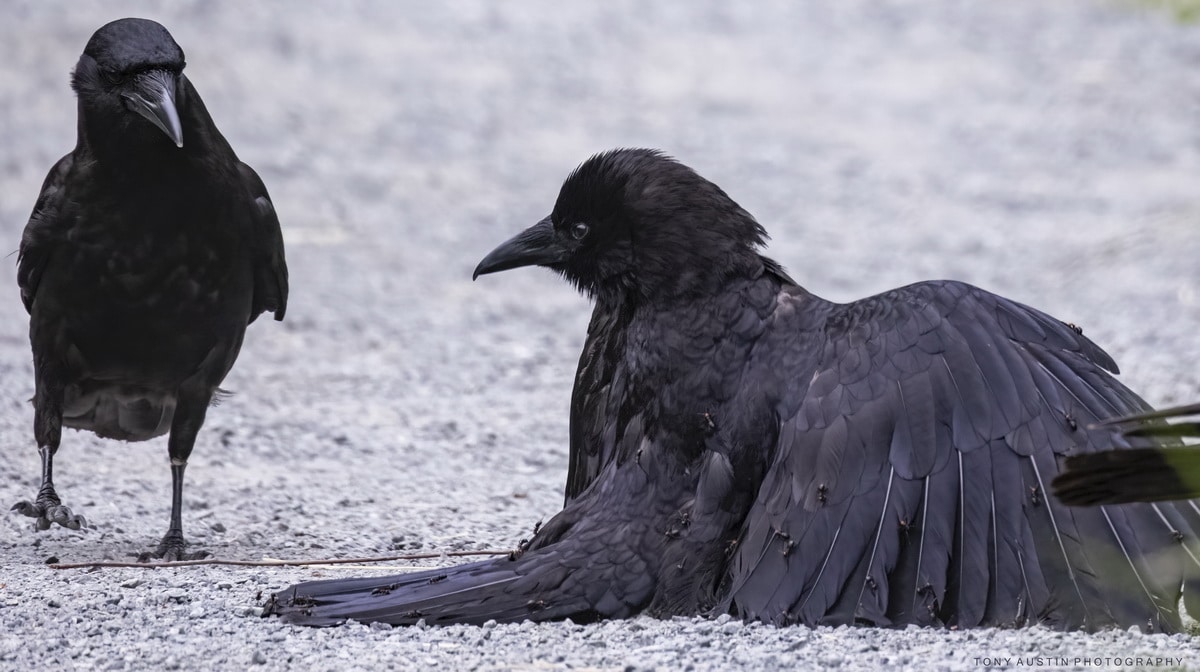
Anting tends to come in two forms. One is when the birds pick up ants with their beaks and rub it on themselves. The second is when they sit on an anthill and wait for the ants to crawl up their feathers. Photographer Tony Austin managed to capture the latter at Swan Lake Nature Sanctuary in British Columbia, Canada. During a nature walk, a murder of crows landed next to him. He pulled out his camera and noticed that one bird was acting strangely.
Capturing a bird’s odd behavior
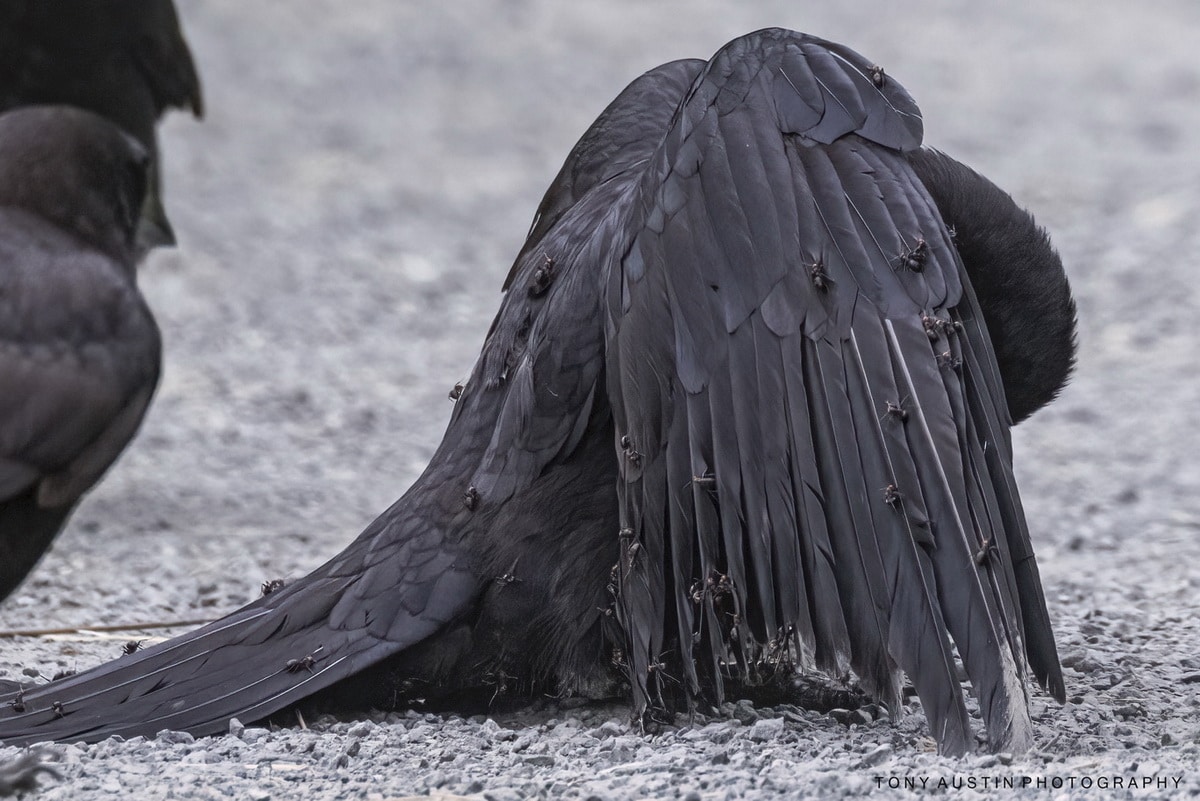
“One bird out of the group seemed to be taking a dust bath, but it appeared to be a bit more frantic than normal, with its wings splayed out on the gravel,” said Austin to My Modern Met. “The crow would leap into the air, land in the brush by the path and then jump back onto the dirt path.” He first thought the bird was in distress but his kin didn’t react, and after a few minutes they all flew off to the trees.
The crow landed on an anthill
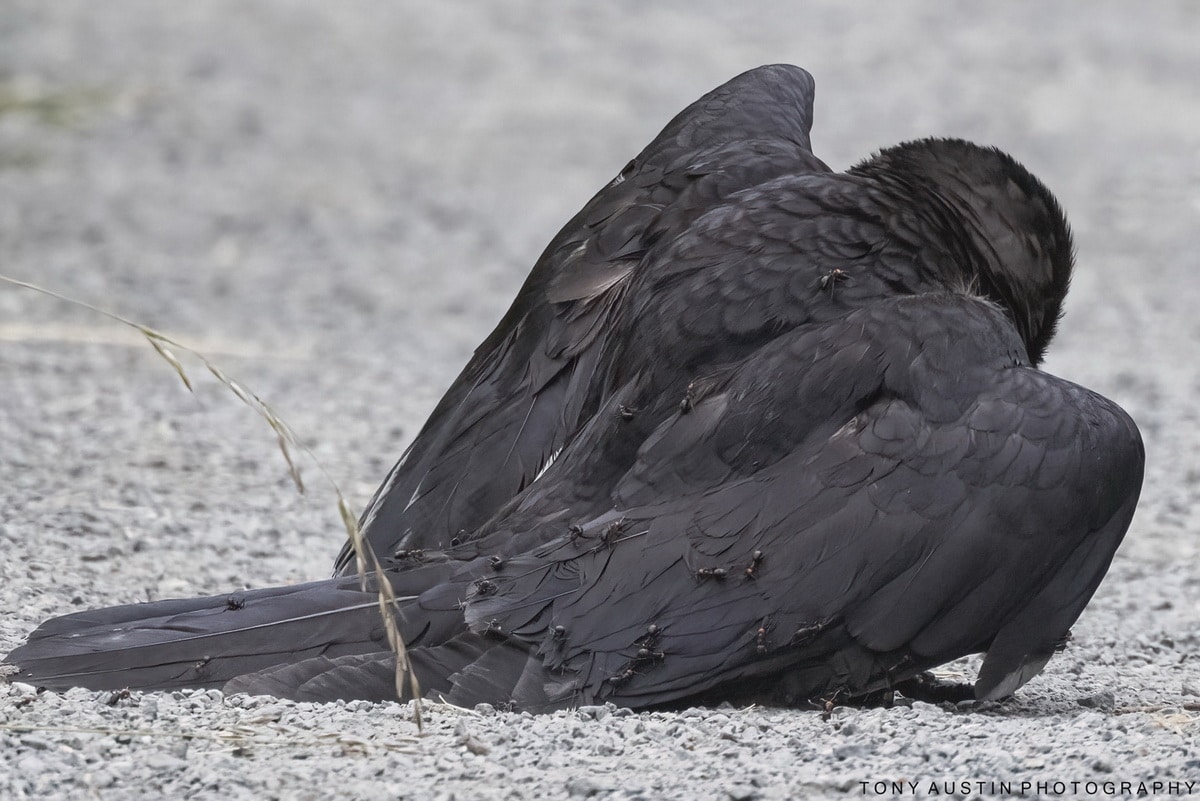
Austin had no idea he had witnessed an obscure, unexplained behavior until he arrived home. “Because it was a bit of a gray day and this was a black bird on a white background (path) I was unable to see the ants on the bird and it wasn’t until I got home and started editing the photos that I saw the ants.” His first thought was that the bird had made an unfortunate mistake. “On seeing the ant-covered crow, I was stunned and thought that the crow had just made a poor choice in choosing to land on an anthill!”
Attacked by ants?
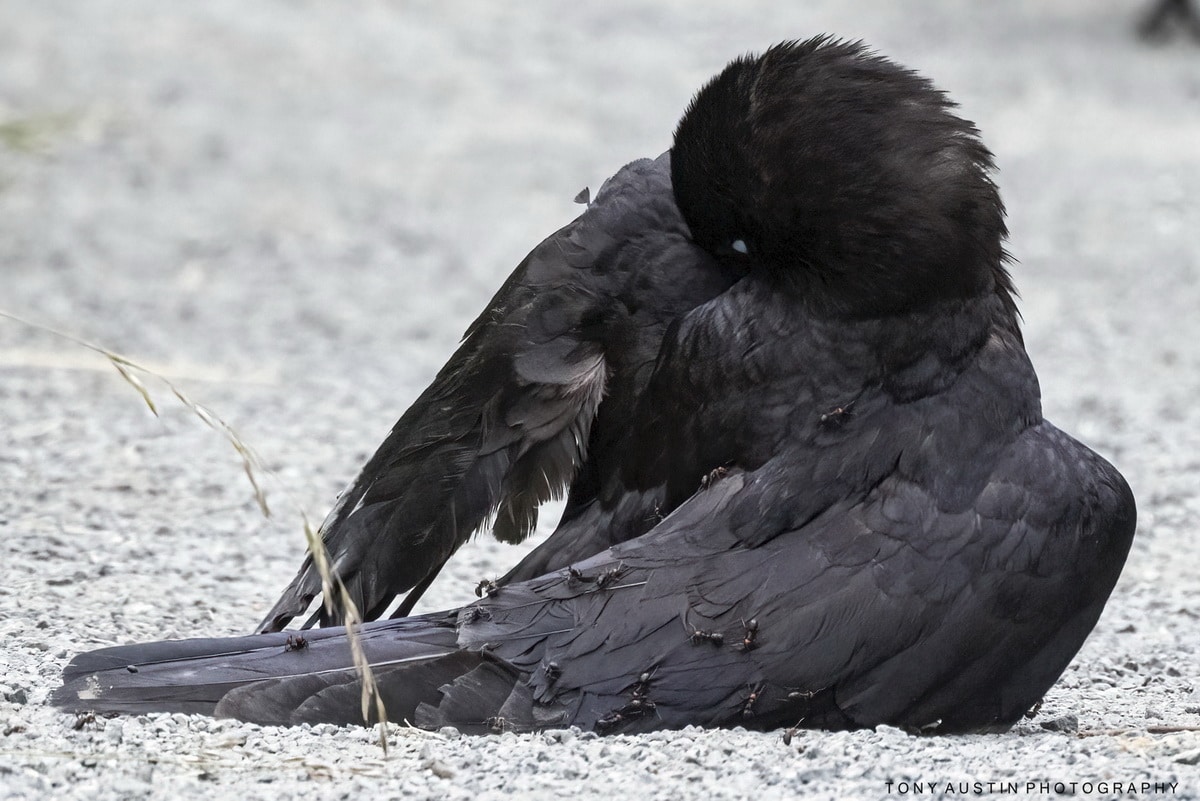
He posted the photos on a Facebook group for local wildlife photographers, according to NPR. Many people were similarly confused by the behaviors and some were worried the crow was being attacked by the insects. However, a few identified the act of anting, which was first observed in the 1830s when James Audubon saw turkeys engaging in it. According to a 2021 review in the Journal of Ornithology, over 200 bird species all over the world participate in anting, or doing similar practices with ant substitutes.
Read More: How Certain Birds of Prey Deliberately Ignite Wildfires
Theories on “anting”
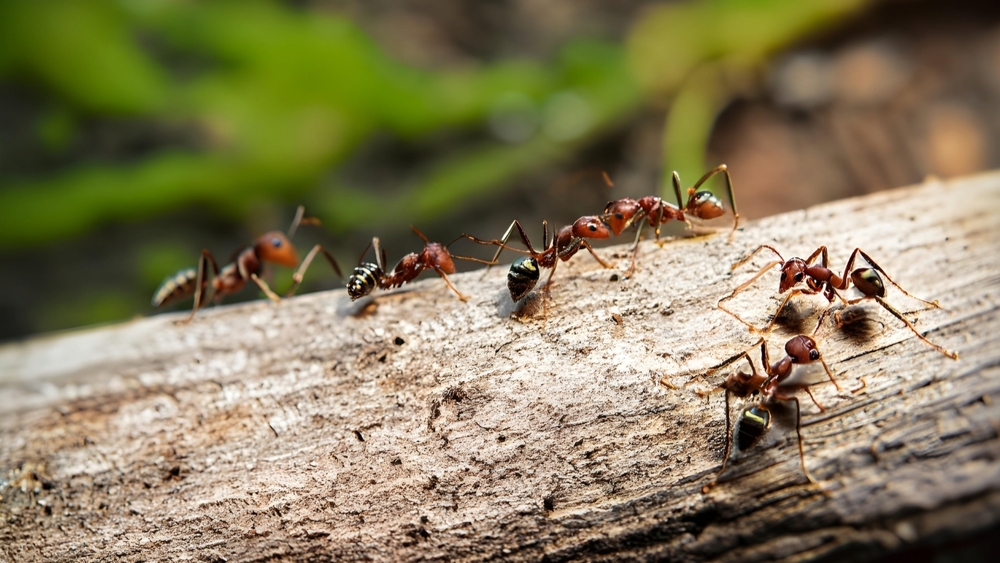
Although scientists don’t know exactly why birds do anting, they have some theories. One of the most common is that ants help soothe irritated skin after intense feather molting. Another theory is that the ants reduce parasites on the plumage. When ants are afraid, they discharge a spray containing formic acid. In laboratory settings, this acid can kill lice and mites, although there’s no evidence it could eliminate them on birds. Alternatively, it’s a grooming method or a sensory stimulation tool. The birds may also use the process to remove the formic acid so the ants taste better, according to a study on Blue Jays.
Types of “ant substitutes”
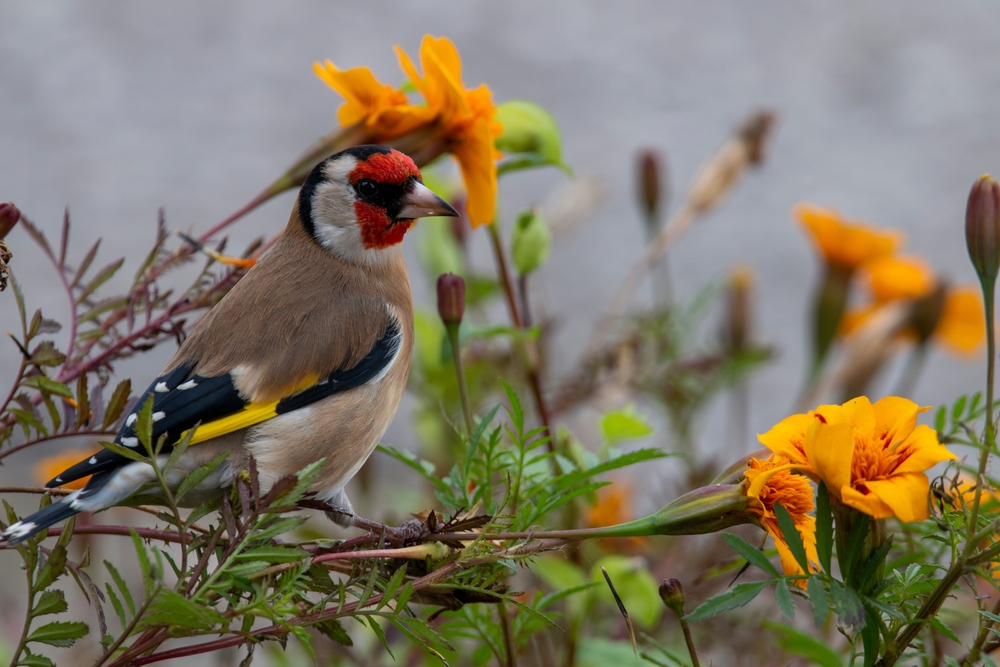
Birdwatchers and gardeners have seen birds “anting” with other creatures and substances. This includes bombardier beetles and millipedes, which excrete insecticidal chemicals similar to ants. They’ve also used marigolds, which contain a natural insecticide called pyrethrum, or mothballs, which contain naphthalene, another natural insecticide. And birds have used the rinds of citrus fruits that have chemicals, namely d-limonene and citronellol, that can ward off insects.
More “anting” birds
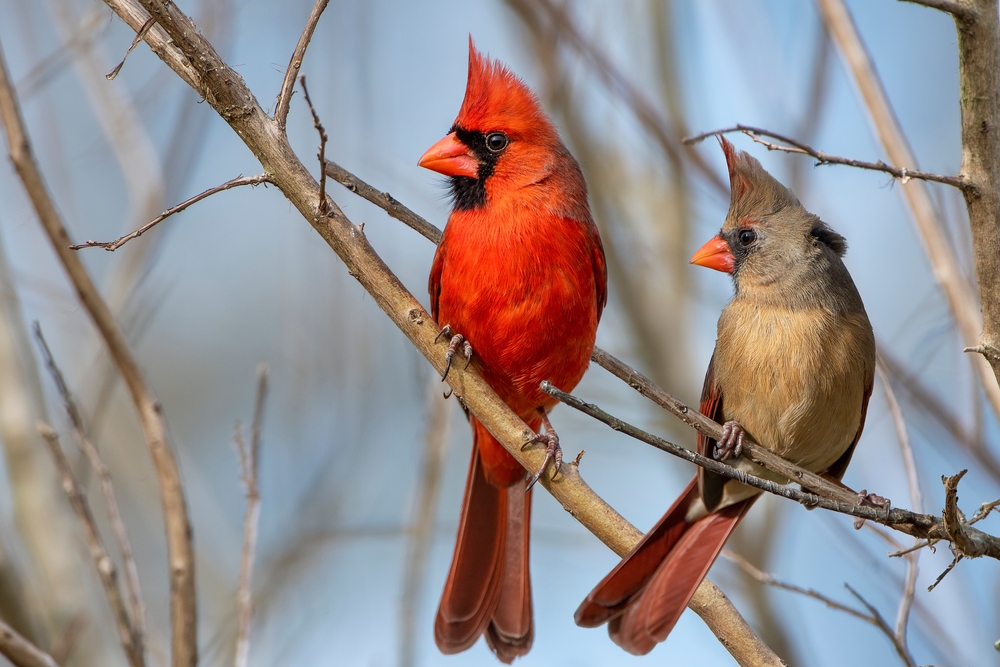
If you are a birdwatch hoping to catch a glimpse of this curious behavior, look out for these birds on your nature walks. According to Bird Watching Daily, they are among the most common species that “ant.”
- American Crow
- American Robin
- Baltimore Oriole
- Cedar Waxwing
- Common Raven
- Great Horned Owl
- House Sparrow
- Northern Cardinal
- Northern Mockingbird
- Red-winged Blackbird
- Wild Turkey
- Wood Thrush
Thank you to “that crow and his ant companions”
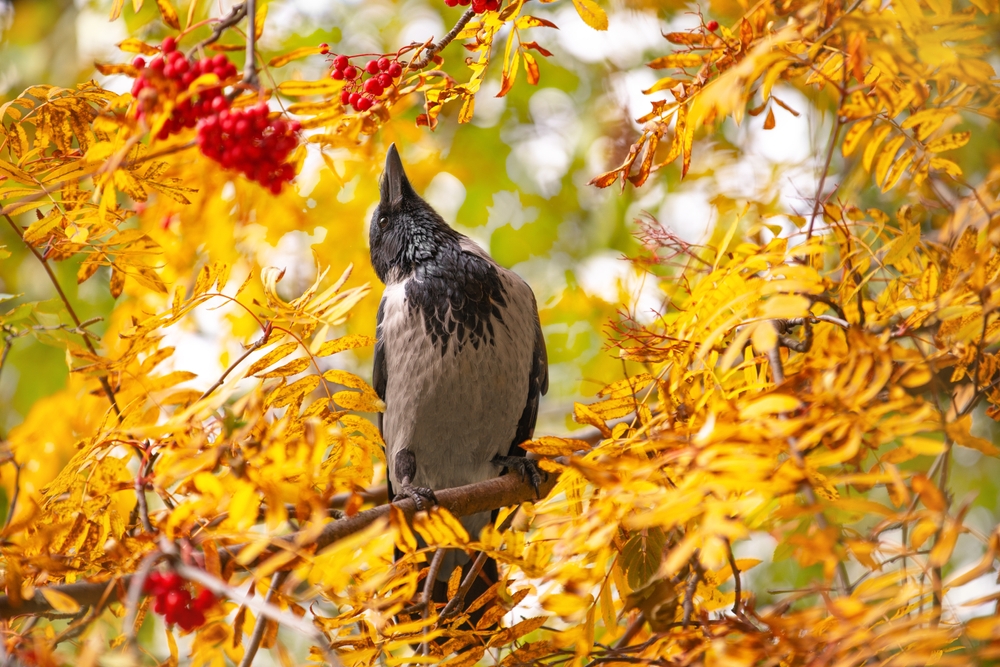
The crow photoshoot is among Austin’s most well-known works. “I’ve spent a lifetime taking photos and it’s always been my passion,” said Austin. “…So it is immensely gratifying to be able to share this shot of a little-seen and even less understood behavior with so many others.” Wildlife photography involves a lot of patience and luck. For birds especially, photographers often need to identify bird calls, field marks, and hotspots. In rare instances, such as Austin’s, the birds appear as if they want to be captured on film. “I do also feel a great debt of gratitude to that crow and his ant companions for giving me a moment I will long remember,” he said.
Read More: Crows Are Capable of Conscious Thought, Scientists Demonstrate For The First Time