
Around the Christmas period, most families are preparing for the festivities by hanging decorations, planning dinner parties, and thinking about Christmas presents. However, for Orthodox Christians and Catholics, Christmas brings a centuries-old tradition that offers families something deeper than presents and decorations. For observing Orthodox Christians, it is a pillar of importance to have their homes blessed and sanctified. Periodically, especially on religious days, it is customary for practicing Christians to have their homes blessed.
Most home blessings traditionally take place in the weeks following Theophany, which is the commemoration of Christ’s baptism in the Jordan River by John the Baptist. It is also the time of year when holy water is blessed in association with the waters of the Jordan. However, if scheduling permits, home blessings can take place throughout the year at any time.
Home blessings are meaningful rituals rooted in Christian practice since medieval times. These ceremonies invite families to gather intentionally and acknowledge the sacred within their daily living spaces. Three specific rituals guide families through this ancient practice today. These rituals, which are done on Epiphany or during the Christmas period, include the blessing of the chalk, sprinkling holy water around the house, and prayer before the Nativity.
Understanding the History and Meaning Behind Home Blessings
Home blessing traditions hold deep theological meaning within Christian communities. These ceremonies began with the early Church and were formalized throughout medieval Europe when priests regularly visited parishioners’ homes after Epiphany. The practice rests on biblical foundations, particularly the Passover account in Exodus 12. Ancient Israelites marked their doorposts with lamb’s blood for divine protection during the tenth plague in Egypt. The Church transformed this biblical practice into a Christian ritual, using blessed chalk and holy water instead of blood.
As parishes grew larger, priests became unable to visit every home personally. The responsibility shifted to families themselves, making home blessings accessible to all baptized believers. According to the Book of Blessings, anyone baptized can lead a home blessing “in virtue of the universal priesthood, a dignity they possess because of their baptism and confirmation.”
Both Catholic and Orthodox Christian traditions maintain this practice with regional variations. In Poland, the tradition called “Kolęda” involves a priest’s visits after Epiphany. Italian families perform blessings on Christmas Eve or Epiphany. Orthodox communities emphasize Theophany water blessings with particular spiritual weight.
Traditionally, only priests possess the sacramental authority to formally bless holy water, chalk, and homes through their ordained ministry. The head of the household, however, carries baptismal graces that enable him to invoke blessings upon his family and dwelling using these sacramentals.
How to Perform a Holy Water Blessing in Your Home
Holy water has been used in Christian practice since the early Church, with documented use appearing in the Apostolic Constitutions from 325 AD. Priests combine water with salt, each element carrying spiritual symbolism within the tradition. Water represents purification and cleansing, while salt symbolizes enduring protection and preservation. Before blessing your home, obtain holy water from your local parish priest or church. Most parishes distribute blessed water during the Christmas season and Epiphany celebrations in early January. You can also request water blessed specifically for home use during any parish Mass.
Step-by-Step Guide For Sprinkling Holy Water
Begin at your home’s main entrance and gather all family members present. Move deliberately through each room of your home in order, pausing briefly in each space to sprinkle water while reciting a prayer. Be sure to include all the rooms in the house. This includes bedrooms, kitchen, bathrooms, living areas, and closets.
As you move through your home, recite this traditional blessing: “Lord Almighty God, bless this home and all who dwell herein with health, peace, and your protection.” Alternatively, sing Christmas hymns or pray the rosary as you progress through each room. Involve all family members in this ritual when possible. Involve children by having them help carry the water vessel or recite prayers alongside the adults.
After sprinkling holy water throughout the home, the priest or household leader will recite: “”O Lord, Almighty God, bless this house that it may become a shelter of health, chastity, self-conquest, humility, goodness, mildness, obedience to the commandments, and thanksgiving to God, Father, Son and Holy Spirit. Upon this house and those who dwell herein may Your blessing remain forever, through Christ our Lord.” All respond: “Amen.” Once the house has been thoroughly blessed, end the ritual at the front door where you began the blessing.
The Ancient Practice of Chalk Marking on Your Doorway
The blessing of the chalk is a centuries-old tradition with strong biblical roots, deeply tied to the Passover in the book of Exodus. Associated with the Feast of Epiphany, the blessing of the chalk also commemorates the Three Wise Men’s or Magi’s visit to Jesus in Bethlehem. Families mark their front door’s lintel with a special inscription using chalk. For 2026, families write: “20 + C + M + B + 26” directly onto the doorframe above the door. The numbers represent the current year while the letters carry dual significance in Christian tradition. C, M, and B represent the names of the Three Wise Men: Caspar, Melchior, and Balthazar. These same initials stand for the Latin phrase “Christus mansionem benedicat,” which translates to “May Christ bless this house.”
While details on the traditions’ true origins remain obscure, the practice resonates with the story of the Israelite exiles of Egypt during the era of Moses. In the story, an angel of the Lord was to pass over the homes in Egypt to kill every firstborn. To avert the death of their firstborns, the Israelite exiles marked their doors with lamb’s blood, making them safe from persecution.
Chalk does not require a priestly blessing to be spiritually effective, though many parishes offer blessed chalk during the Epiphany season. If your parish provides blessed chalk, take advantage of this opportunity. If not, any clean chalk works perfectly for marking your doorway. You can use any color chalk based on your preference and what contrasts with your door.
Step-by-Step Instructions for Chalk Blessing
Gather your family at the front door with chalk in hand. Invite children to help inscribe each letter and number onto the lintel. As they mark the doorframe with 20 + C + M + B + 26, recite the following prayer word for word: “The three Wise Men, Caspar, Melchior, and Balthazar, followed the star of God’s Son who became human two thousand and twenty-six years ago. May Christ bless our home and remain with us throughout the new year. Amen.”
Once the inscription is complete, you can optionally sprinkle holy water on the chalk markings if available to further sanctify the marking. Finally, conclude the ritual by singing “We Three Kings of Orient Are” together as a family to seal the blessing and mark the completion of your home’s protection for the year ahead.
Gathering Your Family for Prayer at the Nativity or Altar
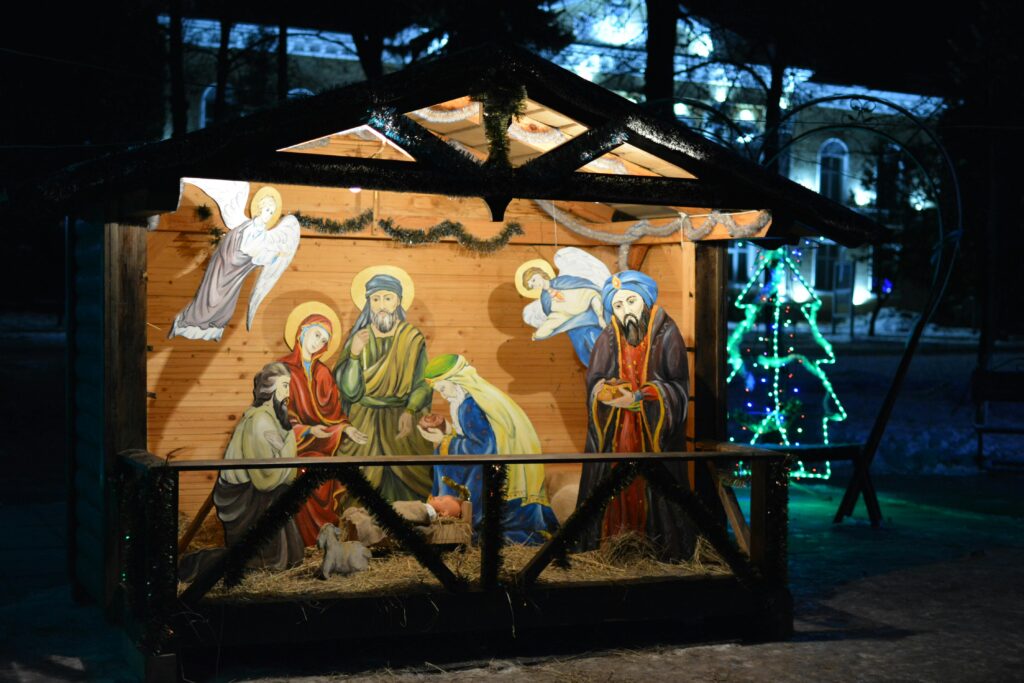
Catholic and Orthodox families perform the nativity scene blessing during the Christmas season as prescribed in the Book of Blessings. This ritual requires families to gather around their nativity scene or home altar for collective prayer. Assemble all family members in the space where your nativity sits. If you do not have a nativity scene, set up a small table with candles and religious icons to serve as a focal point.
Orthodox tradition views the family as a “domestic church” where the home altar serves as the spiritual center. Turn off all televisions, radios, and electronic devices before beginning. The household leader starts the blessing by saying, “God’s peace be in this home.” All family members respond: “And in all who live here.” The leader continues with the antiphon: “The star burned like a flame, pointing the way to God, the King of kings; the wise men saw the sign and brought their gifts in homage to their great King.” The family then recites the Magnificat from Luke 1:46-55 together.
Step-by-Step Guide For Nativity/Altar Blessing
Assemble your family around the nativity scene or home altar. Light a candle to acknowledge Christ’s presence within your home. Invite each family member to read prayers aloud or voice personal intentions for the year ahead. The household leader recites the traditional blessing prayer:
“Visit, O blessed Lord, this home with the gladness of your presence. Bless all who live or visit here with the gift of your love, and grant that we may manifest your love to each other and to all whose lives we touch. May we grow in grace and in the knowledge and love of you; guide, comfort, and strengthen us in peace, O Jesus Christ, now and forever. Amen.”
After the prayer concludes, sprinkle holy water throughout each room while singing Christmas hymns together. This closing ritual permits family members to reflect on Christmas’s deeper spiritual significance and meaning. This adaptation encourages children and adults alike to engage meaningfully with faith. Modern families often personalize this ritual by allowing each person to contribute unique prayers or reflections.
Tips for a Meaningful Home Blessing
Successful home blessings depend more on intentionality than elaborate preparation or rigid adherence to ceremonial rules. Choose a time when your entire family can gather together without rushing or distraction. Prepare your materials ahead of time: blessed holy water, chalk, candles, and any prayer texts you plan to use. Create a calm, respectful atmosphere by eliminating distractions and inviting everyone’s full attention. These rituals carry significance because your family treats them as meaningful and important.
The blessing itself does not depend on perfect execution or memorized prayers. Rather, it thrives when families approach the ceremony with genuine openness and sincere reflection. Encourage children to participate actively, whether by holding candles, reciting prayers, or marking the doorway. Their involvement transforms the blessing from an adult-led activity into a genuinely shared family experience. Keep the entire ceremony brief, typically 15 to 30 minutes total. This prevents younger children from losing focus while maintaining the ritual’s reverent and respectful tone.
Read More: New Research Suggests Two Biblical Miracles by Jesus May Be Historically True
How Home Blessing Traditions Vary Across Cultures and Denominations
Home blessing practices take different forms depending on geographic location and specific Christian tradition. In Poland, the tradition called “Kolęda” involves priests visiting homes after Epiphany to bless them with holy water and prayers. Italian families often perform home blessings on Christmas Eve or during Epiphany season, incorporating regional customs and local prayers. Orthodox Christian communities emphasize the tradition of Theophany water blessings during their Epiphany celebration on January 6.
These water blessings carry particular spiritual weight within Orthodox theology and liturgical practice. Orthodox families often prepare home altars with icons and invite priests to visit their homes for formal blessing services. The priest brings Jordan Water blessed during the Theophany liturgy for sprinkling throughout the rooms. Despite these variations across cultures and denominations, all traditions share common themes. Family participation remains central to the practice. Intentional prayer and spiritual focus matter regardless of specific ritual form.
Conclusion
Home blessing rituals offer families concrete ways to prepare spiritually for the Christmas season and beyond. The three primary rituals: holy water sprinkling, doorway chalk marking, and prayer at your family altar, each provide meaningful engagement with centuries-old tradition. These practices require minimal resources and time investment while delivering significant intentional impact on family life. What matters most is your family’s willingness to pause, gather, and acknowledge the sacred dimensions of your shared home.
Home blessings remind us that families can actively shape the spiritual atmosphere of their living spaces. These traditions demonstrate that faith need not remain abstract or distant from everyday family life. Start small, involve everyone regardless of age, and allow the ritual to develop naturally over the years of practice. Whether you perform these rituals once during Christmas or establish them as permanent annual traditions, you’re participating in centuries of meaningful Christian practice.
Read More: When It Comes To Faith, What Happens To Your ‘Soul’ After Cremation?