
Bananas get blamed for blood sugar spikes because they taste sweet and travel well. Many people label them “too sugary” for diabetes. Yet glucose responses depend on dose, ripeness, timing, and the rest of the meal. A banana is a carbohydrate food, so blood glucose can rise afterward. However, a sharp spike is not guaranteed, and many rises stay moderate. The useful question is not: are bananas bad? The better question is how bananas and blood sugar behave in your body. That means looking at grams of carbohydrate, the banana glycemic index, and everyday habits. It also means remembering that fruit comes packaged with water and fiber. Those features can slow digestion compared with sweets and juice.
Ripeness changes the fruit’s starch and sugar balance, which shifts the curve. A green-tipped banana can be digested more slowly than a brown-spotted one. Portion size changes the story as well, because bigger fruit means more carbohydrates. Pairing changes it again, because mixed meals digest more slowly. Add yogurt or nuts, and absorption slows for many people. Add a brisk walk, and muscles pull glucose from the blood. For many people, including many with diabetes, bananas can fit into a plan. The surprise is not magic. It is that context, not panic, that drives the outcome. Many people also confuse sugar in fruit with added sugar. Fruit sugar comes with fiber and water. Added sugar often arrives without either. That difference changes speed and satiety. It is also why whole fruit usually beats juice for blood glucose control.
What “spike” really means for bananas and blood sugar
When people ask, “Do bananas spike blood sugar?” they usually mean a rapid rise. They picture glucose shooting up, then dropping quickly. Glucose does rise after eating carbohydrates, and bananas contain carbohydrates. What matters is the size of the rise and the speed of the rise. Glycemic index describes speed, but it does not measure portion size. Healthline gives a useful range.“Overall, bananas score low to medium on the GI scale: 31 to 62, depending on the ripeness.” Low to medium GI foods often produce a steadier curve than high GI foods. Yet a steady curve can still be high if the portion is large. That is why a big smoothie can raise glucose more than a whole banana. The blender breaks down structure, and the drink reaches the gut fast. Whole fruit demands chewing, and it stays in the stomach longer.
That slows the appearance of glucose in the blood for many people. Glycemic load adds another useful idea, because it accounts for portion size. A food with a medium GI can still have a low GL in a small portion. In contrast, a large portion can push GL into a higher range. This is where bananas often get misunderstood. Many people compare one banana to “fruit” as a category. Yet bananas vary in size, and ripeness varies in sugar availability. Your body also changes from day to day. Sleep loss can raise glucose after the same breakfast. Stress hormones can raise glucose by pushing the liver to release sugar. Illness can do the same. So can dehydration. Caffeine can raise glucose in some people. The morning often brings higher readings because of dawn hormones.
These factors can make a banana look guilty when the real driver is physiology. That is why one-off tests mislead. Repeated checks give a clearer picture. They also show whether you tolerate bananas better at one time of day. If you wear a CGM, look at the full curve. Watch for the peak and the return to baseline. A small peak that returns quickly can be acceptable. However, a long, high plateau may need changes. A spike also depends on what you eat with the banana and what you ate earlier. Therefore, a banana eaten alone can peak sooner than a banana eaten after a meal. Protein and fat slow stomach emptying, so carbohydrate reaches the intestine more slowly. Fiber can slow digestion. Healthline says it “can help slow the digestion and absorption of carbs.” Bananas still contain fiber, even when they taste sweet.
Chewing also helps, because slower eating gives insulin time to respond. Portion planning still comes first for diabetes. If a medium banana uses up most of your snack carbohydrate, it can crowd out other foods. So, if you want fruit plus crackers, choose a smaller banana or split it. If you are learning your response, measure before and after eating. Many clinicians suggest checking about 2 hours after a meal, but your care plan may differ. Your meter feedback teaches more than internet rules. It also helps you link glucose changes to sleep, activity, and medication timing. The goal is steady control, not fear. Once you understand your response, bananas become predictable. Many people find that eating fruit with breakfast works well. Others do better later, after a walk. Some do best when fruit stays in a snack slot. There is no single rule.
Ripeness, resistant starch, and why the banana glycemic index shifts
Ripeness is the biggest reason bananas do not behave the same every time. Green bananas contain more starch, including resistant starch. Resistant starch resists digestion in the small intestine, so it acts more like fiber. Healthline explains the key point in plain language, noting that resistant starches “won’t cause a rise in blood sugar levels.” As bananas ripen, enzymes convert more starch into sugars. The fruit tastes sweeter because more sugar is available sooner. That change can raise the GI and speed the glucose curve. “A banana can raise your blood sugar, but how quickly that happens depends on how ripe the banana is.” Health.com also notes a just-ripe banana “generally has a low glycemic index of 51.” Those numbers are helpful, yet they are still averages. Your response can run higher or lower, depending on your insulin action and your gut.
Still, ripeness is a practical dial. If you want a slower rise, choose yellow with some green. If you need quick carbohydrates, choose a riper fruit. People doing endurance exercise often use ripe bananas for fast energy. People aiming for tighter post-meal control may choose less ripe fruit. Cooking also changes texture. A baked banana is softer, so it can be digested faster. A frozen banana in a thick smoothie may digest more slowly, because cold slows eating speed. Adding oats can increase total carbs, so the net effect can rise. The point is simple. Ripeness interacts with preparation and portion size. Some people also notice differences with very small bananas. Mini bananas can satisfy a craving with fewer carbs. That can be an easy swap when you want fruit daily.
Ripeness changes more than sugar content. Texture changes digestion speed, too. A soft banana breaks down fast in the mouth and stomach. That speeds the delivery of carbohydrate to the intestine. Fiber also affects speed. Health.com says fiber “slows digestion and helps keep blood sugar from rising too quickly.” As bananas ripen, the structure weakens, and the fruit becomes easier to digest. Even if fiber grams stay similar, the breakdown can still speed absorption. That is why two bananas of the same size can act differently. Temperature also changes ripening speed, which affects what you eat on day three. A banana left on a counter may spot quickly in warm weather. A banana kept cooler may stay firmer longer.
These details matter when someone eats bananas daily. If you always buy the same bunch, your glucose response can still change across the week. People with diabetes often do best with repeatable choices. Pick a ripeness stage you like and can find, then keep it consistent. If you notice higher peaks, adjust ripeness before cutting the portion. That keeps satisfaction high while improving control. When you want a sweet taste, slice a banana into yogurt. The protein slows the curve and supports fullness. Nut butter can do the same. If you use it, measure it, because it adds calories fast. Cottage cheese also works for many people. Some people add cinnamon for flavor, although it does not replace portion control. If you eat a banana with a meal, choose a meal with vegetables and protein. That lowers the relative carb share.
What research says about banana carbohydrates across ripeness
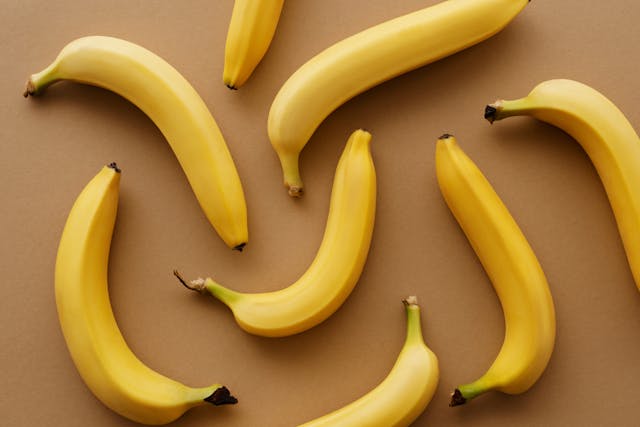
Online claims about bananas often ignore lab data. Researchers have measured how banana carbs shift during ripening. A 2021 study in PLOS ONE analyzed fiber, starch, and sugars at different ripeness stages. It was led by Katherine M. Phillips and colleagues at Virginia Tech, with collaborators at USDA and UC Davis. The abstract reports a clear shift. “A large increase in fructose, glucose, and total sugar going from unripe to ripe.” That matches what your tongue senses. It also explains why riper bananas can raise glucose levels sooner. The paper also discusses fiber measurement methods and resistant starch. It reports that fiber measured with a modified approach was higher in unripe fruit, then decreased with ripening. This supports the idea that greener bananas may digest more slowly.
The researchers also described how fiber testing methods can change results. Traditional methods can miss some resistant starch. Newer methods can count more of it. That detail affects how you read nutrition labels or databases. Two sources can list different fiber numbers for the same banana stage. The study also reminds us that peel color is a proxy, not a lab measure. Use it as a guide, then confirm with glucose readings. If you buy green bananas, the ripening timeline gives you control over the carbohydrate profile. Yet, the storage of bananas also varies by cultivar and handling. The study notes that carbohydrate composition in retail bananas can vary due to cultivar and post-harvest handling. That means one “ripe” banana can contain different sugar profiles than another. It also means your glucose data can vary even when you buy similar-looking fruit.
Research explains the direction, but your meter shows the result in your life. It also shows your response to combinations. A banana eaten with eggs can look different from a banana with toast. A banana after dinner can behave differently from a banana at 10:00. These differences can guide practical habits. Human studies add another layer, because they measure glucose directly. In 2023, Carlos García-Vázquez and colleagues ran a randomized crossover trial in 17 adults with type 2 diabetes. The team worked with Universidad Juárez Autónoma de Tabasco and clinical partners in Mexico. Participants consumed native banana starch for 4 days, then completed a 6-hour meal tolerance test. The abstract reports, “NBS induced a reduction in fasting glycemia, glycemia peak, and insulinemic response during MTT.” That suggests resistant starch can support better post-meal responses in some settings. Yet the study used a starch supplement, not a whole banana.
Whole bananas contain sugars, and they also contain different fibers and plant compounds. So you cannot treat banana starch as a stand-in for eating fruit. Still, the findings support a practical principle. Carbohydrate type influences the curve, not only the total grams. Resistant starch behaves differently from simple sugars. It also reaches the colon, where bacteria ferment it. Fermentation produces short-chain fatty acids that can influence insulin sensitivity in some studies. These pathways are complex, but the direction helps with daily choices. It also explains why green banana flour appears in some research diets. However, those products can vary by processing. Labels matter, and portion still counts. Whole foods remain the simplest starting point. Research continues, but the direction is clear. Greener banana components can act more slowly in the body.
Are bananas bad for diabetics, and how to eat them with steadier glucose
People with diabetes often hear conflicting advice about fruit. Some voices push strict avoidance, while others dismiss concerns. A better approach uses guidance plus personal data. The American Diabetes Association answers the fruit question in plain terms: “Wondering if you can eat fruit? Yes!” The ADA also notes that fruit counts as a carbohydrate, but it provides fiber and nutrients. That means bananas can fit, but they still need portion awareness. Harvard’s Nutrition Source reports that one medium banana provides “28 grams of carbohydrate.” If your snack target is close to that, a full medium banana may fill it. If your target is lower, half a banana can work well. Size labels vary, so compare bananas by length at home. A shorter banana usually means fewer carbs, even if the peel looks thick. Pairing is the next tool.
Joslin Diabetes Center explains, “Carbs with more fiber are digested more slowly than carbs that do not contain adequate fiber.” Pairing adds more slowing through protein and fat. That can reduce peaks and extend fullness. It can also lower the chance that later snacking turns into a second rise. If you enjoy bananas in cereal, choose a higher fiber cereal and add protein. Seeds add fat and fiber, yet they also add calories. If you prefer smoothies, blend less banana and add protein. Better yet, eat the banana on the side. That keeps chewing in the process, which can slow intake. If you count carbs, log the banana the same way every time. Estimation errors can add up across a week. A food scale can help during learning, so you can eyeball later.
Read More: Researchers Discover Vitamin With Potential to Help Control Blood Sugar Levels
Low GI fruits can help if you want very steady curves. Many berries and citrus fruits score low on GI lists, and they often provide more fiber per carb. However, low GI does not mean unlimited. A large bowl of any fruit adds a large carb dose. That can raise blood glucose, even when the rise is slower. For many people, the simplest system is consistency. Keep fruit portions similar, and eat them at similar times. If you use a glucose meter or CGM, use it as your teacher. Test a just-ripe banana alone, then test it with yogurt on another day. Compare the peak and the time to peak. If you take insulin, record the dose and timing too. Then adjust one variable at a time. Choose a smaller banana, choose a less ripe banana, or add a protein side.
If your readings stay high, discuss changes with your clinician. Medication needs differ across people, and food is only one lever. With a steady plan, bananas can be a convenient snack or part of breakfast. They can also support potassium intake and overall diet quality. In the end, bananas and blood sugar can work together when you use the dose and context. Most people can enjoy bananas when they watch portions and check readings regularly. Most people do not need perfection. They need repeatable choices they can sustain. If a banana helps you avoid sugary snacks, it can be a win. If it pushes glucose too high, adjust and try again.
Read More: Meet the Brazilian Doctor Who Accepts Fruit and Gratitude Instead of Payment