
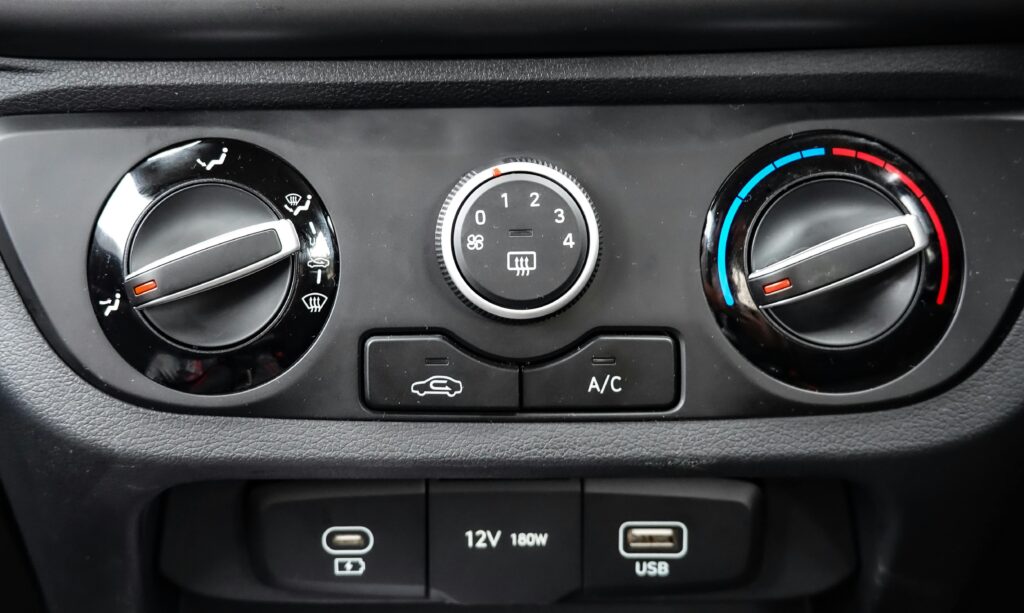
Most drivers have probably noticed a button on their vehicle’s dashboard that features a car icon with a sideways U-shaped arrow inside. While it’s been a common feature in vehicles’ air conditioning systems since the 1940’s, many may still be using it incorrectly, if at all. This air recirculation button controls a critical function in your vehicle’s climate system. Learning how and when to properly utilize this function can improve your car’s fuel economy, protect your health, and extend your air conditioning system’s lifespan while keeping harmful pollutants out of your car’s cabin. Also, effectively utilizing the recirculation button can help keep your car cool on a hot day or help warm up the cabin on a cold winter’s day.
What the Air Recirculation Button Actually Does
The air recirculation button controls your vehicle’s heating, ventilation, and air conditioning system’s air intake. When activated, it closes the external air vents that normally draw fresh air from outside your vehicle. Instead, your HVAC system recirculates the air already inside your vehicle through the climate control system. This creates a closed loop where the same air cycles repeatedly through your air conditioning or heating system. The mechanism works through a motorized flap actuator positioned in your HVAC ducting. This actuator responds to your button press by physically blocking the fresh air inlet while creating an opening for the cabin air recirculation. Your cabin air filter continues operating normally during recirculation mode, removing dust and particles from the circulating air.
How Recirculation Improves Fuel Efficiency
Your air conditioning system consumes significant engine power, which directly impacts fuel economy. Studies show that excessive AC use can decrease fuel efficiency by up to 25%. However, using the air recirculation button can significantly reduce this energy drainage. When your AC continuously draws hot outside air during summer, the compressor works harder to cool that air to your desired temperature. Turning on the recirculation function helps by cycling the already cooled air through the system. The AC compressor subsequently uses less energy to maintain cool air than to continuously cool hot external air. Research demonstrates that recirculation can improve fuel economy by 1- 2% in modern conditions. During intense summer heat, fuel savings can reach up to 10% when recirculation is used properly. The system also achieves your desired cabin temperature 30-40% faster than having the button off.
Protecting Your Health From Traffic Pollution
The recirculation button not only regulates temperature but provides protection against environmental contaminates from entering the vehicle. Driving in urban areas or in places with heavy traffic exposes you to concentrated vehicle emissions and airborne pollutants. Research from the University of California demonstrates that recirculation reduces particulate matter exposure by 92% compared to outside ambient conditions.
Another study found that activating recirculation for just 15 minutes decreased PM2.5 concentrations by 44-59%. PM10 levels dropped by 53-64% during the same period. When recirculation settings reached 70% with a new cabin filter, PM2.5 reductions hit 55%. Even with an aged filter, reductions remained at 39 percent. Scientists at UC Riverside found that cabin nanoparticle concentrations fell to below typical office air levels within three minutes of activating recirculation while driving through heavy traffic.
The Carbon Dioxide Buildup You Need to Know About
While recirculation offers significant benefits, prolonged use creates a potential safety hazard through carbon dioxide accumulation. Every time you exhale, you release CO2 into your vehicle cabin air. When your HVAC system recirculates this air continuously, CO2 levels gradually increase. Symptoms include drowsiness, headaches, reduced alertness, slowed thinking, and difficulty concentrating. Studies indicate that elevated CO2 contributes to 10-30% of automobile accidents annually through driver fatigue and impaired judgment. According to a study conducted by Swedish manufacturer Senseair, CO2 levels reached 1,000 ppm in 1.5 minutes, 2,500 ppm in 5 minutes in a car of 4 adults. Over a period of 22 minutes, even with recirculation turned off, the car reached a whooping 6,000 ppm.
When Summer Heat Demands Recirculation Mode
The best time to use the recirculation button is during periods of hot weather. During summer months, outside temperatures can exceed 35 degrees Celsius, making your parked vehicle’s interior dangerously hot. If your car has been baking in the sun, it’s usually good practice to firstly roll down the windows for the first minute before entering to expel the superheated air. Once the extreme heat has escaped, close the windows and activate both your AC and the air recirculation button.
This prevents your air conditioning system from continuously drawing scorching outside air that requires maximum compressor effort to cool. The recirculation mode maintains the progressively cooler vehicle cabin air, allowing your AC to work at optimum efficiency. Your vehicle reaches comfortable temperatures faster while consuming less fuel. Additionally, summer driving in dense traffic makes recirculation essential for blocking exhaust fumes from surrounding vehicles. Pollen sufferers also benefit during high pollen count days when recirculation prevents allergens from entering the cabin.
Why Winter Driving Requires Fresh Air Mode
As a general rule, cold weather and rainy conditions prompt having the air recirculation button turned off as it can be detrimental in some cases. The primary issue involves moisture accumulation inside your cabin when you turn on the recirculation button during winter. The HVAC system traps humid air generated by passenger breathing and internal moisture from wet clothes. This moisture-laden air cannot escape, leading to condensation on your windows. Fog on your windscreen accumulates when the recirculation button is turned on and can create dangerous visibility problems.
In contrast, fresh air mode draws in cold, dry outside air. Your heater core warms this air before it reaches you, while the natural dryness of cold air prevents condensation. Your windows defog significantly faster when using fresh air rather than recirculation. Additionally, cold outside air flowing through your heating system provides efficient defrosting capabilities. The air recirculation button should remain switched off whenever temperatures drop or precipitation occurs. This general rule applies throughout winter months and during cold, rainy days in other seasons.
How Modern Vehicles Automate Air Quality Management
Recent automotive technology has transformed air recirculation from a manual control to an intelligent, sensor-driven system. Many newer vehicles no longer feature a traditional recirculation button because sophisticated sensors now monitor cabin air quality automatically. These systems track multiple parameters including carbon dioxide concentration, humidity levels, and particulate matter. Vehicles from manufacturers like Hyundai, BMW, and Jaguar incorporate CO2 sensors that trigger fresh air intake when concentrations exceed 2500 ppm.
When the sensor detects elevated CO2 levels, the climate control system automatically brings outside air into the cabin to maintain safe conditions. Similarly, external air quality sensors detect pollutants in outside air and automatically activate recirculation when pollution levels spike. This prevents contaminated air from entering during heavy traffic or when passing through polluted areas. Some manufacturers program their systems to automatically disable recirculation after approximately 15 minutes to prevent excessive CO2 buildup. These intelligent systems balance the competing demands of fuel efficiency, pollution protection, and passenger safety without requiring driver intervention.
Extending Your AC System’s Lifespan Through Smart Usage
Your vehicle’s air conditioning system represents a significant investment that requires protection through proper use. The air recirculation button directly impacts your AC system’s longevity and maintenance requirements. When your AC compressor works harder to cool hot outside air continuously, it experiences increased mechanical stress and wear. This accelerated deterioration shortens component lifespan and increases the likelihood of costly repairs. Conversely, recirculation mode reduces compressor workload by cycling pre-cooled air, which decreases mechanical strain.
The blower motor also benefits from reduced stress when maintaining temperature rather than achieving dramatic cooling. Furthermore, recirculation helps keep your cabin air filter cleaner for extended periods. When less outside air passes through the filter, it accumulates fewer particles and pollutants. This extends filter life and reduces maintenance frequency. However, balance remains essential because extended recirculation without fresh air can promote mildew growth in your HVAC system. Experts recommend alternating between recirculation and fresh air modes every 30 minutes during long drives.
Practical Guidelines for Optimal Recirculation Use
Mastering your air recirculation button requires understanding specific scenarios and timing. During summer cooling, activate recirculation immediately after turning on your AC to maximize efficiency and fuel savings. However, if your car has been parked in direct sunlight, first crack windows open to vent superheated air before activating recirculation. When stuck in heavy traffic or driving through tunnels, switch to recirculation mode to prevent exhaust fumes from surrounding vehicles entering your cabin.
If you notice strong outdoor odors from agricultural operations, industrial areas, or nearby fires, recirculation provides immediate protection. For long highway drives, alternate between 30 minutes of recirculation and brief periods of fresh air to prevent CO2 accumulation while maintaining fuel efficiency. Never use recirculation when activating defrost mode because it traps moisture that causes windscreen fogging. Similarly, avoid recirculation in cold weather unless you’re temporarily blocking unpleasant odors. If you feel drowsy, experience headaches, or notice reduced alertness during extended recirculation use, immediately switch to fresh air mode and crack a window. The average commute of 26 minutes with one or two occupants rarely creates dangerous CO2 levels.
Read More: How to Extend Your Car’s Life: 5 Important Tips