
It’s no secret that the relationship between the United States and Iran has always been contentious, but it seems like tensions might escalate after a threat was made against U.S. President Donald Trump’s life. On Wednesday, January 14th, an Iranian state television channel aired a direct assassination threat against the US President Donald Trump. Warnings of retaliation have been issued from Iran against Trump since 2017, when Trump began the first term of his presidency. Trump also drew the anger of Iran after he approved the drone strike that assassinated General Qassem Soleimani in 2020. Since Soleimani’s assassination, the commanders of Iran’s Revolutionary Guard have promised that there will be certain retaliation, even suggesting Trump may be a target.
However, the recent broadcast by the Iranian state may have escalated the tensions into a potential conflict. The broadcast showed a sign held by a demonstrator at a pro-Iranian regime gathering, which featured an image of Trump surrounded by Secret Service agents following the July 2024 assassination attempt. Below the photo, text in Farsi stated: “This time, the bullet won’t miss.” i24 News correspondent Amichai Stein shared footage of the broadcast on X, providing a translation from Farsi. Iranian American journalist Sana Ebrahimi also posted the clip and confirmed the translation. The Secret Service immediately confirmed it was aware of the threat. The threat comes amid escalating tensions between Washington and Tehran over possible American military intervention in Iran’s domestic crisis. The timing also coincides with mass anti-government protests taking place across the country and the Iranian government’s violent security crackdown that has killed thousands of protesters since late December last year.
The Protest Crisis
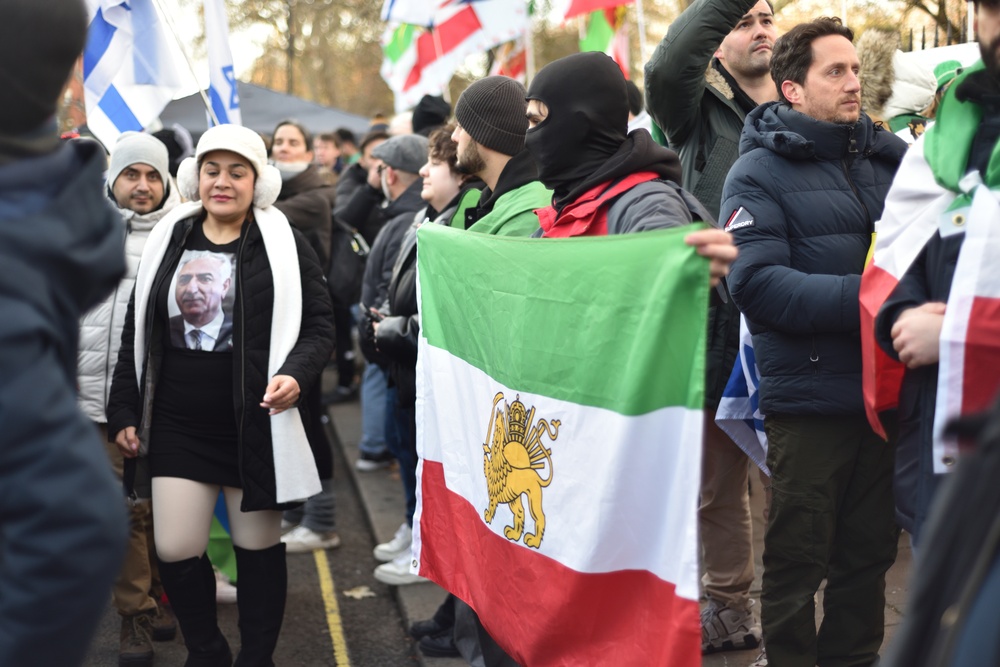
Anti-government protests in Iran began on December 28th, after the collapse of Iran’s currency, the rial. The rial has lost over 90% of its value amid international sanctions partly related to the country’s nuclear program. Decades of economic mismanagement and rampant corruption fueled public anger. What started as strikes in Tehran’s Grand Bazaar quickly evolved into nationwide demonstrations demanding regime change. By mid-January, the crackdown had become one of the deadliest in modern Iranian history. While death toll estimates vary significantly, the US-based Human Rights Activists News Agency reported at least 3,919 deaths during a bloody crackdown of protesters across Iran. Amnesty International and Human Rights Watch documented figures ranging from 2,400 to 3,300 deaths, although fears have sparked that the numbers could be higher than predicted. More recent analyses suggest the death toll could exceed the number of any protests, making this potentially the largest massacre in Iran since the 1979 Islamic Revolution.
More than 24,669 people have been detained, according to the Human Rights Activists News Agency. Security forces deployed live fire, shotguns loaded with metal pellets, tear gas, and beatings to disperse largely peaceful demonstrators. The government imposed a nationwide internet blackout on January 8, severely restricting outside information about the crackdown’s full scope. Authorities have also seized Starlink satellite dishes and shut down international phone lines.
Trump’s Escalating Threats
Trump has issued repeated warnings that the United States would intervene militarily if Iran continued killing protesters. On January 2, he stated the US was “locked and loaded” to strike if Iran persisted in its crackdown. He subsequently told Iranian protesters that “help is on the way” and urged them to “take over your institutions.” On January 13, Trump told CBS he would take “very strong action” if Iran executed detained protesters. He said: “We don’t want to see what’s happening in Iran happen. And you know, if they want to have protests, that’s one thing, when they start killing thousands of people, and now you’re telling me about hanging. We’ll see how that works out for them. It’s not going to work out good.” A US official briefed CBS on Trump’s military options against Iran. However, the Pentagon and some of Trump’s advisors recommended exercising restraint. Military planners cautioned that direct action could undermine the protest movement rather than support it.
Trump’s Shifting Stance
By January 14, Trump softened his rhetoric dramatically. He stated that he had been told by “very important sources on the other side” that Iranian authorities had halted killings of protesters. Trump also claimed that authorities abandoned plans for mass executions. He said that 800 planned executions had been canceled, though he provided no details on how the US obtained this intelligence. When asked if US military action remained on the table, Trump responded vaguely:“We’ll see what the process is.” This shift in Trump’s attitude could suggest either that diplomatic channels were working or that Trump was reconsidering the risks of direct military intervention.
Iran’s Warning to the US
Iran’s parliament speaker, Mohammad Bagher Qalibaf, issued a counter-warning during a televised address: “In the event of an attack on Iran, both the occupied territory and all American military centers, bases, and ships in the region will be our legitimate targets.” He did not specify whether “occupied territory” referred to Israel or other US-aligned nations in the region. The statement suggested Iran viewed any US military action as justification for attacks on American and Israeli interests throughout the Middle East. A senior Iranian official told the Associated Press that Tehran had urged regional allies, including Saudi Arabia and the UAE, to prevent a US attack. The official warned that if the US targeted Iran, military bases in allied countries would become targets.
The Soleimani Legacy
The threat must be understood against the backdrop of the January 3, 2020, US drone strike that killed General Qasem Soleimani. Soleimani was the head of Iran’s elite Qods Force. The strike followed a US embassy attack in Baghdad attributed to Iranian-backed militiamen on December 31, 2019. Soleimani was Iran’s most powerful general and controlled the country’s proxy forces throughout the Middle East. His assassination marked a turning point in US-Iran relations, ending any remaining possibility of diplomatic reconciliation under Trump’s first term. Iran’s supreme leader, Ayatollah Ali Khamenei, vowed “severe revenge” for Soleimani’s death. In December 2020, nearly a year after the strike, Khamenei posted on social media: “Those who ordered the murder of General Soleimani as well as those who carried this out should be punished. This revenge will certainly happen at the right time.”
Since 2020, the US Justice Department has disrupted multiple Iranian plots to assassinate Trump. The plots also targeted other former administration officials involved in the Soleimani decision. In 2024, authorities charged Farhad Shakeri, an alleged IRGC operative, with plotting Trump’s assassination. Iranian officials had reportedly tasked Shakeri with killing Trump to avenge Soleimani. In 2022, Iranian state-linked media released a video depicting a simulated assassination attempt on Trump at his Mar-a-Lago golf course. The video resurfaced in 2024 following the arrest of Ryan Routh. Routh was detained while allegedly attempting to target Trump at the same location.
Previous Assassination Threats
Iran’s most recent threat on Trump’s life was not Iran’s first explicit threat against Trump. In 2021, Khamenei’s office posted a photomontage on social media depicting Trump playing golf beneath the shadow of a warplane. It accompanied a vow to avenge Soleimani’s killing. Following the state television broadcast, Iran intensified their threats against Trump. On January 15, a senior IRGC general declared publicly that Iran would “cut off Trump’s hand and finger.” The same general cautioned that Iran would no longer accept ceasefire terms if the country came under military attack. The following day, on January 16, hardline cleric Ahmad Khatami issued a direct threat during a Friday sermon. Khatami warned that“Americans and Zionists should not expect peace.” He called protesters “Trump’s soldiers” and openly demanded executions.
Military Readiness and Regional Concerns
The Pentagon has been preparing for potential conflict with US officials advising personnel at military bases in the region, including a major facility in Qatar, to prepare for possible evacuation. The Wall Street Journal reported that the Pentagon is deploying additional military resources, including aircraft carrier groups, to the Middle East. Arab Gulf diplomats, however, have been advising the Trump administration against military action. They warn that it could escalate into a “full-blown” conflict which the US Gulf allies, including Saudi Arabia and the UAE, have expressed concern about. They fear American intervention could destabilize the region and threaten their own security interests. Regional analysts have noted that Iran’s defensive capabilities have been significantly degraded. Israeli strikes since October 2023 have neutralized Iran’s air defenses, exposing the limits of its defense infrastructure. US strikes on Iranian nuclear facilities in June 2025 further compromised Tehran’s military posture. The country’s economy, weakened by international sanctions, limits its ability to respond to military aggression. Despite these vulnerabilities, Iran’s foreign minister, Abbas Araghchi, stated that the nation is fully prepared for war if attacked.
The Trump Administration’s Broader Strategy
According to analysis from Chatham House, the Trump administration appears intent on converting Iran’s accumulated weakness into a durable strategic shift. This weakness stems from regional losses to Israel, internal protests, and economic collapse. Trump has previously stated that he left “instructions” with advisors regarding Iran. In February 2025, he told associates: “I’ve left instructions if they do it, they get obliterated, there won’t be anything left.” The Pentagon has assessed that the regime faces existential threats from internal dissent. However, military planners have expressed concern that aggressive US intervention could inadvertently strengthen the IRGC’s position. It could allow the IRGC to consolidate power under nationalist claims of defending against foreign invasion. This dilemma has created tension within Trump’s national security team.
International Response
The Trump administration issued its first round of Iran-related human rights sanctions on January 15. The sanctions designated four IRGC and law enforcement commanders for committing “multiple atrocities targeting Iranian civilians.” The designations also included 18 individuals and entities involved in Iran’s illicit shadow banking network. This network finances the regime. These sanctions represent the administration’s first formal response to the crackdown. They use human rights authority under a 2010 Executive Order. The action demonstrates a preference for economic pressure over military strikes, at least in the immediate term. Domestically, Trump must consider American voters ahead of the 2026 midterm elections. A significant portion of his political base opposes military interventions. This opposition follows decades of conflict in Iraq and Afghanistan. This domestic political reality may constrain his options.
The Uncertainty Ahead
The situation remains highly volatile. While Trump has softened his public rhetoric, military options remain under active consideration. Iran’s parliament has issued explicit warnings about the consequences of any US attack. Iranian hardliners continue to issue assassination threats against Trump. Analysts caution that the current de-escalation could prove temporary. The protest movement could reignite, prompting renewed government crackdowns. Trump has not dismissed military action as a possibility. The death toll from the crackdown continues to rise. Human rights groups estimate that detention and torture of arrested protesters will intensify in the coming weeks. The fundamental economic and political grievances that sparked the protests remain unresolved. These include the collapse of the rial, state mismanagement, and demand for democratic reform. For Trump, the choice appears to be between supporting a protest movement that might succeed in destabilizing the regime or launching military strikes. Military strikes could trigger a regional conflict.
Read More: Bill Gates Blasts Elon Musk, Claims DOGE Is Hurting the World’s Poorest Children