
In October 2025, archaeologists working near the Temple Mount in Jerusalem found a pottery fragment that had been buried for nearly 3,000 years. It measured just one inch, small enough to fit on a thumbnail, and bore an Assyrian inscription. The message was surprisingly ordinary. Someone had been late paying their taxes.
This ordinary complaint carries weight because it is the first Assyrian inscription from this era ever found in Jerusalem. For centuries, scholars have studied biblical texts describing tribute payments from the Kingdom of Judah to the Assyrian Empire. Now they have physical proof that such payments happened, and that they sometimes ran late. The find doesn’t rewrite history so much as confirm it.
The Discovery
Dr Ayala Zilberstein, excavation director for the Israel Antiquities Authority, told The Times of Israel that archaeologists found the fragment during excavations at the Davidson Archaeological Park near the Western Wall of the Temple Mount. The IAA ran the dig in collaboration with the City of David Foundation. The team sent excavated soil to a facility in Emek Tzurim National Park for wet sifting. A process that uses water to separate small artefacts from dirt. The facility, known as the Archaeological Experience, is a joint project of the City of David Foundation and the Israel Nature and Parks Authority.
Over the years, sifters at the facility have caught many finds that field excavators would have missed. Moriah Cohen, a staff member at the facility, was processing soil when she noticed a sherd, a fragment of broken pottery, with strange markings. In a City of David Foundation statement, she recalled at first thinking it was a decoration. But looking closer, she realised it was cuneiform, the wedge-shaped script used across the ancient Near East.
Nothing like this had ever turned up at the facility before. She examined it yet again, and when she confirmed what it was, she screamed. Everyone raced to gather around her, and she called Zilberstein, who was thrilled. For Cohen, it was a once-in-a-lifetime find.
The Site
The fragment likely came from a First Temple period structure that had collapsed into a later drainage canal from the Second Temple period. The First Temple period dates to before Jerusalem’s destruction by Babylon in 586 BCE. The later drainage system did not survive in this particular area, which allowed archaeologists to access the earlier layer beneath it. The massive building appears to have served as an administrative centre during the 8th and 7th centuries BCE.
Part of a new neighbourhood developing on the slopes west of the Temple. The site sits on the eastern slope of the Western Hill, one of the closest areas west of the Temple Mount where First Temple period remains have been found in their original context.
This location matters for understanding Jerusalem’s urban layout during the period of Assyrian dominance. Speaking to The Times of Israel, Zilberstein said, “We knew that this massive building belonged to the end of the First Temple period based on its architecture, but as we have been sifting through the dirt, we have been finding more and more evidence of administrative activities at a high level, by people who were connected to the court and the king.”
Archaeologists have uncovered additional sealings in the building’s remains but have not yet disclosed them to the public. Dr Peter Zilberg of Bar-Ilan University, who helped decipher the inscription, told The Times of Israel it was identified alongside other amazing finds due to be published soon.
What the Inscription Says
According to Zilberg, the fragment was likely part of a bulla, a clay seal impression used to authenticate official documents. “Many of these inscribed sealings sealed official documents or letters addressed to very important people,” he noted. These sealings typically accompanied letters or dispatches and provided a brief summary of the document’s contents or its destination. This particular bulla would have sealed a letter or official dispatch sent on behalf of the Assyrian royal court. Items like this served as a means of communication between Assyrian envoys and the rulers of vassal kingdoms. Conveying official instructions and tax demands. Bullae of this type differ in size and shape from local Judahite seal impressions. Those produced in the Kingdom of Judah, which helps identify them as Assyrian in origin.
The text mentions a delay in payment due on the first day of the month of Av. This date worked for both cultures because Judah used the same Mesopotamian calendar system. Zilberg pointed out that the calendar Jews use today is almost exactly like the one used in ancient Mesopotamia. The inscription also names an Assyrian official called the “holder of the reins.”
Literally one who holds the reins in Assyrian, a chariot officer responsible for conveying official messages on behalf of the royal house. This title appears in Assyrian administrative archives and indicates a high-ranking personality. A deadline and a royal courier add up to a demand, and together these elements suggest the fragment was part of a tax notice sent from the Assyrian government to the Judean king.
Tracing the Clay to Assyria
Researchers dated the inscription to the late eighth to mid-7th centuries BCE because they identified stylistic and linguistic markers in the cuneiform script that match that era. This dating places the bulla in the period when Judah paid tribute to successive Assyrian emperors. So scholars believe it entered the region through established tribute channels. The exact year remains unknown because the section that once held that detail broke off during the past 2,700 years. Zilberg said he hopes archaeologists will eventually find another fragment that carries the missing date.
Dr Anat Cohen Weinberger of the Israel Antiquities Authority examined the clay through petrographic analysis and found that its mineral makeup differs completely from the raw materials used for pottery, bullae, or clay documents in Jerusalem or the southern Levant. Her team compared its structure to regional samples.
They traced its composition to the Tigris Basin in modern-day Iraq. Which places its origin in the heartland of the Assyrian Empire, where cities such as Nineveh, Ashur, and Nimrud stood. This match shows that an Assyrian administrative centre created the bulla and sent it hundreds of miles to Jerusalem. Most likely along with an official demand for tribute. Dr Yehudit Harlavan of the Geological Survey of Israel is now running chemical tests so the team can identify the specific Assyrian city that produced it.
“This artifact is very, very important in connecting the history of the Land of Israel to the Bible and to the history of the ancient Near East as a whole,” Zilberg said.
The Assyrian Empire
To understand what this fragment means, you need some context about the world it came from. The Assyrian Empire, centred in what is now northern Iraq, dominated the Near East militarily and politically from roughly 900 to 600 BCE. At its height, it was the most dominant power in the world, stretching from modern Iran to Egypt.
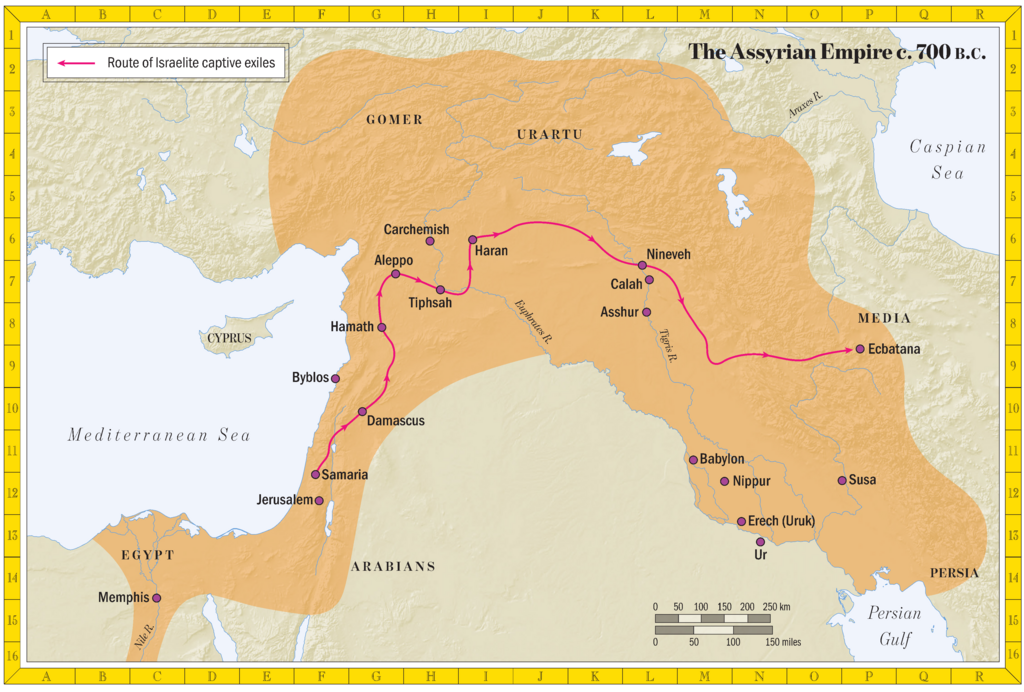
The empire maintained control through military force and sophisticated administration. Keeping detailed records of officials, communications, and tribute payments in vast archives.
Conquered kingdoms paid tribute in exchange for protection, and those that failed to pay faced invasion. Tribute was not voluntary or negotiable. The empire set amounts based on a kingdom’s wealth and strategic value. Demanding regular shipments of silver, gold, and goods to the Assyrian capital. For small states, these payments could drain the treasury, but the alternative was destruction. The Assyrians had already demonstrated what happened to kingdoms that resisted.
Judah Under Assyrian Rule
The Kingdom of Judah operated under exactly these conditions. Located in the southern part of ancient Israel, Judah was a small state centred on Jerusalem that existed from around 930 BCE until Babylon destroyed it in 586 BCE. Its northern neighbour, the Kingdom of Israel, fell to Assyria in 722 BCE, its population deported and scattered. Judah watched this happen and survived by accepting a subordinate role, which meant regular tribute payments. The newly found inscription suggests those payments were not always met on time.
The relationship between Assyria and Judah appears in both Assyrian records and the Hebrew Bible. Documents found in Assyria show that Judean emissaries visited the Assyrian court and Judean merchants did business within the empire. The biblical books of Kings and Chronicles describe Judean kings sometimes rebelling and sometimes capitulating. King Hezekiah, who ruled Judah in the late 8th century BCE, did both. Zilberg described the era as “a period of turmoil,” and Hezekiah’s decision to delay paying tribute to Assyrian King Sennacherib brought the empire’s army to the gates of Jerusalem.
Read More: Ancient 1,200-Year-Old Bread Featuring Christ’s Image Discovered
The Biblical Account
The most relevant passage appears in 2 Kings 18:13-14. This recounts how King Hezekiah initially paid tribute to Assyria but later rebelled. Prompting an invasion by Sennacherib. According to the text, in the 14th year of Hezekiah’s reign, Sennacherib’s army captured the fortified cities of Judah before laying siege to Jerusalem itself. Hezekiah, facing destruction, sent a message to Sennacherib at Lachish.
Deep in Judean territory, writing, “I have done wrong; withdraw from me; and I shall bear whatever you impose on me.” The Assyrian king imposed a tribute of 300 talents of silver and 30 talents of gold. A sum so large that Hezekiah had to strip silver from his palace and the Temple in Jerusalem. Even removing gold from the Temple’s doors and doorposts.
The Sennacherib Prisms, clay cylinders found at Nineveh and inscribed with a detailed account of the king’s military campaigns, also describe the siege and tribute. The prisms claim Sennacherib captured 46 walled cities and deported over 200,000 inhabitants, boasting of shutting Hezekiah up “like a bird in a cage.” Yet they never claim Jerusalem was captured. The biblical and Assyrian accounts align on the invasion, the siege, and the tribute. Both agree that the city held out.
Connecting Inscription to the Bible
The parallel between the inscription and the biblical account seems clear, but the fragment itself does not confirm it. The text names no specific king or year, so researchers cannot definitively connect it to Hezekiah’s reign. It could date from his time or from the reigns of his successors, Manasseh or early in Josiah’s reign, when Judah still answered to Assyria. Zilberg noted that such incidents could have happened on other occasions under different kings. Suggesting that delayed payments may have been a recurring issue rather than a single event. But it confirms what the Bible describes: that Judah owed money to Assyria and sometimes delayed those payments.
Researchers cannot determine whether the delay was a technical issue or a deliberate political act. According to the City of David Foundation statement, the very existence of such an official appeal would seemingly attest to a certain point of friction between Judah and the imperial government. Zilberg noted that the inscription echoes the biblical story of delaying taxes to the Assyrians. Perhaps even the account in 2 Kings 18:7: “And he rebelled against the king of Assyria, and did not serve him.” Speaking to The Times of Israel, he called it “a wonderful addition to the history of the relations between Judah and Assyria.”
Why It Matters
Until now, evidence of the relationship between Judah and Assyria came from documents found in Assyria itself, preserved in royal archives. But all of that evidence came from the imperial side. This inscription provides the other half of the conversation, showing how official communications arrived in Jerusalem. Zilberg called it “a wonderful addition to the history of the relations between Judah and Assyria,” noting that for the first time, we have evidence from Jerusalem and not from Assyria.
The ancient world left behind relatively few written records. And most of those that survived were produced by literate elites for official purposes. A tax notice like this one offers a glimpse into the everyday paperwork that kept empires functioning. Someone in Assyria wrote a complaint about a late payment, sealed it, and sent it hundreds of miles to Jerusalem. Where someone received it and filed it in a government building. That building collapsed, and 2,700 years later, a sifter noticed strange markings on a piece of clay.
The inscription was presented to the public on October 23, 2025, at a conference hosted by the Israel Antiquities Authority. The Hebrew University of Jerusalem and Tel Aviv University. Understanding what this small fragment tells us required multiple disciplines working together. Archaeology located it, linguistics deciphered its text, and materials science traced its origin. Each field contributed a different type of evidence, and together they turned one inch of pottery into a connection between ancient texts and physical proof.
For Zilberg, the find is “like a flashlight in the fog of history. There is so much that we do not know, and then these inscriptions come in and shine a very particular light on a very particular subject.”
Read More: Lost Bible Chapter Revealed After 1,500 Years Using UV Technology