
When 21-year-old Lucas Martin started feeling unwell in early September 2023, nothing suggested that his life was in immediate danger. He had a headache and felt feverish, so his family assumed he had picked up the same mix of bugs many young people get during busy social seasons. For several days, they watched what looked like a heavy flu or freshers’ flu run its course. No one imagined that meningitis symptoms were quietly attacking the membranes around his brain and spinal cord.
Lucas had recently graduated from the University of Liverpool and was back home on the Isle of Man. Friends and family knew him by his nickname, Looky, and described him as energetic, ambitious, and deeply social. His brother Connor later told the BBC that “looking back, the only thing that could have changed things would have been that knowledge of meningitis,” a sentence that now underpins the family’s campaign.
From “really bad virus” to emergency admission in days
In the days before his collapse, Lucas complained of a bad headache and flu-like symptoms. His family was worried, but they assumed it was something that many students experience. Young adults often pick up viruses when they mix in crowded spaces, so everyone thought he simply had a particularly nasty illness. Connor explained that “it felt like a really bad virus he had, but none of us thought it could be meningitis.”
Lucas stayed mostly in his room, feeling unwell for around 5 days. On the evening of 10 September, he spoke to his dad, Brett, who was off the island at the time. During that call, his speech sounded wrong. Connor later recalled that Lucas was “struggling to string a sentence together and mumbling,” a red flag that suggested confusion and delirium. His uncle went to check on him, and Lucas was rushed to Nobles Hospital in what his family describes as a delirious state. Doctors sedated him, but he never woke up. Lucas died on 12 September 2023 from bacterial meningitis.
A family grieving, and a legacy called Looky’s Aid
In the months that followed, Lucas’s family faced the kind of loss they had always assumed happened to other people. His father, Brett, told local media that “after Lucas passed away, life as we knew it ended.” He also stressed that Lucas “didn’t have the symptoms people often expect, like a rash, just tiredness and a headache,” which made it far harder for the family to recognise early symptoms of meningitis.
To keep his spirit alive, the family created Looky’s Aid, a charity focused on helping disadvantaged young people access opportunities and support. On the charity’s site, they describe Lucas as “a beacon of hope and joy to everyone who knew him,” someone who believed strongly in the potential of young people. His mantra was “give it loads,” a phrase now used to inspire others. The Isle of Man has also named a hospitality venue, Looky’s Lounge, in his honour, with proceeds helping the charity continue its work with scholarships and local projects.
Landmarks lighting up to remember Lucas and raise awareness
Lucas’s story has reached far beyond his immediate circle. On World Meningitis Day in October 2025, landmarks across the Isle of Man joined a global “chain of light” to honour people affected by meningitis. Buildings, including the Tower of Refuge, Ramsey Swing Bridge, Douglas City Hall, and parts of Douglas city centre, were illuminated in his memory. For the family, seeing those familiar places lit in his name brought both pride and pain. Brett said that “seeing buildings light up across the Isle of Man on World Meningitis Day in his honour means so much to us as a family.”
These events are not only about remembrance. They link Lucas’s story to a wider international effort to defeat meningitis. Meningitis Research Foundation estimates that there are around 2.3 million cases of meningitis globally every year. The campaign on the island supports the World Health Organization Global Road Map to Defeat Meningitis, which aims to cut cases and deaths sharply before 2030. Meningitis Research Foundation chief executive Vinny Smith has said that “meningitis does not just take lives, it changes the lives of those who survive and everyone around them.”
What meningitis actually is, and why it turns deadly so fast
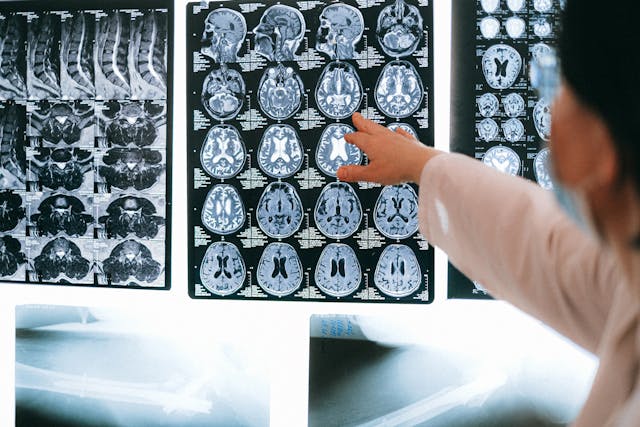
Behind the headlines about Lucas sits an illness that remains both common and widely misunderstood. Meningitis is an infection and swelling of the fluid and membranes around the brain and spinal cord, called the meninges. That swelling can interfere with vital brain functions within hours, especially when bacteria are involved. Bacterial meningitis is less common than viral meningitis, but it is much more dangerous if doctors do not treat it quickly. According to The United States Centers for Disease Control and Prevention, “bacterial meningitis is serious and death can occur in a few hours.”
The World Health Organization estimates that meningitis affects millions of people worldwide every year and can leave survivors with hearing loss, seizures, or limb damage. In some outbreaks, case fatality rates can be high, especially where health systems are stretched. New World Health Organization guidelines on meningitis diagnosis and care explain that earlier detection and better long-term support are crucial, noting that “these guidelines aim to speed up detection of meningitis, ensure people get timely treatment, and improve long-term care.”
Early symptoms of meningitis, and why they look like flu
One of the hardest lessons in Lucas’s story is how ordinary his early symptoms appeared. NHS England explains that symptoms of meningitis can develop suddenly and can include a high temperature, being sick, headache, a stiff neck, dislike of bright lights, drowsiness, or seizures. A rash that does not fade under a glass test is a classic warning sign, but doctors stress that the rash does not always appear, especially early on.
Meningitis Research Foundation notes that “the first symptoms are usually fever, vomiting, headache, and feeling unwell,” which is exactly how many seasonal bugs begin. That similarity is dangerous because it encourages people to wait and see. Early symptoms may sit quietly beside a busy week of lectures, work shifts, and nights out. Only later do more specific features appear, such as neck stiffness, confusion, or very cold hands and feet. Professionals, therefore, advise families to watch for someone who feels unusually ill, gets worse quickly, or seems unlike their usual self.
How meningitis hides behind freshers’ flu and hangovers

For teenagers and young adults, life at college or university often includes late nights, alcohol, and crowded events. Feeling exhausted or rough is almost part of the culture. Charities see a clear risk in that culture. According to Meningitis Now, “early symptoms of meningitis are often mistaken for flu or even a hangover, so it is imperative that students know the signs.” This is exactly what happened in Lucas’s case, where his family thought he had freshers’ flu and a bad virus.
Meningitis Research Foundation also highlights that limb pain, very pale skin, and cold hands or feet can appear even before a rash, neck stiffness, or strong light sensitivity. These red flag meningitis symptoms are easy to miss when people assume every illness is a simple virus. Public Health Isle of Man has echoed that concern in messages to students, urging them not to “just assume it is a hangover or freshers’ flu” if they feel unusually unwell. Lucas’s brother now repeats the same advice whenever he speaks publicly, asking students to question any illness that feels worse than a normal bug.
Why students and young adults carry higher meningitis risk
Meningitis can affect any age group, but teenagers and young adults sit in a high-risk band. The World Health Organization reports that mortality is highest in very young children, but that teenagers and students also see significant disease because bacteria spread easily where people live in close quarters. College dormitories, shared houses, military barracks, and crowded nightlife all help meningococcal bacteria move between people through coughing, sneezing, kissing, or sharing drinks.
Several large studies have looked specifically at college meningitis risk. One influential JAMA study led by Lee Harrison found that college students living on campus had a higher risk than students of the same age living off campus. A more recent review by DeRoo and colleagues concluded that students at 2 or 4-year colleges are at increased risk of invasive meningococcal disease, which supports vaccination campaigns targeting this age group. University health services often summarise the issue simply, saying that “infectious diseases tend to spread quickly wherever large groups of people gather together.”

Vaccines cannot prevent every case of meningitis, but they dramatically cut the risk for several major bacterial types. Many countries now offer a MenACWY vaccine to teenagers and new university students, which protects against 4 important meningococcal strains. Public health agencies stress that these vaccines are especially important for students moving into halls, since that is where infection spreads fastest. The Centers for Disease Control and Prevention states clearly that “vaccines can reduce the risk of developing meningococcal disease.”
Globally, new tools are also emerging. Nigeria recently became the first country to roll out a new Men5CV vaccine, which protects against 5 major strains at once and has been described by the World Health Organization as a revolutionary step for countries inside the African meningitis belt. Alongside vaccines, World Health Organization guidelines aim to make diagnosis faster and improve follow-up care for survivors, especially in lower-resource settings. For families in high-income countries, these advances can feel distant, yet they are part of the same effort that now carries Lucas’s name into international campaigns.
Read More: Flu-Like Symptoms Lead to Life-Changing Amputations for Teen
How to spot meningitis early and act on your instincts
Because meningitis can worsen within hours, knowing when to seek help is vital. NHS guidance explains that symptoms can appear in any order, and some may never appear, so people should not wait for every classic sign. Red flag features include a very strong headache, confusion, difficulty staying awake, severe limb pain, cold or mottled skin, or any rash that does not fade under a glass. If any combination of these appears, especially with fever or vomiting, urgent assessment is essential.
Meningitis Research Foundation advises that “someone who has meningitis or sepsis can become seriously ill very quickly, so always trust your instincts and get medical help fast.” NHS guidance echoes this message, stating that “you should get medical advice as soon as possible if you are concerned that you or your child could have meningitis.” In the UK, that usually means calling 999 for an ambulance if someone seems seriously ill, or calling 111 or a GP if you are unsure but worried. Doctors often stress a simple rule for students and parents. If an illness feels wrong for that person, especially if they seem confused or very hard to wake, do not wait.
Lucas’s story and the message for every family
Two years after Lucas’s death, his family still describes the loss as a shock that never fully fades. They remain proud of his short life and the many friendships he built, yet every interview carries the same regret. Connor has said that “we wish we could bring him back, but the only thing we can do is share his story and have his name do some good in this world.” That choice has turned their grief into a clear warning for other students and parents facing the blur of new terms and new cities.
Their message is simple. If you are university age and you feel very unwell, do not dismiss it as freshers’ flu. If you are a parent and your son or daughter sounds confused, unlike themselves, or too ill for their usual complaints, push for urgent assessment. Meningitis can hide behind ordinary symptoms, but knowledge shortens that hiding place. Lucas’s name is now attached to scholarships, awareness campaigns, and a bar that celebrates his love of good times. The greatest tribute, however, may be a generation of students who learn how to spot meningitis early and decide to act sooner than their family was able to do.