
A fun holiday visit to Istanbul, Turkey, turned to tragedy for a family of 4 from Germany when they met their tragic end from a suspected poisoning. Investigators initially suspected that food poisoning from one of the surrounding street food vendors led to illness that caused their deaths. However, evidence now points to possible chemical poisoning at their hotel. The incident prompted Turkish authorities to launch major food safety reforms and stricter regulations on pesticide control across Istanbul. Authorities have already apprehended 11 people in connection with the death of the family members.
The Böcek Family’s Final Vacation
Servet Böcek, 38, his wife Cigdem, 27, and their two children, Kadir, 6, and Masal, 3, were vacationing in Istanbul. The family, who were Turkish-German nationals, arrived in Istanbul on November 9 having traveled from their home in Hamburg, Germany. They had planned to visit relatives in Turkey after their Istanbul vacation. The family had checked into the Harbour Suites Old City Hotel in the historic Fatih district, popular amongst tourists visiting Turkey’s largest city. They visited the waterfront neighborhood of Ortaköy, two days after their arrival, which is located at the foot of a bridge spanning the Bosphorus strait.
What the Family Ate Before Falling Ill
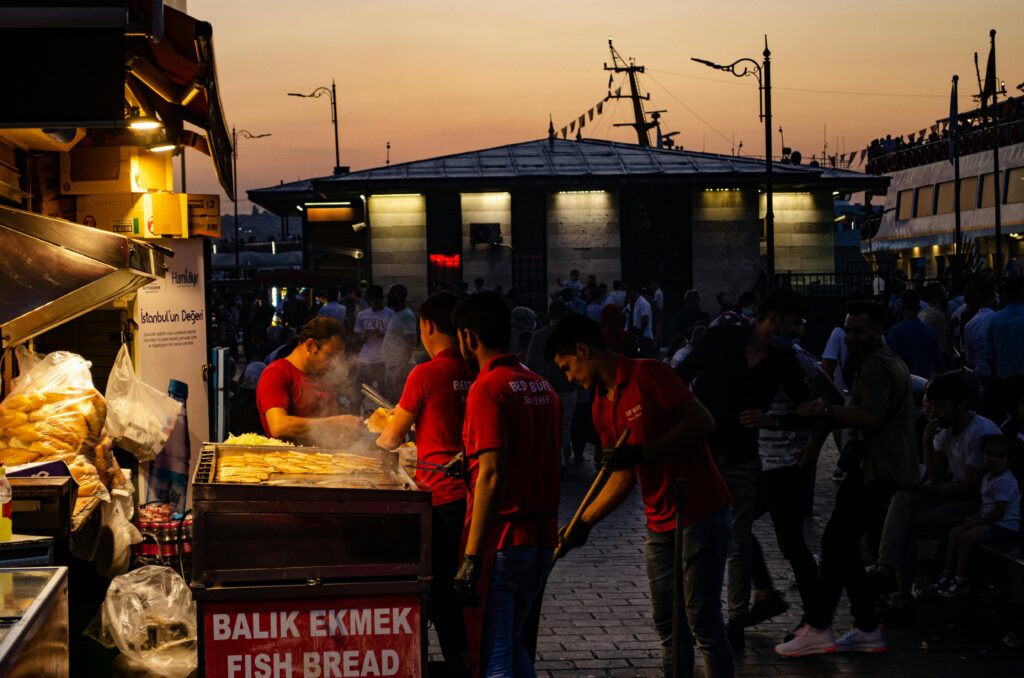
During their visit to Ortaköy, the Böcek family enjoyed several popular Turkish street foods. They purchased midye dolma, which vendors stuff with aromatic spiced rice, chill, and serve cold with lemon, from a street vendor. Midye dolma is a common and popular snack in the coastal region of Ortaköy.
The family also consumed kokorec at a restaurant during their outing. Cooks make kokorec, a traditional Turkish dish, by carefully washing lamb or mutton intestines, marinating them, wrapping them around a skewer, and slowly grilling them over charcoal. The meat is then chopped into small pieces and typically served in fresh bread with salt, pepper, and oregano. Cigdem Böcek ordered chicken tantuni, a type of Turkish wrap, while other family members tried different dishes.
Later that evening, investigators determined the family bought Turkish delight from a confectionery shop in the Fatih district around 6:30 PM before returning to their hotel. Security camera footage helped police track exactly what the family consumed and where they purchased their food during their time in Istanbul.
The Night Symptoms Began
The family began experiencing severe health problems shortly after returning to their hotel on the night of November 11. Around 1:00 AM on November 12, all four family members woke up feeling nauseated. The children, Masal and Kadir were the first to show symptoms, suffering from intense nausea and vomiting. Both parents developed similar symptoms shortly afterward, suggesting all 4 had been exposed to the same harmful agent.
They visited a nearby hospital on November 12, where doctors treated them with IV fluids and probiotics for what appeared to be a case of food poisoning. Medical staff discharged the family the same day, believing their condition had stabilized. The Böceks returned to their hotel at approximately 3:40 PM without eating anything else for the rest of the day.
Tragic Return to the Hospital
The family’s condition took a devastating turn for the worse on November 13. The couple’s children, Kadir and Masal, along with their mother, Cigdem, tragically died after medical personnel rushed them to the hospital with high fever and vomiting. Sercan Tanahuverdi, a taxi driver who claims to have transported the family to the hospital earlier, described the harrowing scene in a video shared by local news outlet Kayseri Haberler. He recalled the family desperately flagging down his vehicle near Kadırga Port Park. He reported that young Masal was vomiting continuously on their way to the hospital, while Cigdem was unconscious and resting her head against the rear window. The mother had noticed her daughter lying motionless on the floor, prompting the frantic call for emergency medical help.
Four Deaths Over Five Days
Tragedy would continue to befall the Böcek family over the next 5 days. Kadir, age 6, and Masal, age 3, both died on November 13 at the hospital despite all medical intervention. Their mother Cigdem passed away the following day on November 14. Servet Böcek was transferred to Cemil Taşçıoğlu Hospital, where he remained in intensive care fighting for his life for 6 days.
Abdullah Emre Güner, head of the Istanbul Health Directorate, announced the father’s death via the social media platform X on Monday, November 17. In his statement, Güner wrote that the Böcek family, who fell ill and were hospitalized in Fatih, lost their two children and their mother. He noted that despite all medical interventions, Servet Böcek also lost his life. The health official offered condolences to the grieving relatives and confirmed the investigation was continuing with utmost diligence.
Investigation Shifts from Street Food Illness to Chemical Poisoning
Istanbul prosecutors initially opened their investigation focusing on suspected food poisoning from the street food the family had eaten. Authorities began inspecting street food vendors throughout the Ortaköy neighborhood and detained several food sellers for questioning. Samples were collected from the establishments where the family had eaten, and 3 food businesses connected to their visits faced enforcement action.
However, the investigation’s focus shifted completely when 2 other tourists staying at the same hotel as the Böcek family were hospitalized on November 15. The 2 guests displayed similar symptoms of nausea and vomiting, immediately sparking concerns that the cause of the illness might be the hotel and not the street food vendors. Doctors also admitted a third person staying in the same room as those tourists to the hospital for testing due to an abnormally low heart rate.
Preliminary forensic analysis released on November 17 concluded that chemical poisoning was more likely responsible for the deaths than food poisoning. The report stated that given the circumstances of the incident, medical backgrounds, and the hospitalization of 2 other individuals from the same hotel with similar symptoms, investigators believed the family likely died from chemical exposure linked to the hotel environment.
Aluminium Phosphide Emerges as Suspected Cause
Attention turned to a highly toxic chemical called aluminium phosphide as the likely cause of death. Investigators learned that pest control workers had recently applied pesticides to combat a bedbug infestation in a ground-floor room at the hotel. Turkish media reported that the harmful substance may have reached the Böcek family’s first-floor room through the bathroom ventilation system.
Aluminium phosphide is a powerful toxic chemical commonly used as a pesticide in agriculture and homes. When this substance comes into contact with moisture or air, a biochemical reaction produces phosphine gas. Phosphine is extremely toxic and has been compared to chemical warfare agents due to its lethal potential. The gas has no effective antidote, and mortality rates from aluminium phosphide poisoning range from 70 to 100 percent in severe cases.
Symptoms of phosphine exposure include nausea, vomiting, abdominal pain, diarrhea, chest tightness, breathing difficulty, and potentially death within 12 to 24 hours after exposure. More severe symptoms such as liver and kidney damage may take 2 to 3 days to appear. Fluid accumulation in the lungs, called pulmonary edema, can also occur around 72 hours after exposure.
Eleven People Detained in Connection with Deaths
Turkish authorities detained 11 people in connection with the family’s deaths as the investigation expanded. Those held for questioning included five food vendors: the stuffed mussels seller, a kokorec seller, a confectioner who sold Turkish delight, a pita bread seller, and a café owner. Authorities also detained the hotel owner and 2 staff members, along with 3 employees from the pest control company that had recently fumigated the premises.
8 of the detained individuals appeared before a judge on Monday, November 17. Some reports indicated that several pest control workers lacked the required certifications to handle such dangerous chemicals. The hotel was evacuated on November 15 and sealed off by municipal officials the following day as forensic teams collected evidence. Investigators gathered samples from bedsheets, pillows, water bottles, blankets, and other items throughout the building.
Justice Minister Yılmaz Tunç confirmed the detentions and stated that prosecutors were conducting a thorough investigation into the circumstances surrounding the deaths. By November 22, German authorities announced they were closely monitoring the probe as the number of people formally arrested rose to 10.
Turkish President Addresses the Tragedy
Turkish President Recep Tayyip Erdoğan spoke publicly about the investigation during a press conference. He stated that authorities were conducting the inquiry with great sensitivity and that within two weeks, the country had lost eleven lives in two separate incidents. He emphasized that anyone found to have been negligent, made errors, committed faults, or acted with malicious intent would be identified and held accountable without exception.
The president assured the public that those responsible for the tragedy would face consequences regardless of their position or influence. His remarks reflected the growing national concern over the incident and the demand for accountability. Turkish officials faced intense pressure to provide answers and implement measures that would prevent similar tragedies in the future.
Istanbul Mandates Sweeping Food Safety Reforms
The Istanbul Governor’s Office announced comprehensive new safety measures following the suspected chemical poisoning deaths. City authorities require all food-related businesses to maintain uninterrupted 24-hour audio and video recordings, storing footage for 30 days. This regulation aims to improve traceability in case of future incidents and hold establishments accountable for their practices.
A new city-wide food inspection commission will operate around the clock, expanding oversight beyond normal working hours. Business owners and employees must undergo mandatory food safety and hygiene training to address gaps in handling practices. Authorities will strictly enforce the long-standing requirement that establishments keep samples of sold products for 72 hours through intensified inspections.
Turkish Minister of Agriculture and Forestry İbrahim Yumaklı announced intensified inspections of street food outlets across the country. Since the beginning of 2025, authorities have carried out over 1.1 million food safety inspections across Turkey. Officials issued more than 26,000 fines totaling approximately 46 million euros, and referred 506 cases to prosecutors.
New Restrictions on Pesticide Sales
Minister Yumaklı also introduced a new system that will require certified agronomists to sell plant protection chemicals only with a prescription. This measure aims to curb the improper use of dangerous pesticides like aluminium phosphide that may have killed the Böcek family. The system will be implemented throughout Turkey beginning next year.
Additionally, the government is developing a mobile application that will allow citizens and tourists to report food safety violations directly to authorities. Authorities will require officials to respond immediately to such reports, improving oversight of restaurants, hotels, and street vendors. Pest control companies will face regular inspections, and firms that fail to meet standards will face both administrative and judicial action.
Authorities have instructed inspectors to immediately notify prosecutors if they find expired or spoiled products for sale. Businesses may face financial penalties, criminal charges, and forced closures for violations. The Istanbul Provincial Directorate of Agriculture and Forestry reported carrying out over 196,000 inspections in 2025, issuing fines totaling more than 506 million Turkish lira to over 8,000 establishments.
Impact on Tourism and Street Food Vendors
The tragedy sent shockwaves through Istanbul’s tourism and street food industries. According to the All Restaurants and Tourism Association, street food vendors in the Beşiktaş district saw sales of baked potatoes, mussels, and kokorec plunge by more than 80% in the days following the initial incident.
Traders in the tourist district of Ortaköy reported that the damage to their reputation has been severe, with turnover dropping approximately 70%. Even though forensic experts later pointed to aluminium phosphide from hotel fumigation as the likely cause, the association between the deaths and street food had already taken hold in public perception. Many people expressed anger on social media, demanding tougher controls on restaurants, hotels, and street vendors..
Funeral and Family Mourning
Family members laid the Böcek family to rest in their hometown of Bolvadin, located in Afyonkarahisar province in central Turkey. Cigdem’s father, Mehmet Çelik, shared his grief with the media while receiving condolences from mourners. He revealed that his daughter had recently completed renovations on their family’s summer home, hoping to one day live there with her husband and children.
In heartbreaking words, the grandfather lamented, “They died without ever being able to sleep in it”. The loss of an entire young family transformed what should have been a joyful reunion into an unimaginable tragedy for their relatives. Political figures also extended their condolences to the grieving family. Representatives from İYİ Parti attended the funeral and conveyed their sympathies.
Read More: Top 9 Foods That Commonly Cause Food Poisoning