
Many people live with a secret that feels almost impossible to describe. They hear speech or whispers that nobody else detects. These are not vague impressions. They can feel as solid as a friend standing beside the bed and talking. For many with schizophrenia, hearing voices affects them near-daily, yet the biology behind them has remained frustratingly unclear. A new brainwave study from psychologists at UNSW Sydney now offers the most detailed evidence so far about why those with schizophrenia experince auditory hallucinations .
The team, led by Professor Thomas Whitford, tested a 50-year-old theory that schizophrenia realted auditory hallucinations come from misperceived inner speech, meaning that they actually hear the inner dialougie in their head. Their experiment, published in the journal Schizophrenia Bulletin, suggests that in some people, the brain mistakes its own silent words for outside sound. Whitford explains that “this sort of measure has great potential to be a biomarker for the development of psychosis.” He also argues that understanding the biology of these symptoms is a “necessary first step” toward better treatment.
What it actually means to hear voices
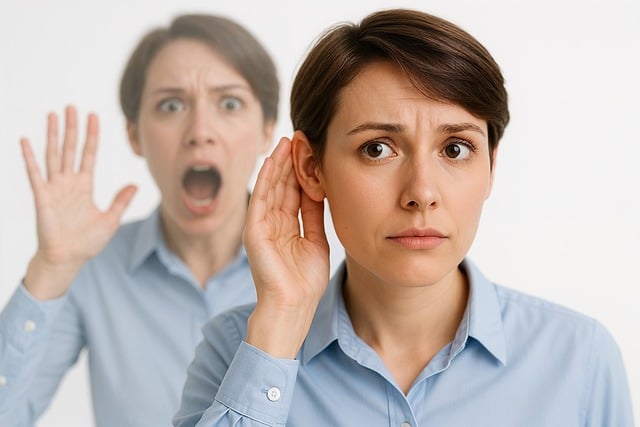
Hearing voices, or auditory verbal hallucinations, is one of the best-known features of schizophrenia. Mental health services describe hallucinations as perceptions that feel real, even when no outside cause exists. The voices may whisper personal comments, repeat insults, or shout over ordinary conversation. Some people hear a single commentator, whereas others report several distinct voices that argue or issue commands. When schizophrenic voices are hostile, the experience can be exhausting and frightening.
Crucially, these perceptions are not imaginary for the person hearing them. A major UK mental health charity notes that “around 1 in 10 of us hear voices that other people do not hear.” Another organisation explains that hearing voices is “actually quite a common experience,” and that many people never receive a diagnosis. These statements highlight something important. The distress comes not only from the content of schizophrenic voices, but also from their convincing presence. The sound feels real, so people often respond as they would to any threatening speaker in the room.
Inner speech and the brain’s prediction system
To understand this new research, it helps to look carefully at inner speech. Psychologists describe inner speech as the familiar running commentary in most minds. It helps people plan the day, rehearse difficult conversations, or keep track of tasks. For some individuals, this inner voice is continuous and verbal. For others, it appears more as images or scattered phrases. Professor Whitford explains that “inner speech is the voice in your head that silently narrates your thoughts.” Everyone uses it, although people notice it to very different degrees. Neuroscientists see inner speech as a kind of action that the brain predicts in advance.
When you speak out loud, your brain sends a copy of the movement command to sensory areas. That copy is called a corollary discharge signal. It warns the auditory cortex that your own voice is coming, so the response becomes dampened. In healthy volunteers, this suppression shows up clearly in brain recordings. Researchers long suspected that a similar predictive signal operates during silent inner speech. If that signal weakens or reverses, your own inner commentary could feel strangely external. That idea sits at the heart of many theories about schizophrenia voices.
A 50-year-old idea about misattributed inner speech

The inner speech theory of auditory hallucinations has been discussed for about 50 years. It draws on early work by neurologist John Hughlings Jackson, who described thoughts as “complex motor acts” carried out internally. Modern models argue that when prediction signals misfire, self-generated thoughts may lose their “self” tag. The Schizophrenia Bulletin article from the UNSW group suggests that abnormal prediction may blur the line between inner and outer sound. In that scenario, the brain cannot reliably decide whether speech comes from inside or outside.
Several previous studies supported parts of this picture. Some experiments showed altered brain responses when people with schizophrenia spoke aloud. Other work detected small muscle twitches around the lips when people reported hearing voices, which hinted at covert speech. These pieces were suggestive, yet incomplete. Researchers still lacked a direct measure of how inner speech affects the auditory cortex in people who experience schizophrenia voices. Whitford has said that “this idea’s been around for 50 years,” but that it proved very hard to test, because inner speech remains private. The new study was designed specifically to reach that hidden process.
Inside the UNSW EEG experiment

Whitford’s team used electroencephalography, or EEG, to record brain activity from volunteers in real time. The researchers worked at UNSW Sydney with collaborators in Hong Kong and the United States. They recruited 3 groups of adults. One group included people with schizophrenia spectrum diagnoses who had heard voices during the previous week. A second group had similar diagnoses but no recent hallucinations. A third group included adults without schizophrenia or schizophrenia voices. In total, the sample provided a careful comparison across different levels of risk and experience.
Participants wore headphones and an EEG cap while completing a simple syllable task. On each trial, they either imagined saying “bah” or “bih” silently, or they remained passive. At the same time, a recorded “bah” or “bih” played through the headphones. Sometimes the heard sound matched the imagined sound. Sometimes it did not. Volunteers could not predict which syllable would appear, so inner speech and external sound varied independently. This design allowed the team to compare brain responses when inner speech and outer sound lined up and when they mismatched. It closely mirrors the situation where thoughts and perceptions overlap, which is central to auditory hallucinations.
How the brains of people with schizophrenia responded
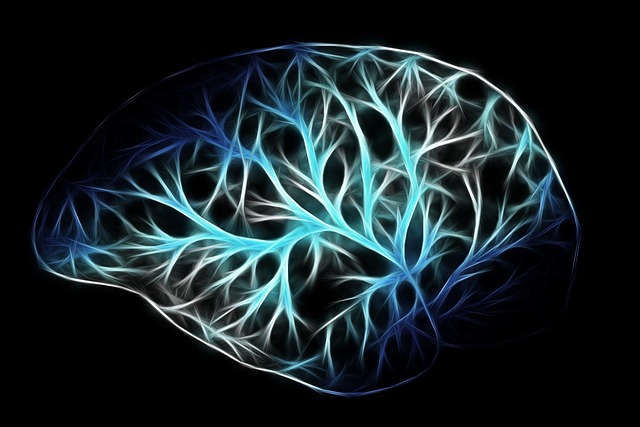
Image Credit: Pixabay
The results for people without schizophrenia matched long-standing theory. When the heard syllable matched the imagined one, the auditory cortex response became weaker. The brain already “expected” that sound because it had prepared the relevant inner speech. In healthy volunteers, thinking the syllable seemed to cancel some of the impact of hearing it. Whitford’s group interpreted this reduction as evidence of a normal corollary discharge signal during inner speech. The pattern looked very different for participants who were experiencing auditory hallucinations in schizophrenia.
In this group, matched inner and outer speech produced stronger responses in the auditory cortex. Instead of suppressing the expected sound, the brain reacted more intensely when inner speech and external speech aligned. Whitford observed that “their brains reacted more strongly to inner speech that matched the external sound.” Participants with schizophrenia who had not heard voices recently showed an intermediate pattern. Their responses fell between the healthy group and the actively hallucinating group. That graded result suggests a spectrum. The more prominent the auditory hallucinations in schizophrenia, the more strongly the prediction system seemed to misfire.
Why researchers see this as a breakthrough
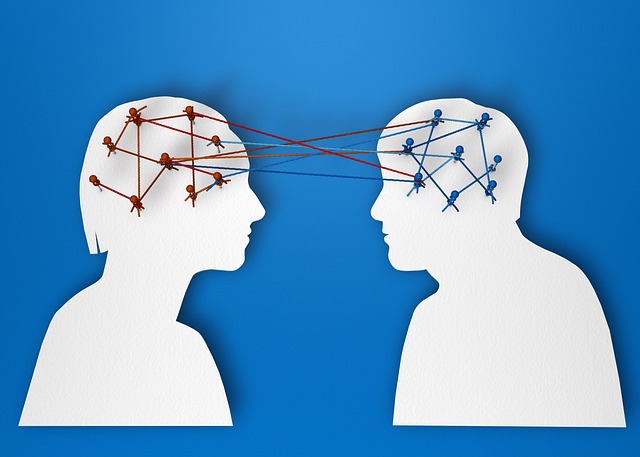
For decades, clinicians have told patients that hearing voices might reflect misidentified thoughts. Many people who hear voices feel deeply frustrated by explanations that sound vague or moralising. This new study offers concrete biological evidence instead of speculation. By showing that inner speech suppresses auditory responses in most people, yet amplifies them during auditory hallucinations, the UNSW team linked a lived experience to a measurable brain signature. The research appeared in Schizophrenia Bulletin, a leading psychiatric journal, which underlines its scientific weight.
The UNSW news release described the findings as the strongest confirmation so far that the brains of people with schizophrenia can misread imagined speech as external. Whitford emphasised both the novelty and the patience involved. He said that “this sort of measure has great potential to be a biomarker for the development of psychosis.” Commentators in science media have echoed that view and highlighted the elegance of the experiment. External experts have praised the clever use of EEG to tap a private process like inner speech. For many researchers, the study finally provides a direct test of a theory that shaped thinking about auditory hallucinations in schizophrenia for half a century.
Could brainwave patterns forecast psychosis one day?

The study does not stop at explanation. It also raises the possibility of early detection. In their article, Whitford and colleagues suggest that abnormal inner speech suppression might become a biomarker for schizophrenia spectrum disorders. A biomarker is a measurable feature that signals increased risk or active disease. At present, clinicians diagnose psychosis through interviews, observation, and reported experiences. There is no blood test or routine scan that can flag auditory hallucinations in schizophrenia before they arrive. Whitford believes that changing this situation could transform care.
He argues that “understanding the biological causes of the symptoms of schizophrenia is a necessary first step” toward new treatments. If researchers can refine this EEG signal, it might help identify young people whose brains already mis-handle inner speech. That knowledge could guide early intervention services. These services might offer psychological therapies, education for families, and support with stress and sleep long before a first crisis. Any such use remains in the future, and the measure still needs replication. However, the concept of forecasting auditory hallucinations in schizophrenia using brainwaves now rests on real data, not just hope.
Limits of the theory and the variety of experiences

Image Credit: Pixabay
Even a strong result like this does not explain every aspect of schizophrenia. Many people with the diagnosis never end up hearing voices at all. Others hear sounds that do not resemble inner speech, such as music or mechanical noises. A feature article on the study pointed out that hallucinations also occur in mood disorders, neurological conditions, and some severe sleep disturbances. Inner speech prediction offers one pathway to voices, not a universal mechanism. Experts also emphasise that schizophrenia includes several clusters of symptoms.
These can involve fixed beliefs, flattened emotional expression, concentration problems, and social withdrawal. The World Health Organization and national institutes describe schizophrenia as a disorder that affects thinking, perception, movement, and motivation. The UNSW findings focus on a single, though important, piece of that larger pattern. Yale psychiatrist Albert Powers, who researches hallucinations, has described such work as clarifying “one possible mechanism” behind auditory hallucinations. That perspective matters for families. The study illuminates a specific aspect of why some hear voices, but good care still needs to address the whole person, including physical health and social circumstances.
Read More: Same Root Cause Shared by Several Psychiatric Disorders, Study Reveals
Voices, stigma, and support beyond the lab

Image Credit: Pixabay
While neuroscience tracks brainwaves and prediction signals, people who hear voices still live in ordinary communities. Stigma can make that life much harder. The charity Rethink Mental Illness explains that “around 1 in 10 of us hear voices that other people do not hear.” The international Hearing Voices Network similarly notes that hearing voices is “generally accepted” to affect between 3 and 10% of people. These figures include individuals with diagnoses and many without. They show that voice hearing is a human experience, not a rare curiosity.
Hearing voices and movements encourages people to talk about their experiences in safe spaces. Peer-led groups invite members to explore who the voices seem to be and what they say. Some people find that their schizophrenia voices reflect past trauma or overwhelming stress. Others experience more neutral or even supportive voices. Health agencies still recommend treatment when voices cause distress or risk. Medication, psychological therapies, and social support can each play important roles. However, the new brainwave findings offer something different. They tell people that hearing voices is linked with a specific brain process, not a personal failing. That message can ease shame and open doors to help.
What this research really changes

The UNSW study does not offer a quick cure for auditory hallucinations in schizophrenia. People still need access to therapy, housing, income, and understanding communities. Yet the work changes the conversation about why these experiences happen. By showing that inner speech quiets sound responses in most brains, but heightens them in people with schizophrenia voices, Whitford’s team has turned an old idea into solid evidence. The study connects a deeply private symptom with an observable pattern of activity in the auditory cortex.
For people living with auditory hallucinations, the message is both scientific and humane. The voices correspond to real differences in how the brain predicts and labels its own speech. They are not signs of weakness, lack of willpower, or moral failure. As more studies build on these findings, researchers hope to create tools that spot risk earlier and guide more tailored treatments. Whitford has called biological understanding a “necessary first step” toward new therapies. It is only one step, but it moves the field toward explanations that respect both brain science and human experience. For anyone affected by schizophrenic voices, that progress offers a measure of validation and, over time, a path toward better support.
Disclaimer: This article was created with AI assistance and edited by a human for accuracy and clarity.
Read More: Why People With Schizophrenia Hear Angry Voices in the U.S.—But Kinder Ones in India and Africa