
For years, the concept of car touch screens was presented to the public as the future of driving. They promised sleek minimalism, smartphone-style convenience, and endless customization. Yet a different story has emerged on our roads in the real world. In fact, many drivers now report frustration, safety researchers warn about delayed reactions, and regulators are starting to push back. What once seemed like technological progress now appears, in many cases, like a dangerous diversion of attention. The glossy panels that dominate modern dashboards often demand eyes, hands, and mental effort at the exact moment our focus should remain on the traffic. As evidence mounts, many manufacturers are quietly changing course and reintroducing familiar knobs, stalks, and switches. This article explains why the tide is turning on car touch screens, drawing on safety data, expert commentary, and new regulations that are reshaping the next generation of car interiors.
Touchscreens Can Slow Reactions More Than Drink-Driving
The most serious concern is that these car touch screens affect our reaction time. When drivers constantly glance down, search through menus, and confirm taps, they spend crucial moments not watching the road. Research by the UK’s Transport Research Laboratory for IAM RoadSmart compared touchscreen use with focused driving and other impairments. The team reported that “a driver using a touchscreen could take up to 57% longer to react to a change in the road conditions.” That deterioration exceeded the delay measured at the legal alcohol limit in several jurisdictions. Additionally, the American Automobile Association’s safety division has raised similar alarms.
Its guidance stresses that both visual and cognitive attention are essential, and warns that many in-vehicle systems “can cause drivers to lose sight and focus of the road ahead.” Whether it is entering an address, scrolling a playlist, or adjusting settings through car touch screens, each task demands sustained visual focus and mental processing. At highway speeds, even a few seconds of diverted attention means travelling hundreds of metres with sharply reduced awareness. As this body of evidence grows, it undercuts the idea that large, menu-heavy car touch screens are a neutral design choice. They increasingly appear as an added risk placed between the driver and the road.
Drivers Are Losing Patience With Fiddly Glass
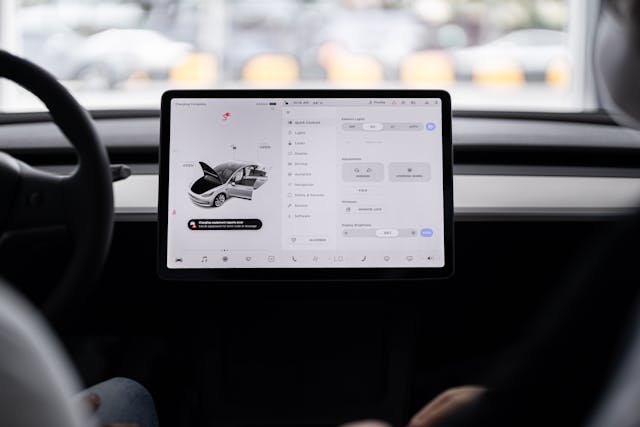
When giant car touch screens first spread through showrooms, they suggested luxury and innovation. However, over time, many owners have decided they are mostly just an irritation. Complaints about lag, cluttered interfaces, and crucial features buried behind multiple taps now appear regularly in surveys and forums. J.D. Power and Consumer Reports have consistently found that infotainment systems sit near the top of new-car gripes. Drivers often report trouble with navigation, audio controls, smartphone integration, and basic usability. What was marketed as intuitive often actually feels obscure once the novelty has begin to fade. Many technology writers have started to capture that mood.
For example, a recent analysis in Wired observed that manufacturers are “gradually shifting back to physical buttons in vehicles,” after discovering how unpopular touchscreen-only layouts can be in everyday use. Survey data indicate that most drivers still prefer tangible controls for core functions such as climate, audio, and demisting. This is exactly the landscape that now encourages physical buttons returning to cars for the most important tasks. Manufacturers are beginning to accept a message that customers have repeated for years. People do want modern connectivity and decent screens. They also want critical adjustments to be immediate, obvious, and available without hunting through layers of icons. That consumer pressure now shapes product planning as strongly as showroom aesthetics.
Our Brains Are Built for Knobs and Switches
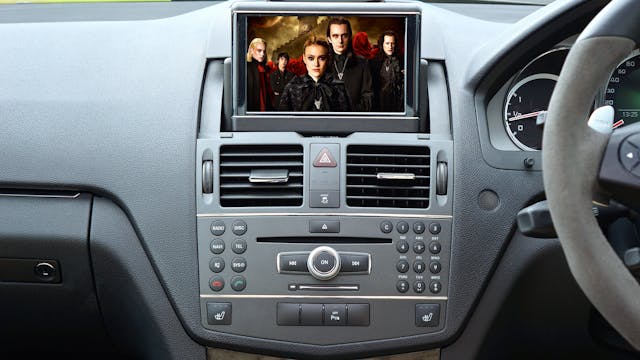
While these car touch screens may look smooth and futuristic, they actually clash with how human cognition works. We evolved to act in a physical environment filled with edges, textures, and resistance. Our hands learn repeated movements until they become nearly automatic, freeing the eyes to monitor threats. Buttons, wheels, and stalks use that natural ability. Once a driver has learned the cabin layout, they can adjust volume, temperature, or wipers largely by feel. Designers call this tactile feedback and spatial memory. The European Transport Safety Council notes that drivers “take much longer to perform regular tasks on in-vehicle touch screens compared to physical buttons and switches.”
Those extra seconds carry obvious consequences at speed. Human-computer interaction specialists have long warned about this trade-off. One design review concluded that physical controls are superior for reducing cognitive load and preserving situational awareness in moving vehicles. That awareness is exactly what allows a driver to notice a cyclist veering, a pedestrian stepping out, or a car braking suddenly ahead. So the renewed affection for buttons is not a sentimental reaction to old cars. It reflects a deeper understanding of how the body and brain cooperate under pressure, and why flat car touch screens often work against that partnership.
Safety Ratings Are About to Penalize Screen-Heavy Cars
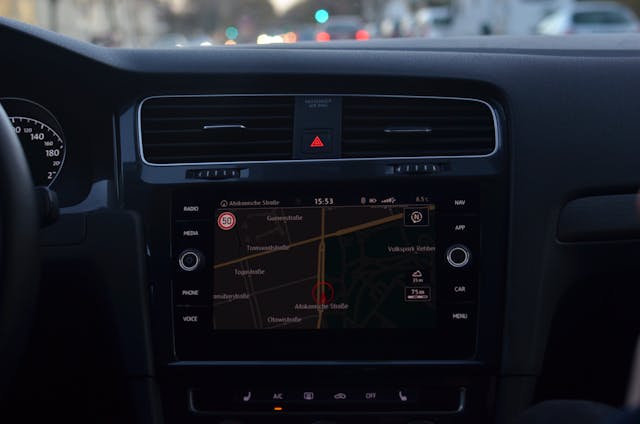
What began as scattered criticism and niche advocacy is now hardening into formal rules. The most influential change is coming from Euro NCAP, the European New Car Assessment Programme, which exerts strong sway over both manufacturer reputations and consumer choices. Euro NCAP’s updated “Safe Driving and Driver Engagement” protocol introduces detailed assessments of how controls are arranged and operated. From 2026, cars that push essential driving functions deep into car touch screens and nested menus will struggle to earn top ratings. The list of protected controls is revealing. Lighting, wipers, indicators, the horn, and hazard lights should all be available through dedicated physical hardware.
Speaking to Wired, Matthew Avery of Euro NCAP explained the intention. He said, “We want manufacturers to preserve the operation of five principal controls to physical buttons, so that’s wipers, lights, indicators, horn, and hazard warning lights.” The aim is not to outlaw infotainment screens. Instead, it is to ensure that urgent, frequently used functions do not depend on visually demanding interfaces. Because European buyers pay close attention to star ratings, these changes carry real commercial weight. Analysts expect the standards to influence designs worldwide, even in markets that do not follow the protocol directly.
Fragile Screens Create Expensive, Centralised Failure Points

Car touch screens also introduce practical headaches that seldom appear in glossy marketing images. When the main display fails, it can cripple many systems at once, since manufacturers often route multiple controls through a single panel. Owner reports and service invoices tell a consistent story. Replacing a damaged infotainment unit can cost more than $1,000 once labour, programming, and trim removal are included. After warranty periods end, these failures become the driver’s financial problem, not the manufacturer’s.
Software fragility compounds the issue even further. Consumer Reports notes that infotainment systems have become “the No. 1 reason for complaints about new vehicles,” with drivers frequently citing frozen screens, crashing apps, unreliable Bluetooth connections, and malfunctioning navigation. A single bug can therefore disable several everyday functions simultaneously. However, traditional car hardware behaves rather differently. A broken fan switch or faulty radio knob is inconvenient, but it is also cheap to replace and localized in effect. For manufacturers who wish to reduce warranty costs and long-term dissatisfaction, shifting some duties back to simple, repairable components is an increasingly rational step.
Design Culture Is Swinging Back Toward Clarity
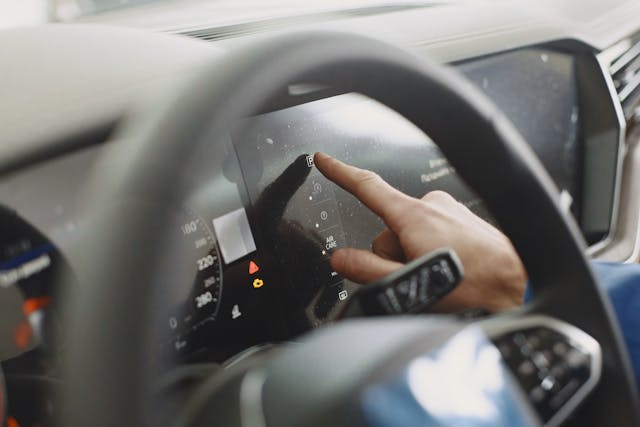
In the last decade, many brands embraced a minimal aesthetic that treated physical controls as visual clutter. Designers carved dashboards into clean planes of plastic and leather, then dropped a large rectangle of glass at the centre. That looks photographed well and signalled modernity, but often sacrificed clarity during real driving, especially with complex car touch screens. Today, a different vocabulary is gaining influence. Engineers and interior designers talk more often about “legibility,” “hierarchy,” and “interaction cost.” The question is no longer how few buttons a dashboard can display for marketing shots. Instead, teams ask how quickly a cold, tired driver can change temperature, clear a fogged screen, or adjust lights during heavy rain.
Euro NCAP’s new scoring framework reinforces this shift by explicitly awarding points for straightforward, accessible controls. The European Transport Safety Council has already highlighted that some manufacturers perform better because they preserve simple, tactile interfaces for frequent tasks. Several high-profile brands have responded publicly. Volkswagen, for example, has promised the return of physical buttons for essential audio and comfort features after sustained criticism of earlier touch-sensitive sliders. The new ideal interior, therefore, balances visual calm with operational clarity, instead of chasing minimalism at any cost, and it quietly celebrates physical buttons returning to cars.
Safety Advocates Keep Sounding the Alarm
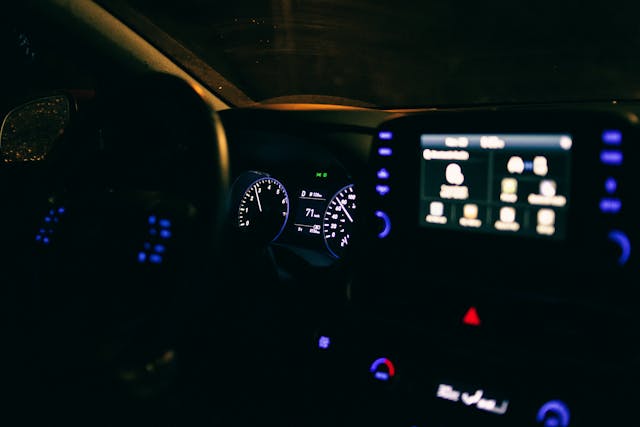
Image Credit: Pexels
For road safety organisations and insurers, touchscreen overload is not an abstract design debate. It intersects directly with injury statistics, liability assessments, and policy discussions, particularly where car touch screens dominate dashboards. TRL’s work for IAM RoadSmart showed that interacting with systems such as Apple CarPlay and Android Auto by touch can impair reaction times more severely than driving at the legal drink-drive limit. The researchers framed this as a clear warning about current design trends, not a minor quirk. The AAA Foundation’s analysis of 40 late model vehicles found that many built-in systems imposed “high or very high” visual and cognitive demands, particularly when drivers entered navigation destinations.
In practice, that means long stretches where eyes are off the road and mental bandwidth is consumed by interface puzzles instead of traffic. In the Wired feature on dashboard controls, Joe Young of the Insurance Institute for Highway Safety summarised the basic principle succinctly. He noted that reducing the complexity of in-vehicle tasks is inherently beneficial because any extra time spent looking away from the road elevates crash risk. A European Commission report has reached similar conclusions, estimating that distraction contributes to up to one quarter of crashes in Europe. As these voices converge, it becomes harder for any manufacturer to claim that heavily screen-dependent interfaces are harmless or purely a matter of taste.
Screen Fatigue Is Reshaping What Feels Like Luxury
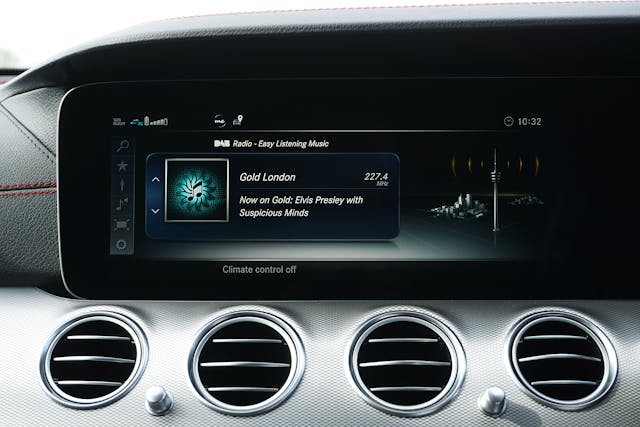
Beyond safety and cost, there is a quieter cultural shift at work. Many people now live their days inside a continuous stream of digital surfaces: laptops, phones, tablets, and workplace dashboards. For a growing number of drivers, the car no longer feels like a place that should add another complicated car touchscreen. Psychologists and ergonomics researchers increasingly describe “screen fatigue,” a mix of mental exhaustion, irritability, and over-stimulation tied to prolonged digital exposure. In that context, a cabin filled with glowing panels can feel less like progress and more like an extension of the office.
The European Transport Safety Council illustrated this problem vividly using Scandinavian testing. In their example, a 2005 Volvo with mostly physical controls allowed drivers to complete four routine tasks in around ten seconds. A recent touchscreen-heavy model needed more than four times as long. For a commuter already tired from email and video meetings, that extra cognitive burden is especially unwelcome. Manufacturers have started to notice that a calmer, more analog-feeling interior now reads as premium. Real knobs, defined buttons, and restrained screens can signal care for the driver’s attention and energy. That, in itself, becomes a new kind of selling point, especially as fatigue with car touch screens spreads.
Read More: 5 Electric Cars a Mechanic Wouldn’t Touch , and the Reasons Might Surprise You
The Next Phase: Smarter Tech With Less Distraction
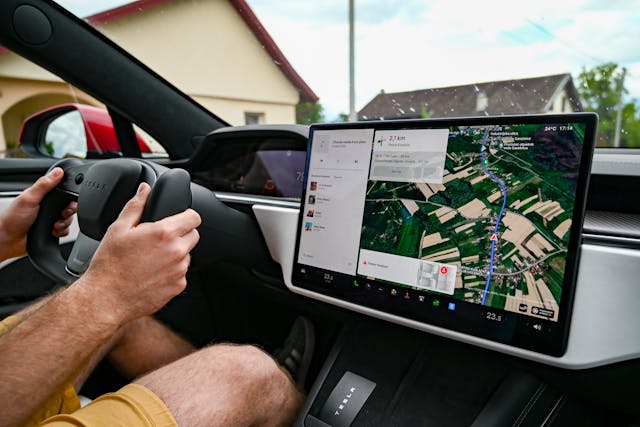
Crucially, the move away from dominant car touch screens does not imply a retreat into nostalgia. Cars will remain connected, software-rich, and updatable. The real change lies in how and where technology appears. Euro NCAP’s coming standards, combined with advances in sensing and processing, are nudging designers toward hybrid control schemes. Large screens will still handle tasks that genuinely require complex visuals, such as detailed maps, reversing cameras, or sophisticated driver assistance views. However, essential and frequently used functions are being migrated back to tactile hardware.
Voice control is also improving. Larger language models allow more natural phrasing and fewer rigid command structures. Yet safety specialists warn that speech interfaces can still create mental distraction, especially when systems misinterpret requests or require repetition. They should supplement, not replace, good physical design. Guidance from AAA encourages manufacturers to minimise the visual and cognitive demand of all in-car technologies, and to limit any task that keeps eyes off the road for extended periods. The car of the near future is therefore likely to use a careful blend of modest screens, reliable buttons, and unobtrusive voice features, all tuned to keep the driver’s attention primarily outside the cabin.
Finding a Safer Middle Ground Between Glass and Hardware
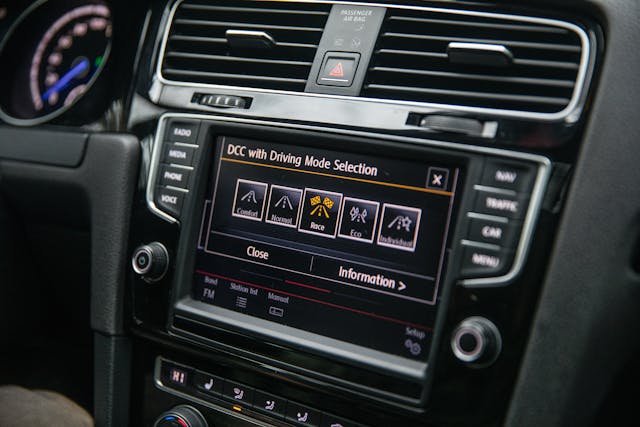
Automakers did not adopt huge car touch screens out of cynicism. Central displays solved packaging challenges, supported global platforms, and offered a flexible canvas for software updates and new features. Many early buyers genuinely enjoyed the futuristic look. However, real-world experience has exposed clear trade-offs. Independent studies show that touch interfaces often make common tasks slower and more attention-heavy than old-fashioned controls. Safety bodies warn that this additional distraction contributes to crashes and injuries. Regulators and ratings agencies now plan to reward cars that keep crucial functions available through simple, tactile hardware.
The likely endpoint is not a total rejection of car touch screens but a more thoughtful balance. High-quality displays will remain for navigation, cameras, and information that truly benefits from rich graphics. Yet the functions that matter most in emergencies or bad weather will once again live under the driver’s fingertips, where muscle memory and touch can guide actions without lengthy glances away from the road. For drivers, that evolution promises something valuable. It offers connected, updatable technology without turning every minor adjustment into a risky microtask. For the industry, it marks a recognition that elegant design must honour human limits, not pretend they can be swiped away.
Disclaimer: This article was created with AI assistance and edited by a human for accuracy and clarity.
Read More: Top 8 Least Reliable Cars to Steer Clear of in 2025, According to Experts