
The International Olympic Committee is getting ready for one of its biggest tests yet. As the world looks toward the trans inclusion 2028 Olympics, the committee is rethinking how transgender and intersex athletes will be allowed to compete. It feels like a turning point, one that might change how fairness and inclusion are seen in sports.
For years, the debate around transgender athletes has caused tension between fairness, biology, and identity. Now, the IOC seems ready to take a clear position. Officials are expected to announce new rules that could stop transgender women from competing in female events altogether. The Olympics 2028 are shaping up to be more than just another Games. They may redefine what equality looks like on the world’s biggest stage.
What the Current Rules Are
The current policy for transgender athletes has been around since 2015. It allows transgender women to compete in female events, but only if they meet certain conditions. They must declare their gender transition, have legal recognition, and keep testosterone levels under 10 nanomoles per liter for at least a year before competing.
Surgery isn’t required, which was considered a progressive choice when the rule came out. Transgender men face fewer restrictions because they usually compete with less of a physical advantage. Over time, though, different sports added their own rules, which made things confusing.
Swimming and track set tougher standards, while others stayed closer to the original IOC framework. Because of that, no one really knows what fair means anymore. The new transgender athlete participation rules for the 2028 Olympics are meant to fix this confusion and create one consistent standard for all.
What Is Under Consideration
According to several reports, the IOC is thinking about completely banning transgender women from all female Olympic events. This would also include some intersex athletes, depending on their biological traits. Early leaks suggest the decision comes from scientific reviews showing that the advantages of male puberty often remain even after hormone therapy.
Kirsty Coventry, the new IOC president, has been open about wanting to make things fairer for everyone. She said that athletes need clarity, not constant changes in the rules. Still, the IOC hasn’t confirmed anything yet. They say discussions are still ongoing with medical experts and athletes before they announce the final version of the trans inclusion policy for the 2028 Olympics.
But even with those reassurances, people close to the committee say the tone has changed. The idea of fairness seems to be taking priority over inclusion.
The Science Behind the Debate
Much of this debate centers on biology, and scientists themselves don’t always agree. Studies show that male puberty creates physiological traits that may give lasting advantages in sports involving strength, speed, or endurance. Testosterone helps develop muscle mass, denser bones, a larger heart and lung capacity, and faster recovery rates.
When transgender women transition, they typically undergo hormone therapy to suppress testosterone. This treatment reduces muscle size and strength over time, but research suggests it may not erase all advantages. For instance, muscle fiber structure and bone geometry often remain more typical of male physiology.
However, these studies are limited. Many involve small sample sizes or athletes who are not competing at elite levels. That makes it difficult to draw broad conclusions. Some experts caution against treating the science as absolute, arguing that the variation among individuals can be wide.
While science provides evidence, it doesn’t always offer simple answers. The IOC’s challenge is to decide how much evidence is enough to justify new transgender athlete participation rules for the 2028 Olympics.
Past Stories That Help Understand the Debate
To really understand how we got here, it helps to look back. There have been a few moments in recent history that shaped the whole discussion.
One was the case of Laurel Hubbard, a weightlifter from New Zealand. She competed in Tokyo 2020 as the first openly transgender woman in the Olympics. Even though she didn’t win, her participation drew huge attention. Some praised her courage, others questioned whether it was fair for her to compete.
Then there’s Caster Semenya, the South African runner with a difference of sex development. She’s not transgender but has naturally higher testosterone. The rules forced her to lower her levels or stop running in certain events. Her battle went all the way to the Court of Arbitration for Sport, which ruled against her. It sparked a wider conversation about what it even means to be female in sports.
Lastly, the case of Imane Khelif at the Paris 2024 Games added new fuel. The Algerian boxer faced controversy over her gender status despite claiming she is female. Her story became another example of how gender in sports has become such a sensitive and complicated issue. These examples built the foundation for today’s push toward clearer rules.
Why the Shift Now
A lot has built up to this point. Many sports groups say transgender women have clear physical advantages over cisgender women, especially in strength and power-based sports. Some scientific research supports that. It shows that traits like bone density, muscle mass, and lung capacity often stay even after transitioning.
Public pressure has also grown. Female athletes are speaking out more about what they see as unfair competition. Support groups for women’s sport have been calling for stronger protections for years. Governments are also weighing in, asking for clearer policies ahead of the 2028 Olympics.
Then there’s the issue of inconsistency. With every sport doing its own thing, the IOC is getting blamed for not taking control. They want a single global standard, one that ends the confusion. The new policy for trans inclusion at the 2028 Olympics could bring that unity, even if it divides public opinion.
Global Reactions and Political Context
The conversation isn’t just happening in Olympic circles. Around the world, sports organizations and governments have been wrestling with similar issues. In the UK, governing bodies like British Cycling and UK Athletics have introduced separate categories or restricted transgender women from female races. World Rugby went even further, banning transgender women from international women’s matches in 2020 for safety reasons.
Public opinion is divided. Some surveys show that most people support policies that prioritize fairness in women’s sport, while others believe transgender athletes should be included as long as they meet hormone standards. The tension between those views shows how cultural and political values shape the debate.
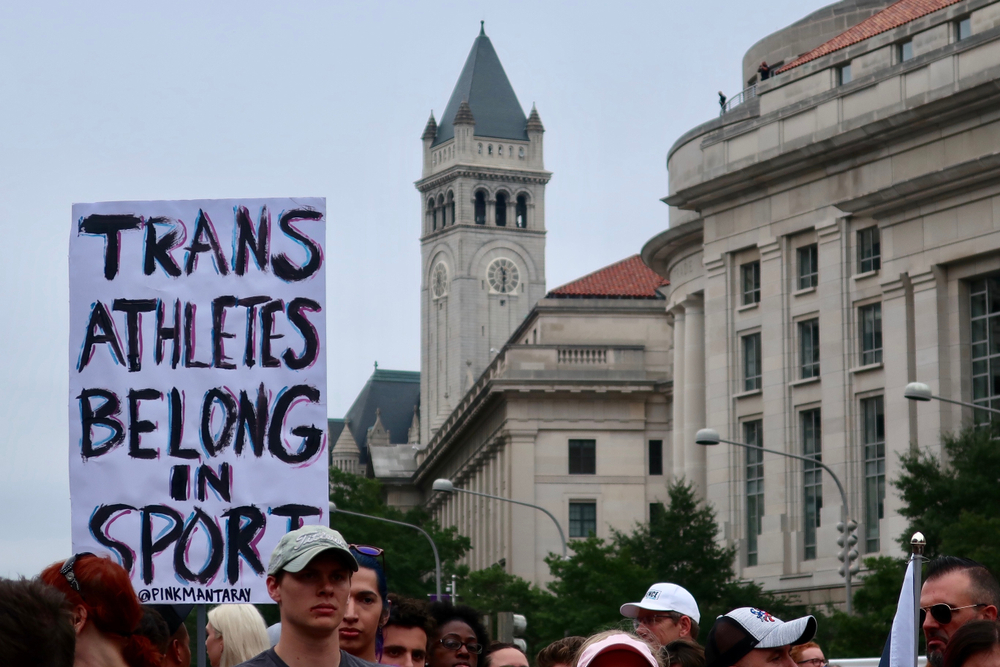
Image credit: Shutterstock
In the United States, several states have passed laws banning transgender girls from competing in girls’ school sports. Meanwhile, other countries, including Canada and New Zealand, remain more open to inclusion. The IOC, sitting at the center of it all, is under pressure to find a middle ground that satisfies both human rights advocates and sporting traditionalists.
How It Could Change Sport
If this new policy goes through, the Olympic landscape could shift completely. Transgender women might not be allowed in female events at all. That could include intersex athletes, too, depending on how the rule is written.
Some people say that’s the only way to keep women’s sports fair. Others say it’s cruel and unnecessary. Either way, it will change the way athletes prepare and compete.
Without clear alternative categories, transgender athletes might have nowhere to go. Creating open or mixed divisions sounds good in theory, but no one has done it successfully at the Olympic level yet. For many athletes, this decision could mean the end of their Olympic hopes.
Sport organizations will need to rewrite their rules and train officials on how to apply them. There will also be legal challenges. Some athletes might argue the policy discriminates against them, while others might defend it as necessary protection. Whatever happens, the rules for the 2028 Olympics will shape the future of fairness in sports.
Voices From Both Sides
Athletes and advocates on both sides of the issue are speaking out. Many female athletes argue they are not trying to exclude anyone but want to preserve fairness. They say they’ve worked their whole lives to compete on an equal footing, and allowing transgender women could undo that balance. Tennis legend Martina Navratilova, who is herself part of the LGBTQ+ community, has said that “fairness has to come before inclusion” when physical differences affect competition.

On the other side, transgender athletes and advocates describe the new direction as deeply personal. American triathlete Chris Mosier, one of the first openly transgender men to compete internationally, says inclusion is about “belonging in the place that reflects who you are.” Many fear the IOC’s new rules could erase years of progress toward acceptance.
Even some scientists who study performance differences say the data should not be used to exclude people but to guide sport-by-sport adjustments. The disagreement isn’t just scientific or political; it’s human, and the outcome will affect athletes’ lives far beyond the Olympic field.
Legal and Ethical Concerns
If the IOC decides to enforce a full ban, legal pushback seems certain. Human rights groups are already watching closely. International sports operate under frameworks like the Olympic Charter, which emphasizes non-discrimination and dignity for all athletes. A total exclusion could be challenged under international law or within national courts.
Past legal cases give some clues. Caster Semenya took her case to the European Court of Human Rights, which ruled that her rights were violated even if the sporting rules technically stood. Transgender athletes could pursue similar paths, arguing that the new policy violates fairness or equality principles.
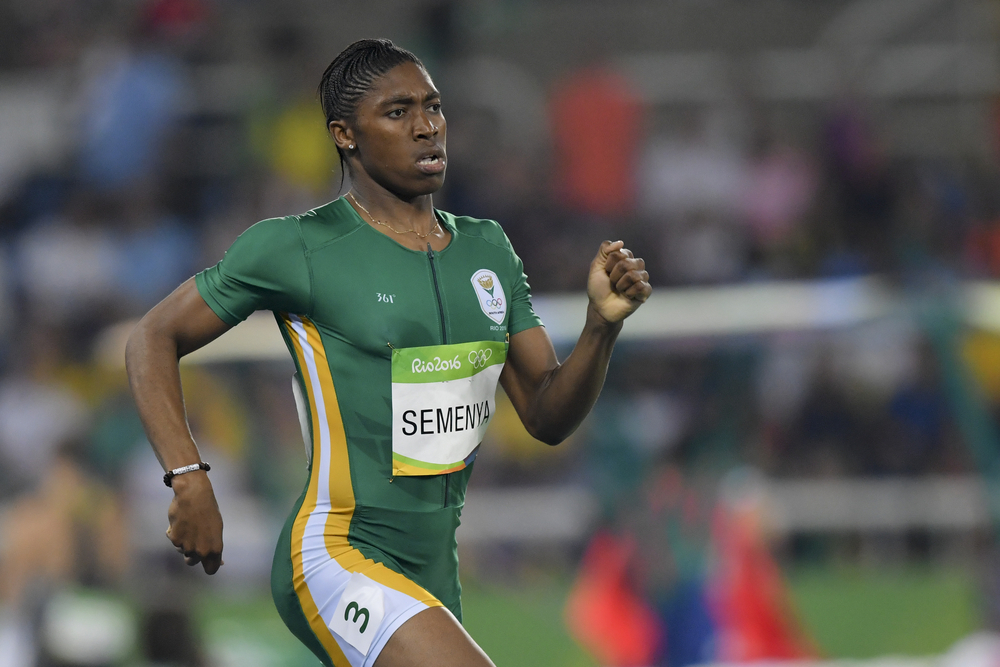
Image credit: Shutterstock
Ethically, the issue also runs deep. The IOC must weigh the responsibility of protecting women’s competition against the duty to include everyone. Too strict a rule risks alienating part of the athlete community, while too loose a one risks backlash from others. Finding the line between fairness and discrimination may be the hardest legal balancing act the IOC has ever faced.
What Could the Future Look Like
Looking ahead, some experts believe new competition categories may eventually emerge. Open divisions, where anyone regardless of gender identity can compete, have been proposed. Others imagine hybrid categories that rely on hormone levels rather than biological sex.
Technology could also change things. As research evolves, more precise ways to measure performance effects of hormones or training might appear. That could allow for more nuanced rules.
Socially, there’s a growing hope that dialogue will replace outrage. Some younger athletes seem more comfortable discussing gender diversity in sport. The next generation might see these debates differently, focusing less on exclusion and more on creative solutions.
Whatever the model, the debate on trans inclusion at the 2028 Olympics will shape how future generations view gender in sport.
Balancing Fairness and Inclusion
This is where things get complicated. Everyone agrees fairness matters, but inclusion matters too. The question is how to have both.
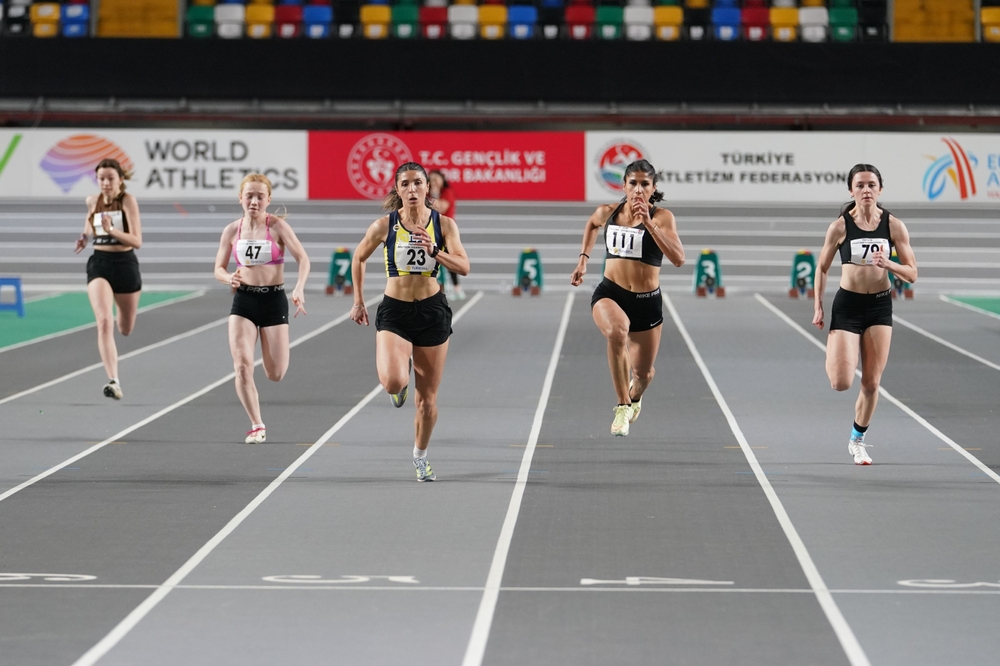
Science says that male puberty provides lasting advantages, but that’s not the whole story. Hormone therapy changes a lot, just not everything. Still, many people feel that any retained advantage makes competition unfair. Others think excluding transgender women from female sports sends the wrong message about equality.
Different sports might need different approaches. In something like boxing, power and strength are critical. But in sports like shooting or equestrian events, the differences are far less important. That’s why a blanket rule will always be controversial.
Privacy is another concern. Testing athletes to verify sex or hormone levels has caused embarrassment and trauma in the past. It’s not just a scientific issue, it’s a human one. So as the IOC finalizes its policy for trans inclusion at the 2028 Olympics, it needs to balance rules with compassion.
What It Means For 2028 And Beyond
The countdown to the 2028 Olympics has already started, and this decision could reshape the Games. If the IOC moves forward, sports federations will have to align their own rules fast. They’ll need to create systems for verification, appeals, and communication. It’s a massive task.
For athletes, the human impact is the hardest part. Some transgender and intersex athletes may lose their chance to compete, even after years of preparation. Others might retire early or turn to activism. Meanwhile, women’s sport groups will likely feel vindicated, seeing it as a victory for fairness.
Beyond the Olympics, the ripple effect will spread to schools, clubs, and national competitions. The IOC sets the tone for global sport, so whatever they decide will influence every level of play. If the new transgender athlete participation rules are enforced for the 2028 Olympics, they’ll shape how the next generation sees equality in sport.
Closing Thoughts
The IOC’s coming decision is about more than who can enter a race or step into a ring. It’s about what sport stands for. The debate of trans inclusion at the 2028 Olympics asks whether fairness and inclusion can coexist without breaking each other apart.
To many, this new direction feels overdue. To others, it feels like a door closing on dreams. There’s no perfect answer, and maybe there never will be. But the way the IOC handles it will say a lot about how sport evolves in the future.
In the end, the Olympics have always been about humanity, courage, and unity. If the committee can hold onto those values while facing this challenge, maybe it can still find a way to keep sport fair and open for everyone.
Read More: Olympic Gold Medalist Imane Khelif Makes Major Career Decision Just Months After Controversy