
A couple turned an abandoned land into a thriving rainforest. Pamela and Anil Malhotra were active environmentalists who wanted to protect and preserve wildlife. They founded the SAI (Save Animals Initiative) Sanctuary in 1993, the only private reserve in India. Their journey began in 1991 when they bought unused farmland that used to grow coffee beans, rice, and cardamom. A lot of deforestation had taken place to create these farms, which had become barren and desolate. Although Pamela and Anil have passed away, they leave behind 300 acres of flourishing ecosystems that homes hundreds of endangered indigenous species.
The SAI Sanctuary
Image credit: Great Big Story
Pamela and Anil Malhotra married in 1980, and they shared a passion for preservation. They honeymooned in Hawaii where they fell in love with its nature and decided to settle there. “That is where we learnt the value of forests and realized that despite threats of global warming no serious efforts were being made to save forests for the future,” said Anil to Times of India in 2016.
When they visited India for Anil’s father’s funeral in 1986, the pollution horrified them. So they decided to stay and “do something to reclaim the forests in India,” said Anil. Another goal was to find more sources of freshwater to prevent future shortages. SAI Sanctuary truly started in 1991 when they sold their property in Hawaii and bought 55 acres of unused farmland in India. As they began their afforestation work, they continued to purchase more surrounding land.
“Once we bought the land, we allowed the forest to regenerate. We planted native species necessary and allowed nature to take care of the rest,” says Anil. In 2016, Anil wrote a call-to-action for CEOS and business owners to buy land that could be returned to the wilderness, according to Forbes. This petition was not just about conservation; it was about solving the fresh water crisis caused by deforestation.
Pamela and Anil Malhotra’s Success

Once the greenery filled in, the insects returned, which further helped grow the fauna. As the trees prospered, elephants, deer, monkeys, and more species arrived. A once vacant land was brought back to life. “Having a forest sanctuary filled with wildlife was always my childhood dream,” said Pamela in an interview in 2022. “It was transformed into a passion born out of love of nature, but also fuelled by the horrible destruction of the natural world.”
According to Pamela, the SAI Sanctuary has become the home of many endangered species “including the Asian elephants, Bengal tiger, Indian leopard, Dhole or Indian wild dog, golden jackal, Indian jungle cat, species of civets, mongoose, Eurasian sparrow hawk, small buttonquail and Asian palm swift, two species of river otter… The list goes on.”
What’s even more remarkable is that the animals came on their own. “…We have never transported or introduced any animals to the sanctuary. This would be against the wildlife laws,” said Pamela. The sanctuary has rescued, rehabilitated, re-released animals under the guidance of Karnataka’s principal chief conservator of forests, but this is not the focus of SAI. Instead, Pamela and Anil Malhotra worked to restore the fauna and ecosystems organically by maintaining the animals’ habitats and food sources. “We have preserved protected natural meadows, wetlands, and riparian areas of rivers and ponds that flow throughout the sanctuary grounds… We keep the river system clean of litter and plastic bags to avoid water pollution.” In fact, the use of plastic is entirely banned at the sanctuary.
Read More: 20+ of The Most Breathtaking Places on the Planet
Leaving the World a Better Place
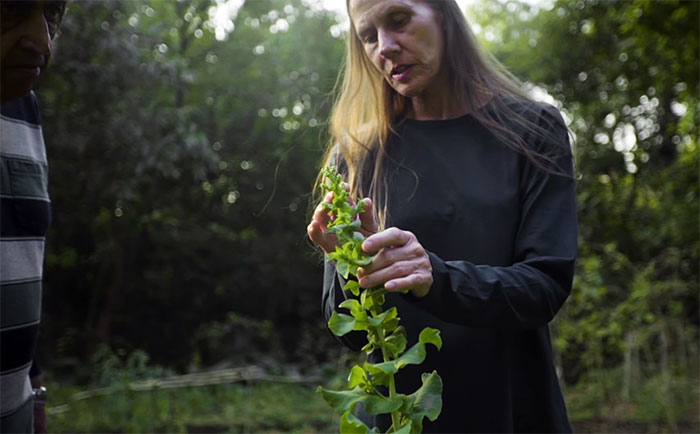
Image credit: Great Big Story
Anil Malhotra passed away in 2021. In addition to his work at SAI Sanctuary, he constructed cottages in his village called Birunani. These homes are eco-friendly and use natural light sources instead of electricity, according to his obituary. He also manufactured organic manure to give to local farmers. Anil was passionate about spreading awareness about nature and how to protect it.
Pamela Malhotra died in 2024 at age 72. Her advocacy went beyond environmentalism. She also empowered women to form committees so they can receive low-interest loans, and worked to give free medical aid to women and children in remote locations. Her efforts earned her the Nari Shakti Puraska Award on International Women’s Day in 2017, according to Legacy. She’s received numerous other rewards recognizing her for her wildlife preservation and protection.
When asked how people can help counter climate change, Pamela recommends they reexamine their lifestyles. She advises not to waste or buy things you don’t need for the sake of getting something new. “…Turn off any electrical items when not in use. Carpool rides to work or use mass transport, walk whenever you can. Plant a garden, even in a window box area, and grow your own food.” Pamela also advocates for veganism because of the negative environmental impact of consuming meat and fish. “Encourage and support forests. The goal is to piece back the fragmented government forest areas, helping to control climate change, building biological and migration corridors for wildlife to help stop human-animal conflict.”
Read More: Mexico, Guatemala, and Belize Unite to Protect Mayan Jungle With New Tri-National Reserve