
A groundbreaking new procedure has restored the vision of 14 people with blinding cornea injuries in one eye. To treat this, the researchers and surgeons transplanted corneal cells from the healthy eye onto a damaged eye. The treatment, called cultivated autologous limbal epithelial cell (CALEC) transplantation, was developed by a team of experts from Harvard Medical School and Massachusetts Eye and Ear. This stem cell therapy is still experimental and not offered at any U.S. hospital, but it offers hope to those suffering from blindness from corneal injuries.
The Importance of the Cornea
Eyes are a complex organ that enables people to see. Unlike other vital organs, you can examine different parts of it without any specialized equipment. For example, anyone can easily see the sclera, the white part of the eye that is also the base of its structure. The iris is the color around the pupil that makes it widen and narrow depending on the light. The conjunctiva is the membrane that lubricates the iris and protects it from irritants. The cornea is a dome-shaped protective layer over the eye that refracts light and sharpens focus. Without it, vision wouldn’t be possible.
However, the cornea is susceptible to injuries, infections, burns, and structural diseases, according to the Cleveland Clinic. This can leave people with vision loss and persistent pain. To make matters worse, injuries can damage limbal epithelial cells, which reside on the outer layer of the cornea. Once depleted, these cells never regenerate, meaning the surface of the eye can’t heal. Currently, the standard care for vision rehabilitation is a corneal transplant, but patients with these injuries are not eligible.
“Current treatment options for limbal stem cell deficiency caused by cornea injuries have considerable limitations, including injury to the healthy eye from removal of stem cells, or limited effectiveness,” said Ula Jurkunas, MD, associate director of the Cornea Service and HMS professor of ophthalmology at Mass Eye and Ear, to Medical News Today. “Because of this deficiency, they are unable to undergo a cornea transplant, the current standard of care, and they are often left blind in the affected eye and in great pain.”
The Stem Cell Therapy that Cured Blindness from Cornea Damage

So researchers began to investigate a method of regenerating limbal epithelial cells. After almost 20 years of preclinical studies and collaborations with other experts, the researchers finally manufactured CALEC grafts that were suitable for human transplantation. Jurkunas is the lead author of the 2025 study that documented the procedures. “Our first trial showed that CALEC was safe and the treatment was possible,” Jurkunas said to Mass General Brigham Newsroom. “Now we have this new data supporting that CALEC is more than 90 percent effective at restoring the cornea’s surface.” This may become helpful for people who have “untreatable” cornea damage.
“In the CALEC procedure, a very small biopsy is performed in a patient’s healthy eye, which removes a small amount of limbal cells,” Jurkunas said. “Then, the cells are transported to a GMP facility at Dana-Farber Cancer Institute, where they are expanded on a scaffold, a process that takes about two to three weeks. The resulting stem cell graft is then brought back to Mass Eye and Ear. There, the scientists transplant the graft onto the patient’s damaged eye. After a brief recovery, the stem cell graft replenishes the limbal stem cells and restores the cornea’s surface. At this point, a patient can undergo a cornea transplant. Or in the case of some patients in our study, do not need further cornea treatment.”
At the 3-month follow-up after the trial, the CALEC treatment had completely healed the vision of 50% of the 15 participants. By the 12-month mark, the overall success rate increased to 93%, and by the 18-month mark, it was 92%. “These findings are significant because it shows that CALEC’s effectiveness improved overtime, which can translate into a lasting benefit for patients who undergo these treatments,” Jurkunas said.
Read More: Doctors Made A 3D Print Of An Ultrasound For A Blind Expecting Mama
The Future of Cornea Treatment
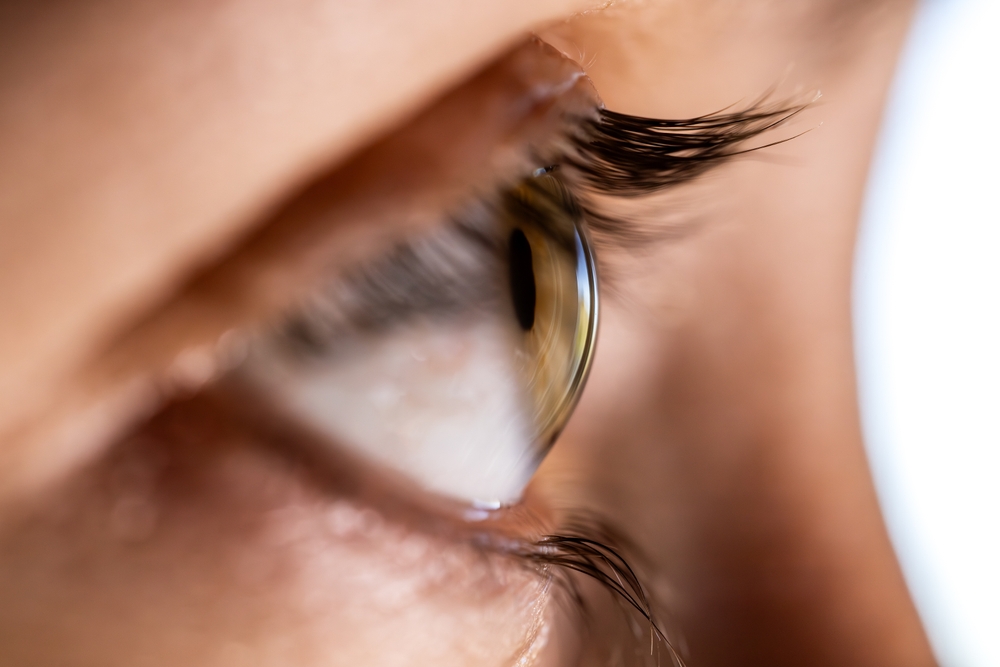
Image Credit: Shutterstock
The trial reported a high safety profile for the patients. There was one instance of infection eight months after the treatment due to the chronic use of contact lenses. Unfortunately, this therapy is only suitable for patients with one damaged eye. “Our future hope is to set up an allogeneic manufacturing process starting with limbal stem cells from a normal cadaveric donor eye,” said Jerome Ritz of Dana-Farber’s Connell and O’Reilly Families Cell Manipulation Core Facility, where the stem cell grafts are reproduced. “This will hopefully expand the use of this approach and make it possible to treat patients who have damage to both eyes.”
People involved in ophthalmology are excited by the prospect of reproducing limbal stem cells. But some are skeptical about the availability of such a treatment. They include Benjamin Bert, MD, a board-certified ophthalmologist, who was not involved in the study. “The description of how they’re able to culture these cells requires pretty advanced technology,” he said. “So it’s a question of can this be expanded so that it can be offered to many patients, or is it going to be limited just to these more academic centers where they have the laboratories and the capabilities to do it.”
For the next phase of study, the researchers will test the CALEC treatment on a larger group of people. They also plan to conduct a randomized controlled trial by including a placebo group. This will help determine the true effectiveness of stem cell therapy on blindness. Eventually, they hope to get FDA approval and help bring the treatment to patients who need it.
Read More: Blind Man, 34, Regains Sight After Doctors Implant His Tooth in His Eye