
Over the last 20 years, Amazon has reshaped how Americans shop and work. The company’s fulfillment network stretches across the country, linking warehouses and an ever-growing last-mile fleet. This massive network requires a vast workforce to keep packages moving every hour of the day. According to recent reports of a leak, however, the next phase will look very different. Apparently, these internal strategy documents outlined how Amazon leaders believe robots can eliminate much of the hiring the company once expected. The plans describe automation that could help Amazon avoid bringing on hundreds of thousands of workers through the next decade, while the company doubles the number of items it sells. While Amazon has disputed the strongest interpretation of those documents, it has confirmed the rapid buildout of advanced robotics inside its newest facilities. The leaked materials about the Amazon automation plans also go into detail about their goal to automate three-quarters of warehouse operations in the coming years.
Executives reportedly told the board they could avoid hiring more than 160,000 additional U.S. workers by 2027. Additionally, they could also avoid hiring a further 600,000 by 2033, largely through robotics and software. That projection is not the same as layoffs, but it implies fewer entry-level hirings in the future. Amazon publicly pushed back, arguing these documents actually reflect one team’s modeling rather than a companywide hiring plan. The firm also pointed out its ongoing seasonal hiring and says language choices around “robots” or “AI” are not centrally directed. The reporting has nonetheless focused the public’s attention on a crucial question. If the nation’s second-largest employer automates at scale, how does that ripple through communities that have come to rely on warehouse jobs and hourly work tied to e-commerce growth? Let’s find out more about Amazon robots replacing workers and the future of work automation.
What the Leaked Documents Say About Amazon Automation Plans
Several reports that examined the internal documents say the company’s strategy is clearly focused on automation. Amazon’s U.S. workforce has roughly tripled since 2018 to around 1.2 million. Yet it has modeled a path where automation would allow the company to ship far more product without hiring humans. They projected avoiding more than 160,000 U.S. hires by 2027, which equates to saving around 30 cents on every item packed and delivered. Over a longer period, they anticipate avoiding more than 600,000 hires by 2033, even as their order volume doubles. Those savings would arrive through faster picking systems and automated carting between zones. Apparently, these documents also describe operating models with less human intervention after a package is sealed.
As the leak gained attention, analysts estimated multibillion-dollar cost reductions if the plan scaled across dozens of sites. The details also mention communications tactics, including softer vocabulary like “advanced technology,” intended to emphasize collaboration rather than replacement. Amazon denies giving company-wide instructions on messaging, but the wording mirrors how many firms manage communication during major tech transitions. The internal goal mentioned most often in reports is ambitious. Amazon’s robotics organization aims to automate up to 75 % of operations. Human roles would be focused on maintenance and quality. The leaked plan identifies about 40 various sites to implement this idea by 2027.
Amazon’s Response

However, Amazon has contested the claim that it has a companywide plan to “replace” a fixed number of workers. Company spokespeople have argued that the documents reflect one group’s scenario planning. They added that they do not capture total hiring across all business lines. They also point to ongoing seasonal hiring bursts, which last year involved a quarter million roles. However, permanent totals are not always disclosed. Various reports have picked up Amazon’s pushback and noted the tension between planning documents and public statements. Furthermore, independent media coverage further confirms that robots are already deeply embedded in the network. Amazon has publicly stated that it now operates over a million robots globally across more than 300 facilities.
That figure grew even more in 2025, revealing the scale and speed of deployment. The company also emphasized its internal training pipeline. Leaders highlight a mechatronics apprenticeship that has served nearly 5,000 employees since 2019, creating pathways into technician roles. In interviews, executives have argued that robots eliminate repetitive or physically demanding tasks. This would effectively allow workers to transition into higher-paid roles that require troubleshooting and preventive maintenance. Those roles exist today at the company’s most automated sites, where technicians earn a premium relative to entry-level warehouse work. These claims neither erase the displacement risk nor settle the long-term totals. They do, however, reflect a company actively investing in both the machines and the people who keep them running.
Inside the Template: Shreveport, Virginia Beach, and Stone Mountain

To understand the shift, it helps to step inside Amazon’s most advanced facilities. In late 2024, Amazon opened a next-generation fulfillment center in Shreveport, Louisiana, designed from the ground up around robotics. Amazon’s own coverage detailed eight or more robotic systems working in concert with human teams, including automated storage and robotic arms. Trade press tours revealed five floors of dense automation, where packaged items move with minimal human intervention until outbound loading. Reports based on the leaked documents say Shreveport used roughly 1,000 robots. This enabled the site to employ about a quarter fewer workers than a non-automated counterpart last year.
As additional systems come online, human headcount could drop further relative to the traditional system. Amazon has stated it plans to replicate the Shreveport model in dozens of buildings by 2027. This includes a new robotics fulfillment center in Virginia Beach. At the same time, the company is retrofitting recent-vintage facilities to adopt these new workflows. One internal analysis also detailed Stone Mountain, near Atlanta, which currently employs around 4,000 workers. After retrofitting, the facility was projected to process more items while requiring around 1,200 fewer employees. Amazon has stated that the final number of workers could still change, but the overall direction remains pretty clear.
Why Automation Now
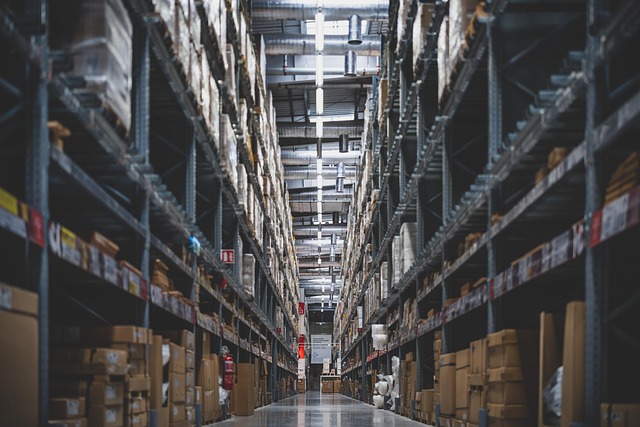
The business logic behind automation is pretty straightforward. Warehouse labor takes up a considerable percentage of fulfillment costs, and logistics is a low-margin, high-volume game. Small improvements in accuracy and uptime compound into significant savings at Amazon’s scale. After the pandemic, e-commerce demand surged dramatically, then subsequently normalized with higher cost structures and intense service expectations. Companies faced issues such as wage inflation, tight labor markets, and rising transportation costs. In that environment, robotics promised durable improvements in efficiency. Industry research revealed that warehouse automation is growing by double digits annually, with robot shipments increasing rapidly throughout the decade. Consultants have reported that automated picking can boost efficiency significantly while reducing the associated labor costs.
Amazon has long embraced this logic, starting with its 2012 acquisition of Kiva Systems. This effectively replaced miles of walking with goods-to-person flows. The new generation will go even further, using AI models to sequence and monitor thousands of concurrent movements. Amazon’s own documents now emphasize AI-enabled orchestration in Shreveport, describing “ten times more robotics” than prior-generation sites. These types of improvements typically come with major upfront costs and require careful planning to manage the transition effectively. Yet as these systems mature, they lower unit costs and increase predictability. Other competitors will likely follow similar paths, since logistics performance ends up affecting customer expectations across the entire retail sector. Ultimately, the company that initially cracks reliable, low-touch fulfillment at scale ends up setting a new benchmark for everyone else.
What Happens to Jobs
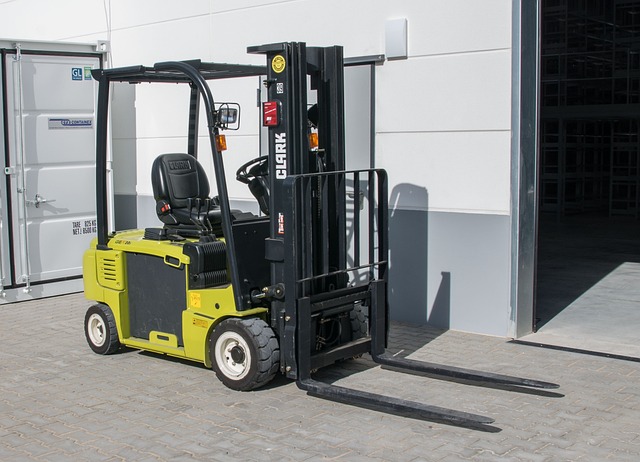
Exactly how this automation ends up affecting total employment depends on various dynamic forces. New technologies can displace tasks while creating other roles in maintenance and operations. Over time, these productivity gains can lower prices and support new business formation, generating jobs elsewhere. Several well-known research organizations describe the situation as complex, showing both positive and negative effects. Brookings notes that automation often creates as many jobs as it destroys over longer periods. However, it also acknowledges the painful transitions for specific workers and regions. The OECD estimates that around 28% of jobs across member countries are at high risk of automation, with the highest risk in lower-skill roles. The International Monetary Fund projects that roughly 60% of jobs in advanced economies will be significantly impacted by AI. Additionally, half potentially benefit and half potentially face lower demand.
In the case of U.S. warehousing, the risk is highest in areas such as manual picking, packing, stowing, and carting, which are exactly the steps being automated. Economists warn that when a dominant employer finds a profitable automation recipe, the approach spreads. This shifts bargaining power and reshapes local labor markets. Acemoglu, who received the 2024 Nobel Prize in economic sciences, has argued that aggressive automation risks turning a prolific job creator into a net job destroyer. Companies and workers, therefore, face an urgent design problem. They must convert short-term displacement into long-term opportunity, which requires training and investment in new local industries.
Who Is Most Exposed

Warehouse jobs have become a ladder into the middle class for many workers without four-year degrees. The sector also employs higher shares of Black workers than the national average. This raises equity concerns if hiring slows down or attrition accelerates during the retrofits. While the documents do not specify demographic impacts, researchers warn that automation tends to impact regions most severely when many local workers depend on a single large employer or industry. Warehousing clusters near population centers can experience considerable changes in job postings when a major site ramps up or retools. The Bureau of Labor Statistics tracks warehousing jobs within the larger transportation and warehousing sector. Those numbers rise and fall in cycles, affecting local unemployment rates across regions.
Communities that offered tax incentives for fulfillment centers may feel betrayed when headcounts decline. The leaked documents even considered boosting “good corporate citizen” branding through community events during automation. Amazon says community involvement has nothing to do with automation, yet the contrast underscores political risks. As facilities become more automated, staffing plans and workforce makeup shift significantly. Technicians increase relative to generalists, and temporary hires may cover peak weeks more often. City leaders and workforce boards need earlier, clearer insight into retrofit timelines and staffing models. They also need training requirements defined so residents can qualify for higher-skill roles. Without that visibility, opportunities can fade before local workers are prepared to compete.
The Case for “Fewer but Better” Jobs

Advocates of warehouse automation often mention the potential gains in workplace safety. Robots can take on heavy lifts and repetitive jobs that contribute to musculoskeletal injuries. More fixed-path traffic and machine-to-machine handoffs can also reduce collision risks and human exposure to fast-moving equipment. Industry safety groups argue that well-designed automated facilities can reduce accident rates and improve ergonomics, though the actual outcomes depend on implementation and training. Quality and customer outcomes matter too. Automated systems can maintain consistent picking rates across shifts, improving on-time performance and inventory accuracy. They can also support more granular tracking, which helps with recalls and defect investigations.
Amazon’s leaders frame their approach as human-centered automation, where robots remove all the drudgery and people can focus on problem-solving. That vision may be plausible if companies invest deeply in training and clear career ladders. It falters if technicians remain too scarce, if vendors lock skills behind certifications, or if wage premiums fail to keep pace with rising technical requirements. The Shreveport example shows what “fewer but better” jobs can look like. There, technicians earn more than in entry-level roles and work on complex systems. The question ultimately comes down to scale. Can thousands of such jobs materialize across dozens of sites, and can local training systems prepare residents for them in time? The answer depends on cooperation between employers, colleges, and public agencies, rather than on technology alone.
Preparing Workers

The most practical response for workers is upskilling into roles that complement automation. Mechatronics blends mechanical, electrical, and computing knowledge to maintain and improve automated systems. Amazon’s apprenticeship program has already trained nearly five thousand employees since 2019, giving incumbents a bridge into technician positions. Community colleges can expand similar tracks, offering stackable certificates in industrial maintenance and robotics troubleshooting. Employers can help by publishing clearer skill maps and by accepting third-party credentials when feasible. Policymakers can support portability of certifications between states and fund short, intensive bootcamps aligned to actual job postings.
The broader research suggests that workers who move from high-exposure, low-complementarity jobs into high-exposure, high-complementarity jobs can maintain earnings and reduce displacement risk. That path is easier for workers with some college exposure, so scholarships and paid work-learn models matter. For those not aiming at technical roles, there are still options. Process improvement, quality assurance, safety, and team leadership remain integral parts of automated production environments. Key skills now include data interpretation, operating human-machine interfaces, and performing root-cause analysis. The main takeaway is practical: do not try to compete with robots. Instead, learn to guide, maintain, and enhance them where human judgment adds the most value. Communities that treat workforce training as essential infrastructure can transform automation from a threat into a local competitive strength.
What Cities and States Can Do Right Now

While local leaders cannot halt automation, they can help shape its outcomes. They could start by negotiating for more transparency when companies retrofit large sites. Cities should request early disclosure of staffing changes and credential requirements. That includes expected technician counts and the skills needed for new roles. Next, they could tie public incentives to local hiring and training results. When facilities receive tax relief, they could dedicate funds to scholarships and equipment for public labs. There should also be more support for paid apprenticeships at nearby colleges to build reliable talent pipelines. Additionally, they could co-fund regional training centers that serve multiple employers. Shared programs keep seats full even when one site pauses hiring.
Cities should improve transit to industrial parks because technician shifts often miss existing routes. They should also fund fast reemployment services when attrition outpaces internal transfers. Global organizations recommend place-based plans to share AI gains and cushion local shocks. The OECD’s 2024 report shows AI exposure differs by region and calls for targeted policies. Brookings offers similar advice, urging proactive local plans to balance risks and benefits. The IMF warns that many jobs will change with AI, widening inequality without active policy. These warnings are real, not academic. Warehouse automation is moving from pilot to standard practice across major networks. Regions that upgrade training systems quickly will capture more value and protect jobs
If Amazon Moves, Others will Follow

Amazon is not alone in automating fulfillment. Large retailers and parcel carriers have been investing in mobile robots, automated sortation, and AI-driven forecasting for several years. Consultants expect warehouse automation spending to grow through the decade, driven by labor costs, service expectations, and supply chain resilience. If Amazon proves a reliable, low-touch model that lowers per-unit costs by cents at scale, others will adopt similar blueprints. The competitive dynamic is simple. Shoppers order more when delivery is fast, accurate, and cheap.
Companies that achieve that mix take share, forcing rivals to match both service levels and cost structures. This is why economists watch Amazon’s strategy closely. MIT’s Daron Acemoglu warns that once a dominant player finds profitable automation pathways, the approach diffuses, altering labor demand across the sector. Expect, therefore, a wider set of employers to concentrate hiring in roles that complement machines rather than compete with them. Expect, too, more emphasis on predictive maintenance, controls engineering, and data-heavy shift management. The longer the cycle runs, the more essential it becomes for regions to build broad technical education capacity. That capacity will serve logistics, advanced manufacturing, and clean-energy projects equally well, making it one of the safest bets in local economic development.
Disclaimer: This article was created with AI assistance and edited by a human for accuracy and clarity.
Read More: Amazon Prime Settlement Refund: How to Check Your Eligibility and Claim Yours