
Long before the advent of Chat GPT and other AI technology began stirring fears of job obsolescence, Microsoft co-founder Bill Gates proposed a radical idea that, in retrospect, makes sense: taxing robots. Back in 2017, he suggested taxing robots that replace human workers, just like governments tax human wages. At the time, artificial intelligence was still a tale of science fiction. It would only be years later that Bill Gate’s tax proposal would actually take precedence.
AI and Automation: The Looming Threat to Jobs
Today, the looming threat of accelerated automation and AI replacing the human workforce is an ever-closer reality. Automation has infiltrated various industries, ranging from logistics to manufacturing, and its consequences on economies have been a major topic of global debate.
The World Robotics reported over 4 million industrial robots were installed in factories globally in 2024, which is a 10% increase from the previous year. Amazon alone has operated more than 750,000 robots since 2012, throughout its network. The question is no longer whether robots will replace jobs, but how society will adapt.
The Case for Robot Taxation
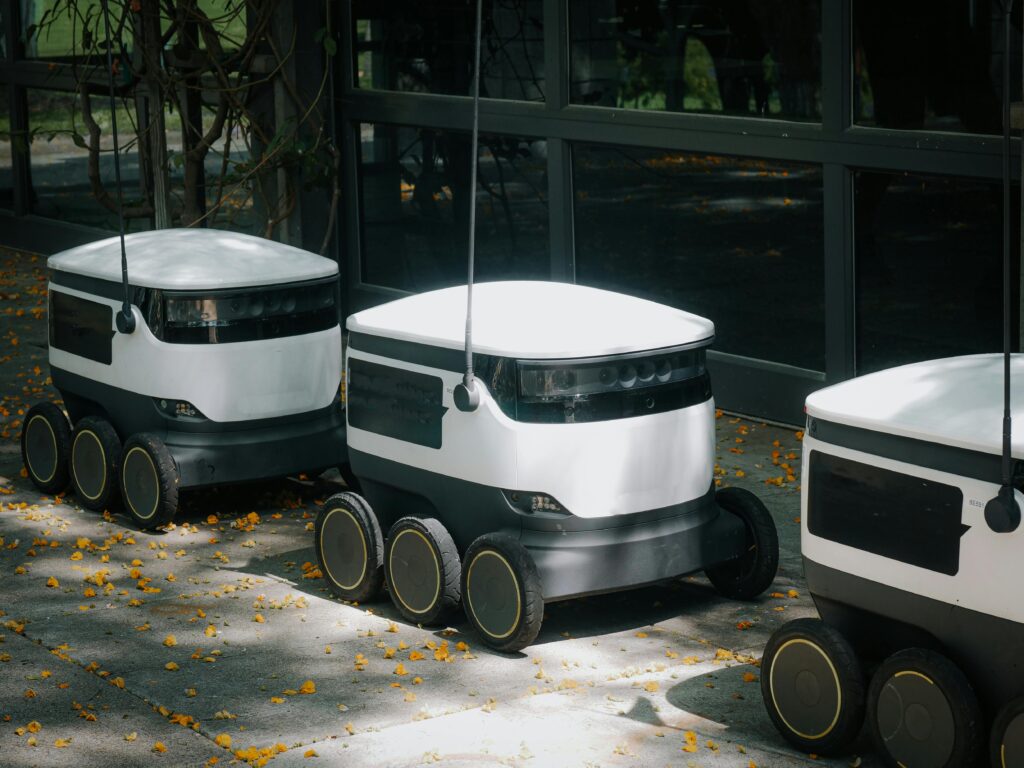
During a 2017 Quartz interview, he clarified his reasoning: If we tax human workers’ pay through income tax, companies using robots performing the same work should be charged with the same levies. Gates then added that the revenue generated from robot taxes could fund social programs. He also mentioned retraining displaced workers and creating new employment in fields requiring human empathy. These sectors face significant labor shortages that robot tax revenue could help address. Gates believed that slowing automation “just a bit” would give communities time to adapt economically. “You cross the threshold of job replacement all at once,” Gates said, referring to driving and warehouse work as at high risk of complete automation takeover. He also emphasized that governments are solely responsible for addressing rising inequities and not businesses alone.
Universal Basic Income Connection
While Gates did not explicitly mention or link his proposal to Universal Basic Income, the connection has become increasingly apparent. As automation eliminates traditional jobs, societies need new mechanisms for economically supporting citizens. Robot tax revenue could provide the funding source.
Back in 2017, during a Reddit AMA session, Gates suggested that America was not “rich enough” to support UBI, but might be someday in the future. However, in his 2024 Netflix series “What’s Next? The Future With Bill Gates,” he demonstrated a change in perspective, stating that addressing poverty through UBI could alleviate costs to American taxpayers.
Other tech and parliamentary figures considered linking robot tax to UBI. French presidential candidate Benoit Hamon proposed partially funding UBI through robot taxation. Elon Musk warned that large-scale AI job displacement would require government economic security for displaced workers.
Innovation Through Deflation
Stanford lecturer Kartik Gada offers an alternative perspective through his ATOM (Accelerating Technomic Medium) theory. Gada argues that technological deflation naturally creates conditions for UBI funding without traditional taxation increases. Technology makes goods cheaper over time, creating deflationary pressure that central banks must counteract through monetary expansion. Gada envisions UBI payments starting in the thousands annually and rising to $100,000 by the 2030s. The funding would come from monetizing technology’s deflationary impact rather than traditional taxation.
European Rejection and Global Resistance
Although robot taxation sounds like a solution to job displacement, not everyone agrees that taxing robots will reap benefits. Some critics even argue that it might result in more negatives than negatives. The European Parliament considered a robot tax proposal in February 2017 but ultimately rejected it. The vote came in close: 328 MEPs against, 286 in favor, with 8 abstentions. Some argue that taxation would discourage innovation and investment in automation.
Critics of robot taxation have raised valid arguments about robot taxation’s impact on innovation. They argue that taxing automation could discourage companies from investing in productivity-enhancing technologies. This might slow economic growth and reduce long-term competitiveness.
Why a Robot Tax Could Backfire on Workers and Innovation
Critics also argue that there are several other issues that come with robot tax implementation. Defining what qualifies as a “robot”: The term could apply to everything from factory machines to vending machines. This broad definition makes meaningful enforcement nearly impossible. Companies might simply relocate their business to countries without robot taxation, undermining the policy’s effectiveness. The tax could actually harm the workers it aims to protect. Robots increase productivity and reduce costs, benefits that flow throughout the economy. Taxing this efficiency makes little economic sense, experts argue. Some compare it to penalizing any technology that improves output.
If automation becomes too expensive, employers might stick with poorly paid human labor instead of upgrading to better jobs. This traps workers in what researchers call “bad work” rather than creating pathways to higher-skilled positions. Innovation suffers when companies fear robot taxes. Britain already lags behind other developed nations in automation, with only 33 robots per 10,000 workers. Adding tax burdens could further discourage the technological investment needed for economic growth.
Economic Transformation Underway
Despite all the criticism and debates, automation will continue to accelerate. The COVID-19 pandemic accelerated automation adoption as companies sought to maintain operations during labor shortages. Amazon doubled down and invested in robotics to mitigate operational shutdown due to the pandemic.
A 2025 Bloomberg survey found that major banks anticipate replacing 200,000 roles with AI within 3 to 5 years. According to statistics, roughly 47% of all workers might have to change careers by 2030 as AI and automation continue to accelerate. An estimated 300 million jobs could be lost to AI in the next 5 years.
Manufacturing automation shows no signs of slowing despite Gates’ proposal. Global industrial robot shipments exceeded 500,000 units for the third consecutive year in 2023. Despite economic uncertainties, companies continue investing in automation for a competitive advantage. The operational stock of industrial robots now exceeds 4.2 million units installed globally.
Future Policy Implications
As automation reshapes the economy, traditional approaches to taxation and social welfare require fundamental rethinking. Current tax systems depend heavily on human labor income, which automation systematically reduces. New frameworks must emerge to address this structural shift.
Current AI capabilities suggest that job displacement will accelerate exponentially over the next decade. Waiting for consensus could leave societies unprepared for rapid economic transformation, possibly leading to rising inequalities. Gates’ 2017 proposal, once seeming premature, now appears remarkably timely as the future of work hangs in the balance.
Read More: Bill Gates Predicts the Only Three Jobs He Believes Will Not Get Replaced by AI