
Crabs are more diverse than most people think. The most well-known ones include the red king crab, brown crab, Dungeness crab, and Mud crab because they appear in popular seafood cuisine. However, crabs can come in a wide variety of colors, sizes, and shapes. The largest is the Japanese spider crab, with claws measuring up to 12 feet, an orange-spotted shell, and a 16-inch carapace width. The smallest is the spiky, pink, and parasitic pea crab. But after an exciting discovery in Thailand, many people have found their new favorite: the Purple Princess Crab.
Rare, Purple, and Tiny
Also known as the “Sirindhorn” crab or panda crab, the princess crab has a distinct purple shell that sets them apart from other crustaceans. They are one inch long, about the same length as a paper clip. Typically, the species has red, black, and white markings, similar to a panda’s pelt. These purple crabs are so rare that they can go unreported for years. They tend to stay hidden under forest debris or in freshwater streams and shaded splash zones. They were first documented in 1986.
Named After Princess Maha Chakri Sirindhorn
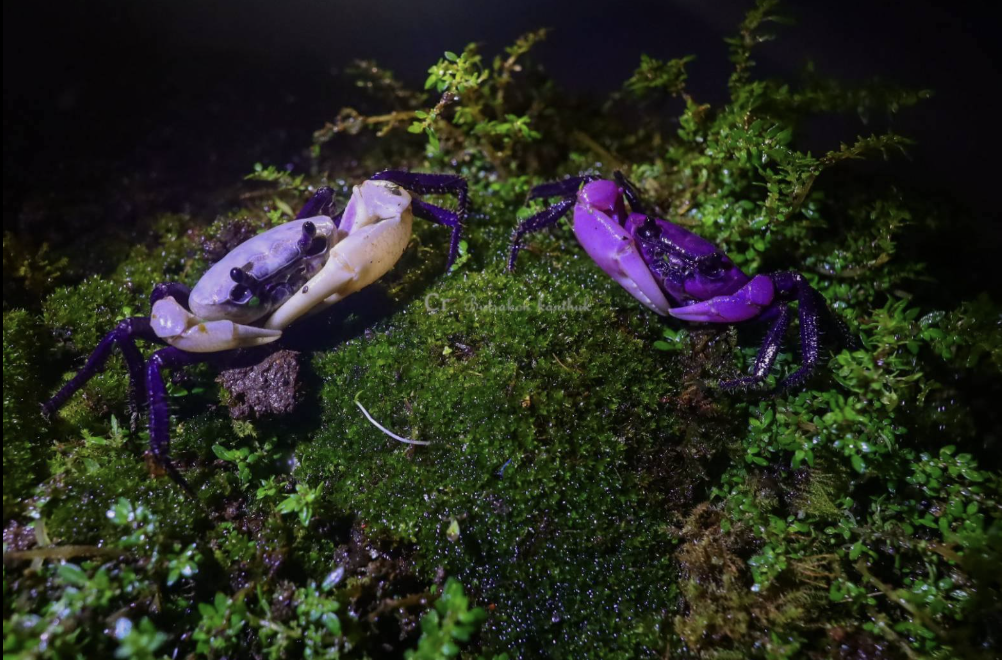
The Sirindhorn crabs were named after Princess Maha Chakri Sirindhorn, who is highly beloved in Thailand for her humanitarian work, public service, and approachable nature. This is not the first species to be named after her. Others include the Eurochelidon sirintarae (Princess Sirindhorn bird or white-eyed river martin), the Streptocephalus sirindhornae (a freshwater fairy shrimp), and the Phuwiangosaurus sirindhornae, a sauropod dinosaur from the Early Cretaceous period. According to Thailand’s Department of National Parks, Wildlife and Plant Conservation Facebook post, this naming was intended to honor the occasion of Princess Maha Chakri Sirindhorn attending the opening of the Chulalongkorn University Natural History Museum on February 24, 1988.
An Indicator Species
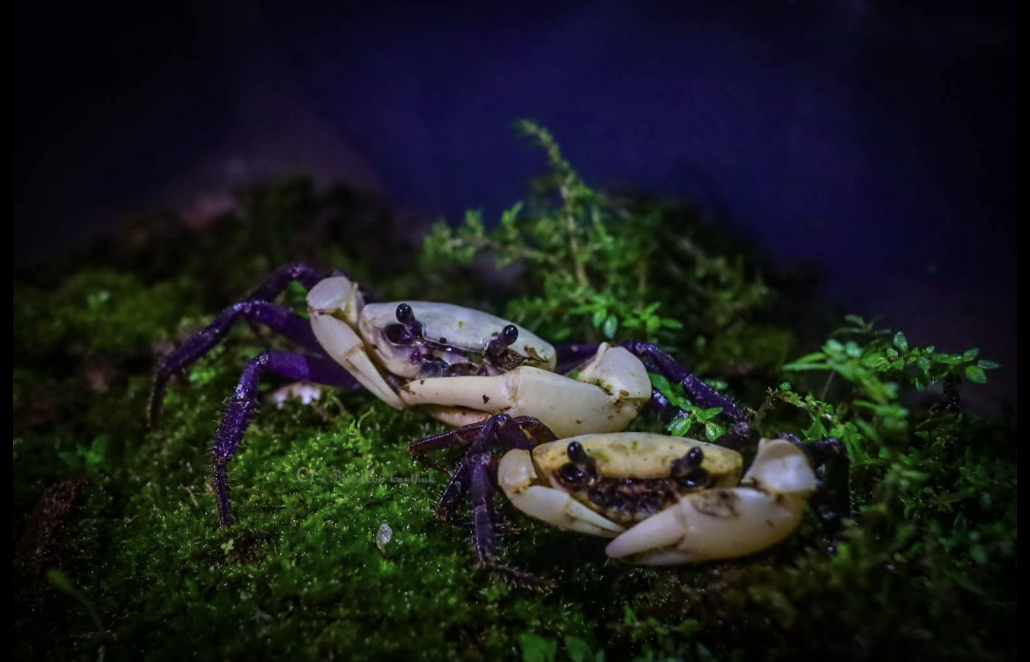
In addition to looking cute, purple princess crabs are an indicator species. This means their appearance signifies that their home, the Kaeng Krachan National Park, has a healthy ecosystem. Indicator species can signal a number of things about their environment because they respond quickly to changes and issues. Because there are always numerous factors that affect biodiversity, researchers don’t rely on indicator species to assess areas, but they help paint a wider picture.
Purple Princess Crabs, Mayflies, Lichen, and More
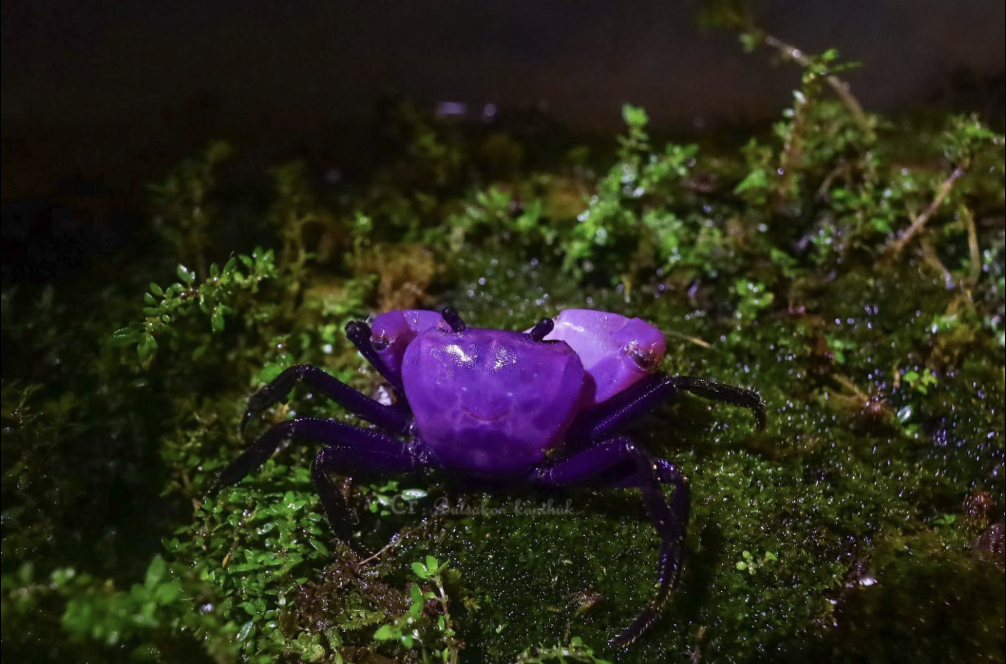
Another indicator species is mayflies, which are sensitive to water pollution. So if their populations are present and thriving, the ecosystem has low levels of pollution. Lichen is another bioindicator, because it’s sensitive to air pollution. People can have “indicator species-like” experiences on a regular basis. Home intruders like cockroaches and silverfish may mean the home has mold or water damage. Weeds in the yard can explain soil conditions, such as compaction, moisture levels, and acidity. And that it’s time to bring out the lawnmower.
The Habitat of Purple Princess Crabs
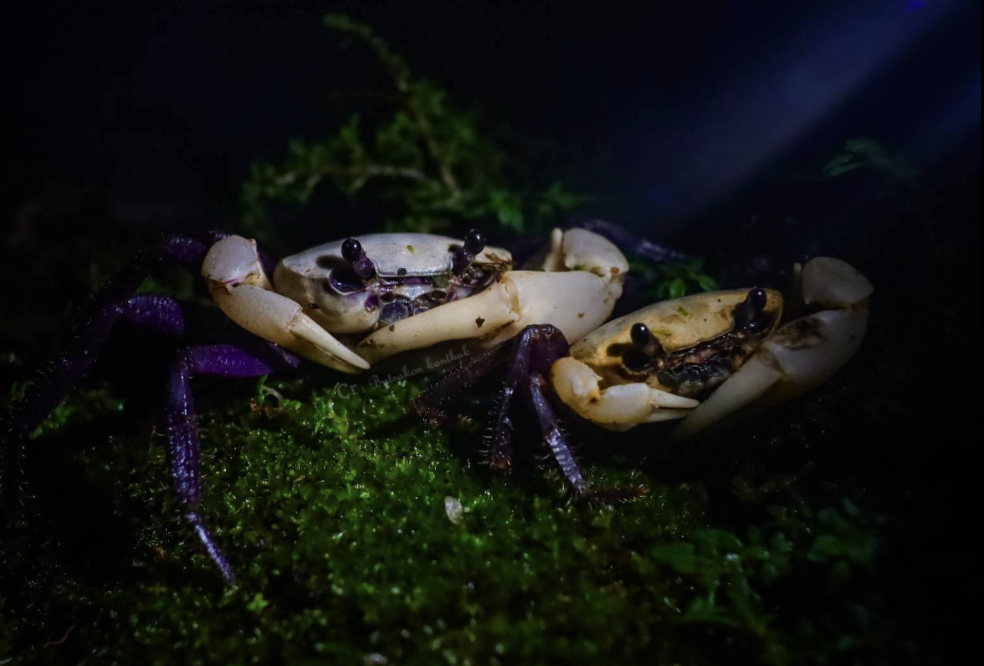
In the same vein, purple princess crabs are sensitive to habitat degradation and pollution, so their appearance is a testament to the conditions of the Kaeng Krachan National Park, which happens to also be a World Heritage Site. This means it is a protected area protected by an international treaty. These sites are meant to uphold places of cultural, historical, scientific, or natural importance. Examples include the Great Pyramids of Giza in Egypt, the Easter Island in Chile, the Taj Mahal in India, the Great Barrier Reef in Australia, and the Yellowstone National Park in the USA. The Kaeng Krachan Forest Complex became a protected site to preserve its unique floral and fauna.
The Wildlife in Kaeng Krachan National Park
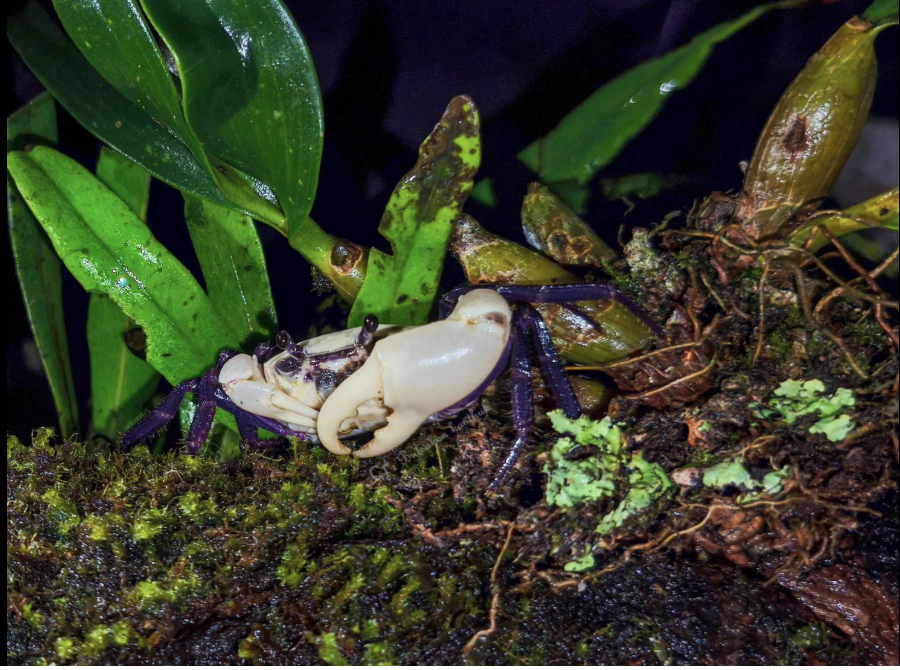
In addition to purple princess crabs, the park hosts many rare and endangered creatures, including the Siamese crocodile, Asiatic wild dog, and Asian elephants. It’s 409,000 hectares of terrain includes six major forest types, including semi-evergreen, dry evergreen, moist evergreen, mixed deciduous, montane, and dipterocarp forests. The unique wildlife draws many visitors to the park to hike, camp, boat, birdwatch, butterfly-watch, take tours, and enjoy the scenery.
Read More: Scientist Repopulates a Rare Butterfly Species In His Backyard
Protect Purple Princess Crabs
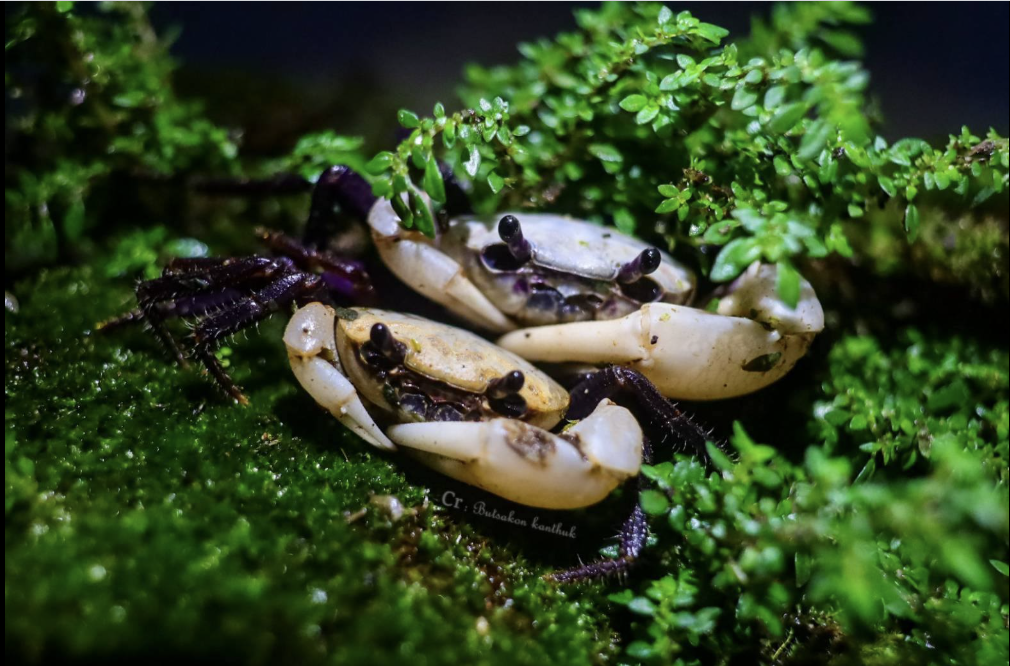
These photos of the purple Princess crab were taken just before the park closed for the season. This closure is vital for these endangered crustaceans and all other vulnerable species living there. This break allows the ecosystems to reset and flourish without any hindrance from human visitors. If the park and its inhabitants continue to thrive, perhaps more indicator species will appear to signify more good news about the wellness of our planet.
Another Purple Crab Species

Surprisingly, purple princess crabs aren’t the only crabs in this color. Similar news broke in 2012 in the Philippines when scientists discovered four new species of freshwater crabs. One of these, the Insulamon palawanense, has a bright purple shell and red claws. According to a study published in the journal Raffles Bulletin of Zoology, these purple crabs species live exclusively on the island Palawan and nowhere else in the world. Unfortunately, these species and their habitats are threatened by nearby mining projects. In response, Palawan Council for Sustainable Development has added these newly-found Insulamon species to their local wildlife protection and conservation list.
Read More: Deep Sea Expedition Leads to Discovery of 20 New Species Living in Underwater Mountain