
In October 2019, The Ocean Cleanup project made headlines around the world when its prototype vessel started collecting plastic from the Great Pacific Garbage Patch. This launch followed a year of challenges and constant redesigns. Since then, the organization has grown, and the vessel has undergone several new iterations. Their first new design was called System 02 (or Jenny), and that was followed by the latest version, System 03. Today, the effort is far more capable than before, yet still experiences much scrutiny. Let’s learn more about the breakthroughs and challenges surrounding The Ocean Cleanup.
The Ocean Cleanup of the Great Pacific Garbage Patch
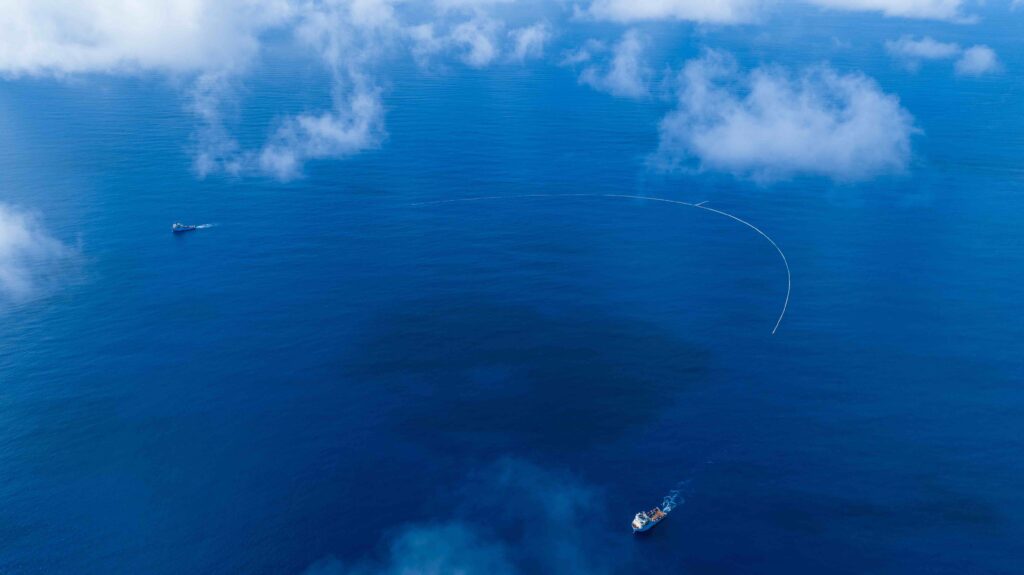
Many issues marred the initial at-sea attempts. This was followed by a smaller redesign called 001/B. This set the stage for the production of the actively towed System 002 model dubbed Jenny. This model helped validate the technique between 2021 and 2023. Towards the end of 2023, they moved across to System 03, which featured floating wings that can extend to a length of 2.2 kilometers. This is a massive upgrade from System 02’s 800-meter operating length. According to The Ocean Cleanup team, this new system can sweep an area around the size of a football field every five seconds!
System 03 consists of two vessels that tow a long barrier that helps to guide floating garbage into a retention zone, which is offloaded periodically. The size of the mesh in the retention zone was increased from earlier designs to enable more marine life to escape through the mesh while retaining all of the debris. Based on what they learned from the previous iterations of the system, the team published mitigation steps to reduce any further ecological risks. These included various avoidance protocols, strobe lights, and observers of protected species.
This year, they also began incorporating AI systems that help them find the garbage debris hotspots. This is vital, as where you choose to sweep is as important as the method you use to sweep. The Ocean Cleanup announced in July that they would be collaborating with Amazon Web Services to create an AI pipeline that combines satellite, aerial, and in-ocean data to determine where they can locate clusters of plastic. The vessels will then be steered towards these locations.
Dealing with the Source of the Debris
No matter how much they try to clean up the oceans, nothing will change until they deal with the source of the problem. According to the team’s research, around 1,000 rivers are responsible for approximately 80% of riverine plastic emissions. So, they designed the Interceptor line, which is a boom and barrier system that has been customized to local conditions to trap the plastic before it even enters the oceans. The Interceptor Barricade in Rio Las Vacas, Guatemala, was designed for strong flood pulses.

In one incident, the barricade stopped around 1.4 million kilograms of waste in a single night. By June of this year, the fleet of Interceptors numbered around 20 across nine countries. They also launched the “30 cities” program to scale interception city-wide with municipal partners. Their main goal is to cut down the amount of plastic entering the ocean from rivers by one third by 2030. In a press release from the 12th of June, the team noted that, so far, they had removed more than 29 million kilograms of trash from the rivers and oceans.
The Bottom Line
Despite the claimed success of their latest systems, the Ocean Cleanup remains controversial. Some marine biologists are concerned that any large-scale removal at the ocean surface risks harming marine life communities that dwell there. Many creatures, such as violet snails and blue buttons, live in the same layer where plastic debris accumulates. One study from 2023 modelled the impact of macroplastic removal operations. They concluded that the effects of these activities could range from a mild to a severe impact. The amount of damage incurred depends on the operational design and target species. Yet the team has noted that this is exactly the issue they are attempting to mitigate by changing the mesh size and towing speeds, and including observers in their activities.
While the initial experiments and systems ran into many teething problems, their newest model is proving to be very helpful in cleaning up the Great Pacific Garbage Patch. They are likewise dealing with the issue at the source, the rivers from which the debris typically enters the ocean. So far, they have managed to remove tens of millions of kilograms from the ocean, no small feat by any measure. Yet, there is concern that considerable amounts of marine creatures may be affected by these activities. However, the team does seem to be actively dealing with these concerns in their redesigns and updates.
Read More: Where Did All the Ocean Plastic Go? Scientists Uncover Troubling Truth